



 China's Ample Covid-19 Drug Supply Is Not Great for Developers
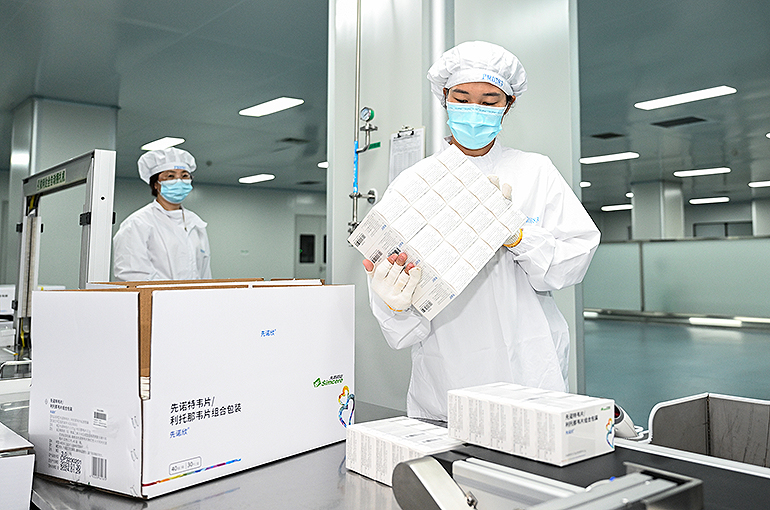
(Yicai Global) May 22 -- Chinese hospitals are awash with homegrown Covid-19 medicines but demand remains lower than expected partly due to restricted sales channels.
Brii Biosciences, which invested more than CNY1 billion (USD142.3 million) in the research and development of its antibody therapy for Covid-19, announced in March that it will terminate production after logging sales of CNY50 million (USD7.1 million), a sum which does not cover its investment and operational costs.
The new Covid-19 drugs have their own advantages but because so many drugs got approved in a short time period it takes time to demonstrate product efficacy and gain recognition from both doctors and patients, a drug development insider told Yicai Global.
China has so far approved six small-molecule antivirals to hit the market, as well as some antibody drugs. However, sales channels are limited as most of the novel medicines are only sold through hospitals.
Although the demand has risen since March, hospitals still have inventory left from the peak of the pandemic last year, so they are not procuring more, an insider from another medicine firm said to Yicai Global.
Medicines expire so if the pandemic remains under control hospitals would prefer to optimize their inventories and not buy more, another insider said. But without new orders, medicine firms will have a hard time returning their investment and having the motivation to develop more antiviral drugs in the future, the person added.
But there is a reason for the limited sales channels, according to an expert in infectious diseases. These drugs got approved mostly on the basis of emergency use, so regulators require developers to gather more clinical data for final approval. Although adding another sales channel of pharmacies could help increase sales, the person added, sale through hospitals are better for data collection.
China still lacks high-quality clinical data about the efficacy of small-molecule Covid-19 drugs, especially among special user groups and regarding drug interactions, according to Liang Zhenyu, deputy director of a department at the National Clinical Research Center for Respiratory Diseases.
Editors: Tang Shihua, Emmi Laine, Xiao Yi





