



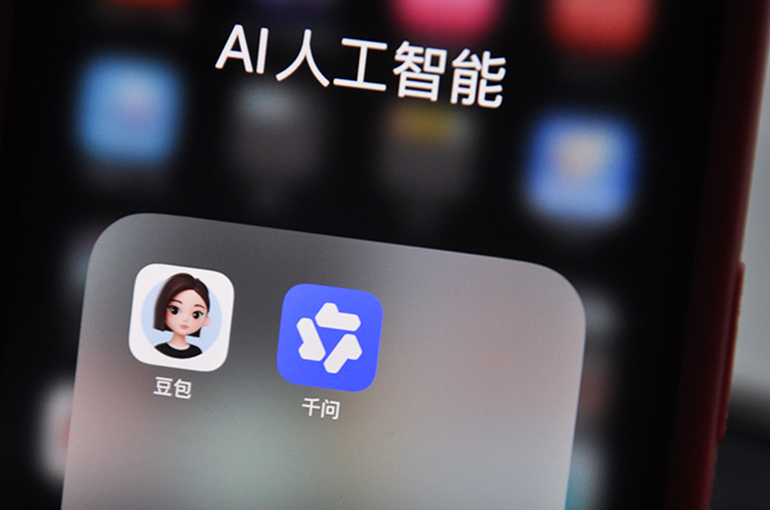
 Alibaba, ByteDance Push AI Monetization With Paid Services
(Yicai) Aug. 12 -- Chinese technology titans Alibaba Group Holding and ByteDance Technology have introduced fee-paying versions of their artificial intelligence services, as the domestic AI sector moves toward the monetization deemed necessary to cover the massive costs involved.
Starting from Aug. 10, fees are now being charged for hotel bookings on Douyin Laike via ByteDance’s hugely popular AI assistant Doubao. Douyin Laike is a merchant platform created by the Beijing-based company for Douyin, the original Chinese version of TikTok.
The combined rate is about 12 percent, the company said, of which the software service fee is 11.4 percent and service charges are 0.6 percent. This rate is lower, it added, than the range of 15 percent to 22 percent charged by leading online travel agencies such as Trip.Com Group.
Liu Xing, head of public relations at Doubao, said the platform is not currently selling paid promotion for its local-services business. Hotels recommended by Doubao are not charged advertising fees, he said, and merchants cannot pay to influence their position in recommendations or search rankings. Instead, merchants pay only a channel service fee when a transaction is completed.
The move comes as the high cost of operating large AI models becomes an increasingly pressing challenge for the sector. According to data from research platform AI.100EC.cn, Doubao is used by over 200 million people every day, but its daily income is less than CNY1 million (USD148,230), mainly from e-commerce commissions, and it uses computing power costing tens of millions of Chinese yuan a day.
Analysts at AI.100EC.cN believe that ByteDance has raised its capital expenditure plan for this year to over CNY200 billion (USD29.65 billion), which is about 60 percent of its profit last year. Such spending requires a clearer path to monetization that can be justified to both internal stakeholders and external investors, they said.
The immediate revenue from the new fee is less important than establishing a price benchmark, the analysts said. Doubao needs a clear pricing anchor for capital markets and vendors, while the 12 percent rate could become a reference point for monetization across the broader AI assistant industry.
Alibaba has also introduced fees for professional users of its Qwen app, a tier that is directly benchmarked against the paid version of Doubao. The fees range from CNY200 (USD29.60) to CNY1,499, but the basic functions are still free. There are also charges for AI video creation, and Alibaba has started public beta testing for Qwen Office as part of its monetization plans.
After the fee model is applied to the hotel sector, it is likely to be extended to categories including restaurants and tourism once it proves viable, said Bao Zelin, general manager of Hangzhou Songyun Digital Technology, which focuses on the cultural and tourism industry.
By shortening users' decision-making process, AI could reshape how traffic is distributed across local services, Bao said, although platforms will need to balance merchants' willingness to pay with users' expectations that recommendations remain neutral.
As other platforms also explore AI monetization, the industry is poised to enter a new competitive stage where traditional search/browsing and AI-driven conversational interfaces coexist as traffic channels.
Editor: Tom Litting





