


 AI Is Forcing Every Sector to Prove Its Worth, Mathematician Says
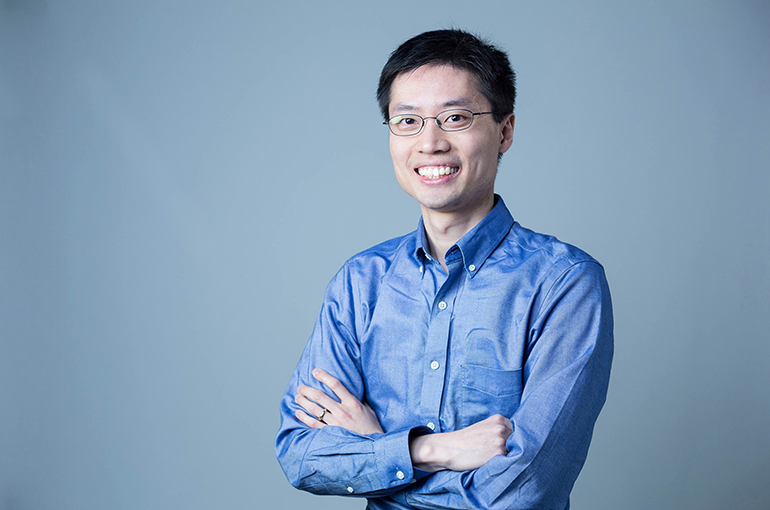
(Yicai) Nov. 27 -- In the face of artificial intelligence's impact, every sector, including mathematics, needs to explain why it exists and how it can use its abilities to create value for others and society, according to mathematician Po-Shen Loh, who served as the head coach of the United States International Mathematical Olympiad team from 2014 through 2023.
In a recent interview with Yicai, Loh said he was not surprised when Levent Alpöge, a mathematician at US AI firm Anthropic, announced on Nov. 20 that he had proved the Riemann hypothesis in collaboration with AI assistant Claude, which may rewrite the history of mathematics. When AI first reached the silver-medal level in the IMO, it showed it could break through existing problem-solving strategies, Loh noted, adding that it's only a matter of time before it moves from the IMO to more complex mathematical research.
Although Alpöge's proof still needs further review by the mathematical community, using AI in proving a world-class mathematical challenge sparked heated discussions about mathematical research paradigms and the future of the field.
Loh said he immediately downloaded the proof but did not read it line by line. Based on his observations, mathematicians have made many calculations to verify the proof, and he believes it is correct given the current status.
On the proof's biggest impact on mathematical research, Loh pointed out that society was willing to fund scientific research and pay mathematicians' salaries in the past because some extremely difficult problems could only be solved by a few professionally trained people. But if AI can also solve these problems, and is even better than humans, mathematicians need to rethink what their research can provide to society.
Significant achievements co-made by AI and mathematicians will continue to occur, but many mathematicians do not like this kind of life, because if the research process becomes constantly asking AI questions, they may lose the joy of exploring mathematics in person, Loh noted.
In the AI era, there is not only a need for more intelligent and capable people, but also a need to rethink the purpose of cultivating these talents, he said, adding that if a person's competitive advantage lies solely in being better at completing standardized tasks than others, then this person's rivals now also include AI.
Editor: Martin Kadiev