



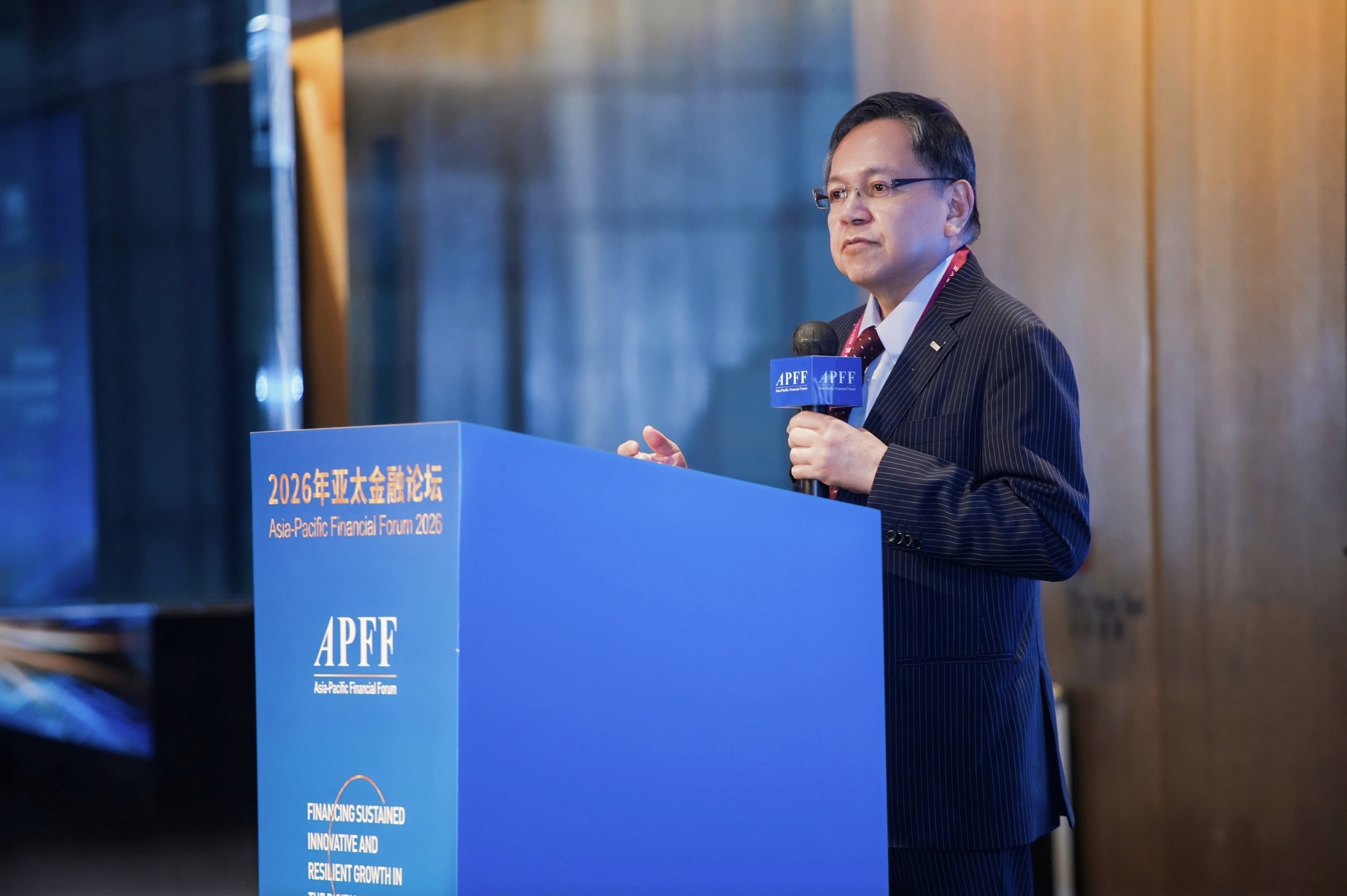
 [APFF 2026] AI Is Pushing APAC Digital Infrastructure Funding Needs Into the Trillions, Forum’s Coordinator Says
(Yicai) Oct. 23 -- Artificial intelligence is reshaping capital allocation across the Asia-Pacific, with financing needs for digital infrastructure climbing from billions to trillions of US dollars, said Julius Caesar Parreñas, coordinator of the Asia-Pacific Financial Forum concluded yesterday.
Digital infrastructure has long required substantial investment to support cloud services for technology companies such as US e-commerce giant Amazon, but AI has dramatically increased the scale of the investment needed, Parreñas, who is also managing director at Japanese lender Sumitomo Mitsui Banking, said in an interview with Yicai yesterday on the sidelines of the APFF in Hong Kong.
“Now, instead of billions of dollars, we are talking about trillions of dollars that are needed to finance digital infrastructure and this is just for data centers,” he said. “We are not yet talking about the foundational infrastructure needed for these data centers to function, like energy. You need a lot of investment in energy infrastructure, also water, and of course, human resources.”
Meeting these financing needs had become a key issue for regional policymakers, according to Parreñas. The subject was discussed at a recent working lunch attended by Asia-Pacific Economic Cooperation finance ministers and the APEC Business Advisory Council, he noted.
Parreñas pointed out that Hong Kong is taking steps to adapt its policy and regulatory frameworks to the digital economy, positioning itself as a regional leader in digital finance. “Hong Kong is undertaking a lot of reforms and playing a leading role in adjusting the policy and regulatory environment for the digital world,” he said.
The Special Administrative Region’s close ties with the Chinese mainland and its links to other regional economies also put it in a strong position to support digital transformation across the Asia-Pacific, Parreñas added. Hong Kong could help develop common standards and best practices while strengthening connections among APEC economies and with markets beyond the region, he said.
“There is a big opportunity for Hong Kong to play a leading role in establishing standards, in establishing best practices, and then actually connecting to the other member economies of APEC and beyond,” he noted.
Regional Reforms
Parreñas also discussed the APFF's role in advancing financial reform across the region, saying “what we want to see is actual reforms taking place.”
One example is efforts to broaden the assets that small and medium-sized enterprises can use as loan collateral. Banks in many Asian economies have traditionally relied on real estate as security, making it harder for those businesses whose assets consist mainly of accounts receivable, inventories, or intellectual property to secure financing.
In 2015, APEC finance ministers made reforms to movable-asset collateral a top priority under the Cebu Action Plan. The APFF subsequently brought in international experts to advise policymakers on the necessary legal and regulatory changes. The Philippines completed its reform in 2018, and Brunei Darussalam also pursued changes. In China, the central bank invited the APFF to hold workshops for officials drafting the secured-transactions chapter of the Civil Code.
"A lot of things that we advocated actually went into the reform," Parreñas said.
The APFF, a policy platform set up in 2013 for public-private collaboration, operates on a "demand-driven" basis, Parreñas added, saying that he hopes more APEC members will seek its help in implementing policy priorities set by finance ministers.
Editor: Kim Taylor





