



 China Adds Record 51 Novel Drugs to National Medical Insurance List
(Yicai) Nov. 16 -- China has added almost 110 medicines, including a record 51 innovative drugs, to its national medical insurance catalog, with some treatments from several multinational pharmaceutical giants among those selected.
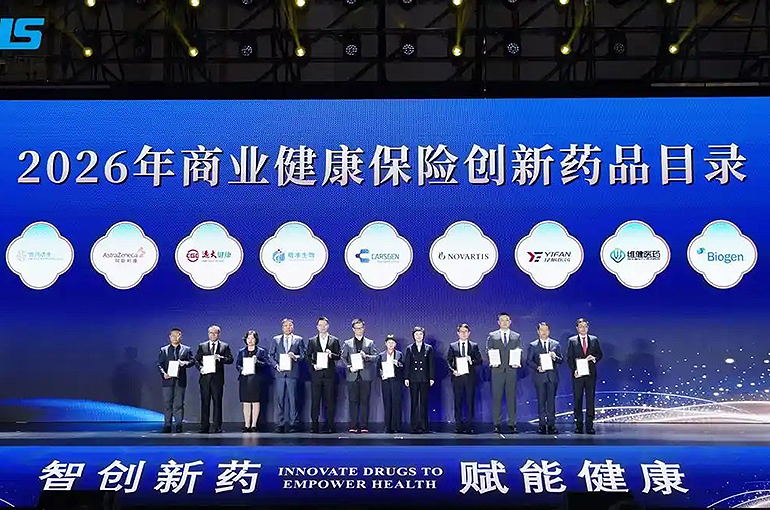
The updated list, released alongside the 2026 Catalog of Innovative Drugs for Commercial Health Insurance, gained 107 medicines, including 51 Class 1 drugs. The additions expand reimbursement coverage for cancer, chronic diseases, rare diseases, and other serious conditions. Twelve drugs were also added to the commercial insurance list.
Following the adjustments, the national catalog, which lists medicines reimbursed by the public health insurance program, contains more than 3,330 drugs, almost 60 percent of which are of Western origin and the rest Chinese patent medicines. The separate commercial catalog, designed to help private insurers cover expensive novel treatments, now lists 28 drugs. Both updated catalogs will take effect on Jan. 1 next year.
The adjustments prioritize clinical value and focus on treatments for tumors, chronic diseases, mental illnesses, rare diseases, and pediatric conditions, according to Wang Li, an official at the Ministry of Human Resources and Social Security. Innovative medicines demonstrating clear clinical benefits and favorable cost-effectiveness were prioritized, she added.
Multinational Drugmakers Secure Wider Coverage
Multinational pharmaceutical companies were among the major beneficiaries of the expanded coverage. AstraZeneca had 13 medicines included. Two treatments entered the national catalog for the first time through price negotiations: tezepelumab injection, used to treat severe asthma and chronic rhinosinusitis with nasal polyps, and datopotamab deruxtecan jab, for advanced hormone receptor-positive, HER2-negative breast cancer.
Another 11 indications involving five of AstraZeneca's innovative medicines gained coverage. These include five additional indications for trastuzumab deruxtecan in breast, gastric, and lung cancers, as well as the combination of savolitinib and osimertinib for non-small cell lung cancer that has progressed after EGFR-targeted therapy and shows MET amplification, a genetic alteration that can fuel tumor growth.
Four other innovative AstraZeneca medicines had their insurance coverage renewed, while sodium zirconium cyclosilicate powder was transferred to the regular Class B reimbursement category, which entails patients footing part of the cost.
Sanofi secured coverage for six innovative medicines and additional indications across the two catalogs. Among them is rovadicitinib, the world's first JAK/ROCK dual-target inhibitor for treating myelofibrosis, a rare bone marrow cancer that disrupts blood cell production. Developed by China's Chia Tai Tianqing Pharmaceutical Group and exclusively licensed to Sanofi globally, the drug was approved in China in February and was added to the medical insurance program this year.
Another Sanofi treatment, aficamten, a Class 1 innovative medicine for obstructive hypertrophic cardiomyopathy, a heart condition in which thickened heart muscle obstructs blood flow, entered the national list less than a year after receiving approval in China last December, ahead of green lights in Europe and the United States.
Sanofi's fitusiran sodium injection, used to treat hemophilia, a bleeding disorder that prevents blood from clotting properly, was also added to the national catalog, while five approved indications for dupilumab injection, used to treat inflammatory conditions, are now covered by basic medical insurance.
Novo Nordisk's once-weekly combination injection of insulin icodec and semaglutide, the world's first weekly basal insulin and GLP-1 receptor agonist combination treatment, was also included. China has become the first country to provide medical insurance reimbursement for the medicine.
Chinese Innovative Drugs Gain Ground
Domestic pharmaceutical companies also secured important additions to the national catalog, including Innovent Biologics' mazdutide injection, the world's first and only approved dual glucagon and GLP-1 receptor agonist.
JW Therapeutics' relmacabtagene autoleucel shot was transferred from the first edition of the commercial health insurance innovative drug catalog to the national medical insurance catalog, becoming the only CAR-T cell therapy included in the latest additions.
Meanwhile, the commercial health insurance innovative drug catalog added 12 medicines from 11 companies, mainly targeting hematological cancers, solid tumors, and rare genetic diseases.
Among them is Sanofi's caplacizumab jab, used to treat immune-mediated thrombotic thrombocytopenic purpura, a rare blood disorder. AstraZeneca's eplontersen sodium injection, a treatment for polyneuropathy associated with hereditary transthyretin amyloidosis, a rare inherited disease that causes abnormal protein deposits to damage nerves, was also included for the first time.
China will continue working to implement the commercial health insurance innovative drug catalog, said Huang Xinyu, a departmental director at the National Healthcare Security Administration.
To address difficulties in applying previously negotiated discounts, pharmaceutical companies and insurers will be allowed to negotiate directly and agree on flexible ways to implement the price reductions, Huang added.
Editor: Emmi Laine





