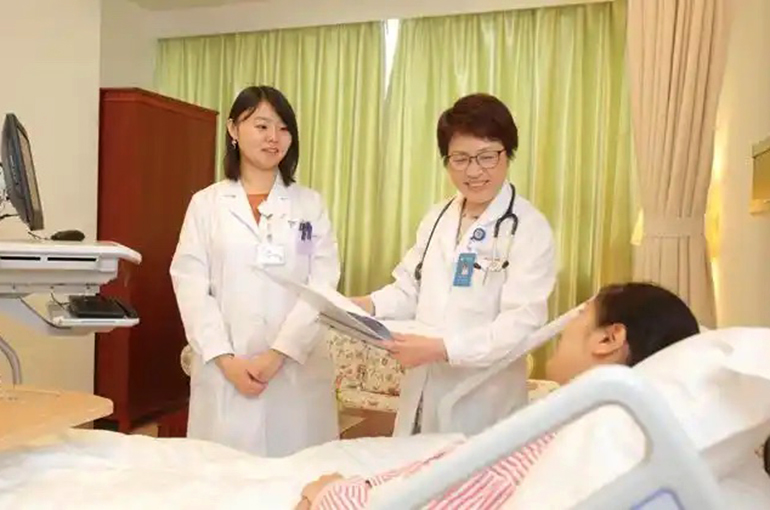
 China Draws Growing Number of Medical Tourists Seeking Faster, Cheaper Care
(Yicai) Jan. 15 -- China is increasingly becoming a destination for overseas tourists and even patients from developed economies seeking medical treatment, as the country’s medical service capabilities improve and visa-free transit and entry policies continue to expand, a senior medical management professional told Yicai.
Lower costs, faster treatment, and improving medical technology have drawn growing numbers of foreign patients to Chinese hospitals. In Shanghai, the number of overseas patients visiting the international departments of public hospitals has risen by double digits since 2024, with more than half receiving inpatient care or surgery, according to industry professionals.
Personal experiences shared on Chinese social media platforms have highlighted the appeal. “I received a magnetic resonance imaging scan at Yunnan St. John Hospital in Kunming not long ago, which cost me only CNY486 (USD70). This would cost thousands of dollars in the United States,” said South African blogger Lizzy. “The entire process, including registration, consultation, appointment, and examination, took about two and a half hours. Simply making an appointment would take several months in the US. The speed and cost of medical treatment in China are simply beyond imagination.”
American actor Da Yang shared a similar experience. “I received a hip joint surgery in Shanghai in September, spending around CNY30,000 (USD4,304) rather than USD30,000. I was hospitalized for six days and recovered very quickly afterwards. Now I can walk normally without any problem.”
Foreign Patients Opt for Advanced Treatments
Foreign patients are also increasingly willing to undergo complex treatments in China. “There have been significant changes in the international department of our hospital,” Gu Jingwen, director of the International Medical Center of Huashan Hospital Affiliated to Fudan University, told Yicai.
“Foreign patients only came to the hospital for minor ailments but now are willing to receive minimally invasive surgeries, tumor radiotherapy and chemotherapy, or even complex and difficult multi-disciplinary consultations here. They feel very reassured when they are told the hospital has robot equipment,” Gu said.
Some overseas patients were referred by community doctors in their home countries, Gu added. In September 2024, Shanghai designated 13 hospitals, including Huashan Hospital and Ruijin Hospital, as pilot units for international medical tourism in public hospitals.
Cost advantages are a major draw. Lower prices for imported original drugs and medical services, along with efficient consultation processes, have prompted patients from the US, Canada, and Southeast Asia to travel to Shenzhen for treatment, Xia Yihuang, chief operating officer for the Guangdong-Hong Kong-Macao Greater Bay Area at New Frontier, told Yicai. United Family Healthcare operates hospitals under the group.
“Especially in the field of targeted cancer treatment, there were cases where patients from the United Kingdom and Italy came to our hospitals in Shenzhen after ineffective first-, second-, and third-line cancer therapies in their own countries,” Xia said. “Some patients directly sought Chinese-made drugs for cancer treatment under the guidance of overseas doctors.” Hospitals also provide post-surgery rehabilitation and follow-up management through WhatsApp to accommodate overseas patients’ habits, he added.
Pricing Challenges
Despite growing demand, challenges remain. China’s medical service pricing system for overseas patients is still incomplete, said Zhao Haibo, executive director of the Shanghai Jiao Tong University–Yale University Joint Center for Health Policy.
Foreign-related charges at international departments of public hospitals should be fully separated from basic medical care and managed using full cost accounting, with related income supporting the overall development of public hospitals, Zhao noted. Non-public medical institutions, meanwhile, need to continuously improve medical technologies while strengthening cost control.
Policy support is expected to expand. Based on measures released earlier by Beijing, Shanghai, and Shenzhen, future priorities include promoting connections between commercial insurance and basic medical insurance, as well as improving access to innovative drugs and medical devices.
A person in charge of related business at a leading domestic commercial health insurance company told Yicai that the firm works closely with international departments of major public hospitals and high-end medical institutions. “Our company has sent staffers to hospitals we cooperate with,” the person said.
“Overseas patients with commercial insurance rights only need to bring their ‘direct cards’ to visit the hospitals that have signed agreements with insurance firms. Overseas patients will finish settlement of insurance claims with the help of the insurance firm,” the insurance insider added.
Editor: Emmi Laine