



 China’s Car Imports Halve for Second Straight Month in September
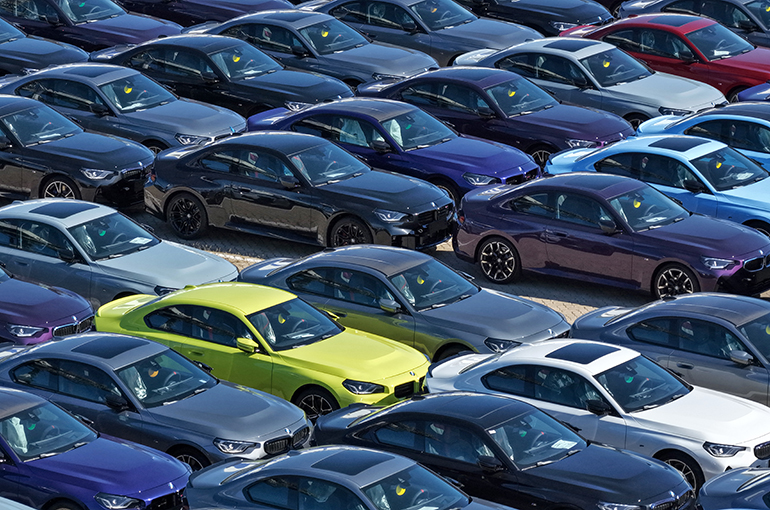
(Yicai) Oct. 26 -- China’s auto imports halved year on year for the second month running in September, as new energy vehicles increasingly displace gasoline-powered cars and buyers in first- and second-tier cities show waning appetite for imported luxury vehicles.
The country imported 21,000 vehicles last month, a 49 percent drop from the same period last year, according to figures released yesterday by Cui Dongshu, secretary general of the China Passenger Car Association. August’s imports slumped 51 percent to 23,000.
Vehicle imports have been sliding since 2018, though the pace appears to have increased. Some 480,000 cars were shipped in in 2025, down 32 percent from the previous year, and from January to September this year it was 290,000 units, down 20 percent.
Luxury car demand in traditionally affluent cities such as Beijing, Shanghai, Hangzhou, Chengdu, and Shenzhen, is under pressure, Cui said, while in Xinjiang Uygur Autonomous Region, Shandong province, and other oil-producing areas in central and western China, demand remains relatively strong.
Guangzhou saw the steepest fall in auto imports in September, with a drop of 46 percent, while Nanjing, Zhengzhou, Chengdu, and Hangzhou all notched up decreases of 40 percent or more.
Retail sales of cars with internal combustion engines tumbled 43 percent from a year ago, with pure fuel vehicles falling 49 percent, almost exactly in line with the decline in car imports, according to the CPCA’s monthly report.
To keep pace with the rapid development of China’s NEV market, multinational carmakers have been accelerating their shift away from fuel vehicles. BMW decided to produce the long-wheelbase version of its iX3 -- the most localized model in its Neue Klasse lineup -- in Shenyang.
The German automotive giant has also launched its sixth-generation battery technology, and plans to raise the share of locally made cars in its China sales to more than 95 percent by 2030.
Audi, another top German brand, has opened an Innovation Technology Center in Shanghai in partnership with Chinese car titan SAIC. The center will focus on production of auto chips, Level Three autonomous driving, and intelligent cockpits. Mercedes Benz has also boosted its research and development team in China to over 2,000 engineers, and their advances are being incorporated in its global product lineup.
Editor: Tom Litting





