



 China's Film Industry Reaches New Milepost With First AI Theatrical Release
(Yicai) Sept. 24 -- China's first feature-length movie created using artificial intelligence is scheduled for nationwide release next month, marking a new milestone in the use of generative AI in the country's film industry.
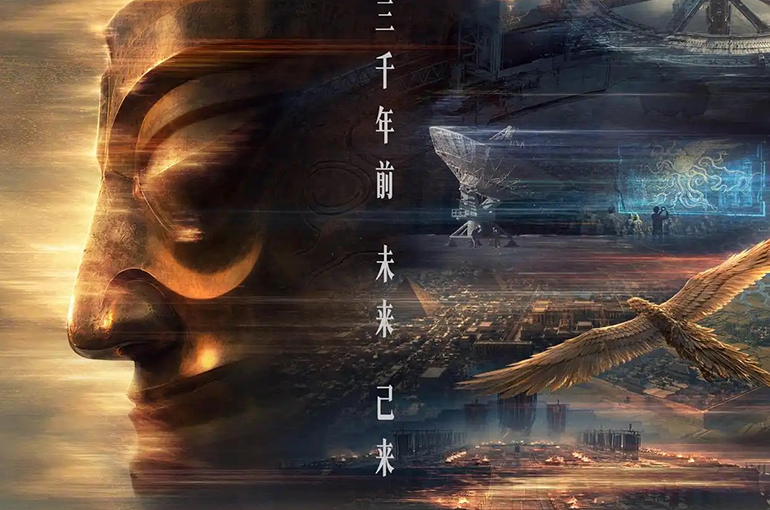
With a total runtime of 100 minutes, “Sanxingdui: Future Past” is a science-fiction animation inspired by archaeological discoveries related to the more than 3,000-year-old Sanxingdui civilization in China. Due for release on Oct. 23, it is the first theatrical film in China produced with AI to receive a public screening permit from the National Film Administration, Bona Film Group announced yesterday.
Produced by Bona’s department for AI-generated movie and television series following standard film industry workflows, the movie features entirely original digital characters.
Human creators led the film's conceptual development, artistic direction, and narrative decisions, while AI handled the generation of visuals, sound effects, and other production elements. The technology enabled highly detailed recreations of iconic Sanxingdui artifacts, including the Bronze Sacred Tree and the Golden Mask, for the big screen.
The story is set in a future where super-intelligent AI has swept across the globe and humanity has surrendered control to algorithms, plunging the world into crisis. When an archaeologist discovers that the key to resolving the crisis lies in seven symbols carved into Sanxingdui bronze artifacts, a narrative unfolds that reveals the hidden connection between this ancient civilization and the future world.
Located in China’s southwestern Sichuan province, Sanxingdui was one of the country's most important archaeological discoveries of the 20th century. The site is well known for its distinctive bronze masks, bronze sacred trees, and other artifacts dating back more than three millennia.
AI plays a dual role in the movie. It was not only deeply involved in the production process but also serves as a central theme of the story, specifically how humans can retain their own judgment and capacity for choice in an era increasingly reliant on algorithms.
AI-generated production is becoming increasingly common in China's film and television industry. At the end of last month, Hunan Satellite TV, a broadcaster popular with young Chinese audiences, began airing “The Later Journey to the West” during its prime-time evening slot. Produced entirely using AI, the series became the first long-form AI-generated drama broadcast on Chinese TV.
Based on characters from the classic Chinese novel “Journey to the West,” “The Later Journey to the West” contains no live actors, with all visuals and character performances generated by AI. The first season is planned to comprise 30 episodes. Five episodes have aired so far, while the rest will be produced, reviewed, and released on an ongoing basis.
Editor: Tom Litting





