



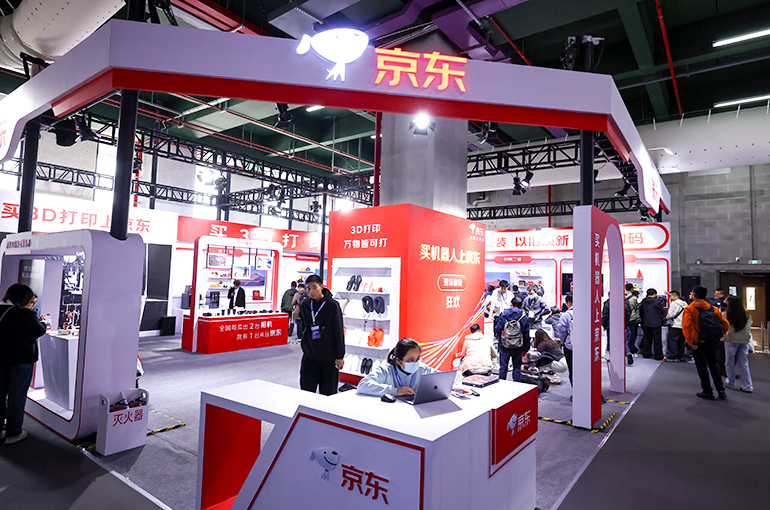
 China’s JD.Com Puts Embodied AI at Core of Strategic Layout, Technical Committee Chief Says
(Yicai) Nov. 5 -- Embodied intelligence ranks among the most important strategic priorities of JD.Com, according to the chairman of the Chinese e-commerce and tech giant’s technical committee.
JD.Com’s plans for embodied intelligence center on three pillars: embodied data collection and data infrastructure development, equipment research and development and deployment in real-world scenarios, and cutting-edge embodied artificial intelligence model research, Cao Peng said in a keynote speech at the Robot and Embodied Intelligence Sub-forum of the World Internet Conference Wuzhen Summit yesterday.
The company is building embodied intelligence data hubs and aims to accumulate more than 10 million hours of high-quality video data captured from real human scenarios and over one million hours of robot operational data within two years, Cao pointed out. Data collection work will be carried out jointly by frontline JD.Com staff and ecosystem partners, with all activities conducted in strict compliance with laws and regulations to ensure legality, compliance, security, and trustworthiness, he pointed out.
Beijing-based JD.Com operates more than 3,800 warehouses with a nationwide logistics network, partners with over 200,000 retail pharmacies and runs more than 10,000 outlets, including JD Malls, 7Fresh supermarkets, and JD Auto service stores, and its JD Domestic Services has more than 50,000 in-house cleaners, serving nearly 10 million households a year, Cao said.
JD.Com’s supply-chain capabilities and extensive business scenarios constitute its unique data edge, he stressed. These operating scenarios generate massive volumes of real-world data every day, he noted, adding that the diverse, multidimensional, and multimodal data serve as rich fuel for embodied intelligence development.
AI and robots are also being integrated across JD.Com’s entire supply chain, Cao said. JD Logistics expects to procure three million robots, one million autonomous vehicles, and 100,000 drones over the next five years, while the firm’s offline retail, healthcare, and industrial park businesses present substantial demand for robot applications, he added.
Robots could achieve large-scale deployment in commercial scenarios within the next three to five years, but mass adoption in household settings will take far longer, potentially five to ten years or even more, Cao told media outlets, including Yicai.
Editors: Tang Shihua, Martin Kadiev





