



 China’s Ugreen Teams Up With Qwen on AI NAS Devices for Homes
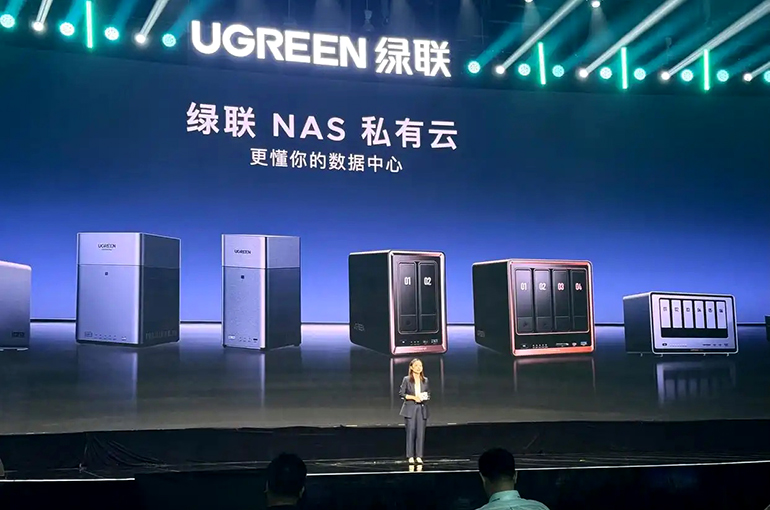
(Yicai) Sept. 14 -- Ugreen Group, a Chinese electronics manufacturer best known for its power banks, data cables, and docking stations, has shifted its focus toward smart homes, unveiling new artificial intelligence network attached storage devices developed in collaboration with Alibaba Group Holding’s Qwen.
NAS devices connect to the local area network of homes or companies and mainly store files, but Ugreen has begun adding local inference capabilities through deep cooperation with Qwen, aiming to upgrade them into a personal computing power center that can understand and process data, the Shenzhen-based company announced on Sept. 12. Users can switch to cloud-based AI models for more complex reasoning tasks, it said.
Ugreen’s operating revenue reached around CNY5.8 billion (USD864.8 million) in the six months ended June 30, with that from its intelligent storage products surging 86 percent to CNY770 million from a year earlier, posting the biggest growth among all segments, according to its financial report released last month.
Ugreen will extend its local AI capabilities to the home intelligence ecosystem, said founder and Chief Executive Zhang Qingsen. The ecosystem is an AI of Things hub that provides central storage and computing power and shares computing power and AI capabilities with vacuum cleaners, 3D printers, and other devices through protocols, Zhang noted.
Each household appliance does not need to be individually equipped with AI and computing power because a central hub provides computing power on demand, improving AI reuse and reducing costs, Zhang pointed out.
The global AI NAS market stood at about USD9.9 million last year and is expected to top USD155 million in 2032, for a compound annual growth rate of 49 percent, according to data from QYResearch. Global AI NAS device sales will likely surge to 6.69 million units in 2035 from 60,000 in 2024, with a penetration rate of over 60 percent, China Securities pointed out.
However, whether AI NAS devices can move from enthusiasts to the average household, and whether users are willing to pay for local AI in practical applications depends on future market feedback.
Editor: Martin Kadiev





