 Chinese Academy of Sciences to Stop Paying Publication Fees for Over 30 Int'l Open Access Journals, Researchers Say
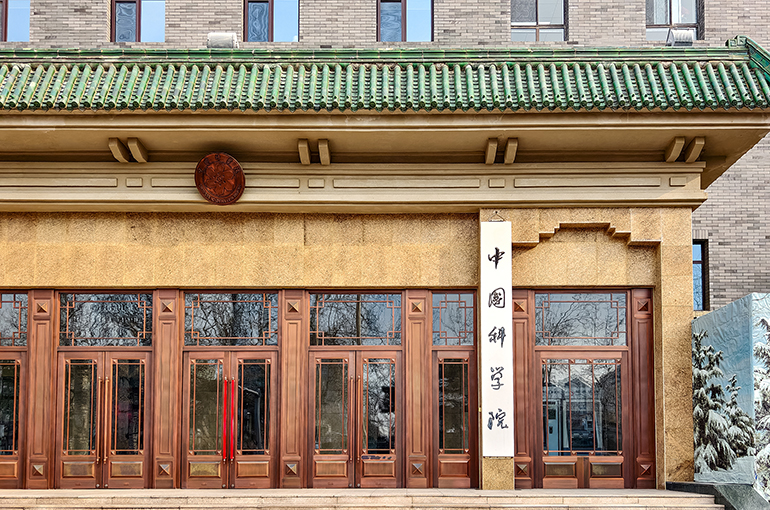
(Yicai) Feb. 27 -- The Chinese Academy of Sciences plans to stop paying article processing charges for more than 30 international open access journals, including Nature Communications, Cell Reports, and Science Advances, according to several researchers from institutes under the academy.
The Chinese Academy of Sciences issues a "journal warning list" each year, listing works that show signs of research misconduct, charge high APCs, or both, a researcher told Yicai. "Journals on the warning list, such as Nature Communications and Science Advances, will no longer be permitted to use national funds to pay publication fees."
The Chinese Academy of Sciences has not commented on the matter yet.
Policies about publication fees for OA journals have been tightening, the Shanghai Institute of Biochemistry and Cell Biology, the Shanghai Institute of Ceramics, the Shanghai Institute of Organic Chemistry, the Institute of Automation, and other institutes under the Chinese Academy of Sciences said to Yicai. The academy has about 100 research institutes, involving over 50,000 researchers.
Regulations that national funds could not be used to pay for predatory journals were shared internally earlier, making it an inevitable trend that using national funds for APCs will be restricted, another researcher said to clarify the official stance. Predatory journals refer to those that only aim to collect publication fees and provide little or no academic services.
High APCs are one of the direct causes of policy tightening, with about 10 percent of the authors of Nature Communications and Science Advances being affiliated with the Chinese Academy of Sciences last year and about 40 percent from institutions in China, according to data from Web of Science.
The APCs of international authoritative journals are generally no less than USD5,000, while the global average stands at about USD2,000, industry data showed.
The adjustment of fund management is also a rivalry for the right of speech in scientific research, aiming to support domestic Chinese journals, a life sciences researcher told Yicai.
The move is not unique to China, with the German Research Foundation having already set an upper limit on the reimbursement amount for APCs, and the US' National Institutes of Health considering following suit.
Chinese scientific journals have been growing rapidly since 2019. China had about 178 English OA journals as of 2023, nearly half of which do not charge APCs, according to a report released by Osmanthus Consulting and Clarke & Esposito.
However, experts noted that it will take time for Chinese journals to truly establish international influence.
Editor: Martin Kadiev