


 China Takes Top Three Spots in Nature Index’s Global Science City Rankings for First Time
(Yicai) Nov. 27 -- For the first time ever, Chinese cities have secured the top three places in Nature Index's annual global science city rankings, which evaluates metropolitan areas worldwide based on their high-quality scientific research output.
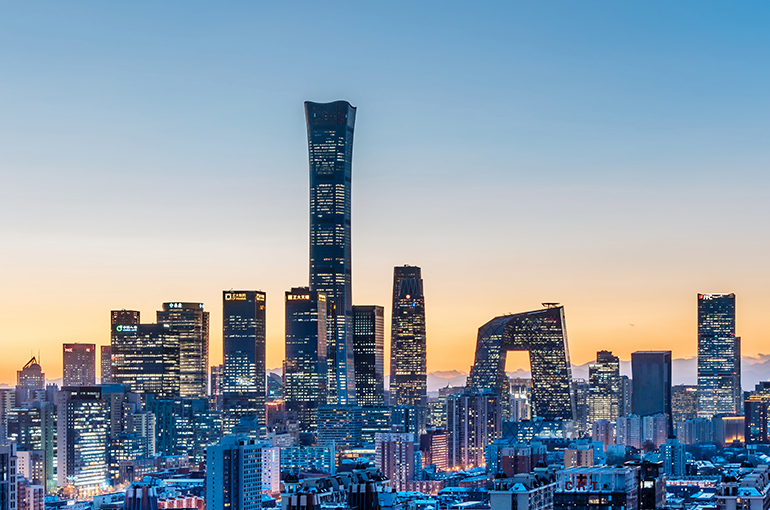
Beijing has kept its hold on the No. 1 spot for a decade, according to the Nature Index Science Cities 2026 supplement published by Springer Nature on Nov. 25. Shanghai remains second for the third year in a row, while Nanjing climbs to third, surpassing the New York and Boston metropolitan areas.
The Chinese cities of Guangzhou, Wuhan, and Hangzhou came in fifth, eighth, and ninth, respectively.
The rankings are based mainly on “Share,” the Nature Index’s measure of fractional authorship contributions to research papers. The metric allocates credit among a paper’s authors and their affiliated institutions according to the respective contributions. The latest supplement draws on research output in natural science and health science journals tracked between 2016 and last year.
Beijing had a Share score of 6,518.56, followed by Shanghai with 3,928.46 and Nanjing with 2,635.38, which surpassed the New York MA by just 37.15 points.
China and the United States had 47 and 49 cities and metropolitan areas in the top 200, respectively. China secured 24 spots in the top 50, twice as many as the US.
Chinese cities performed particularly well in chemistry and physical sciences, claiming 10 and eight of the top 10 spots globally. Beijing and Shanghai each gained nearly 900 points in adjusted Share for chemistry over the past decade, the largest increases among the world's top 50 cities in the field.
US cities maintained their lead in health sciences, with the Boston and New York MAs, Baltimore-Washington, and the San Francisco Bay Area occupying the leading four spots. Beijing, Shanghai, and Guangzhou ranked fifth, seventh, and eighth. The US accounted for 21 of the top 50 cities in the field, compared with eight for China.
In biological sciences, China and the US each secured four of the top 10 spots, with European cities taking the remaining two.
Several Chinese cities made major gains in the natural science rankings over the past decade. Hangzhou climbed to eighth from 43rd in 2016, Guangzhou rose to fifth from 31st, and Wuhan advanced to sixth from 24th. Over the same period, Tokyo, Paris, Baltimore-Washington, Los Angeles, and Chicago all dropped out of the global top 10 in the subject.
Editor: Futura Costaglione