 Chinese NEV Makers Shift Competition to Lightweighting
(Yicai) July 22 -- With the iteration of battery technologies and the popularization of charging facilities, electric vehicle range anxiety is gradually alleviating. Energy consumption and handling are becoming concerns now, so manufacturers are shifting their competitive focus toward lightweighting capabilities.
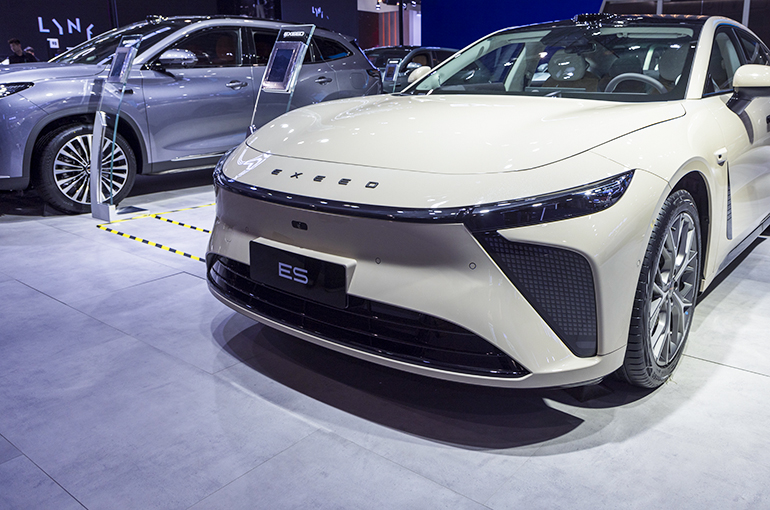
Chery Automobile launched the Exeed ES 2027 edition at the Tongji University Intelligent Connected Vehicle Testing Base in Shanghai on July 20. The new model has lightweighting as one of its core selling points, being equipped with the all-aluminum Flying Fish Chassis 2.0, which reduces unsprung weight by 60 kilograms.
Lightweighting is not a new concept. In the era of internal combustion engine vehicles, major brands touted it as a core technical selling point for improving handling and reducing fuel consumption. But in the early stages of electrification, carmakers prioritized installing larger batteries and stacking comfort features, making vehicles increasingly heavy. This has sparked controversy over the damage caused by overweight EVs to public roads.
On July 16, Chinese auto giant Geely Automobile released an intelligent electric drive system that deeply integrates 16 core hardware components and functions, including the motor, electronic controls, and reducer. The system weighs 75 kg, about 15 percent lighter than mainstream products.
Moreover, Geely Auto recently exhibited its Starray wheels, which use aviation-grade aluminum and are made through the T6 heat treatment process to strike a balance between lightweighting and durability.
Nio launched its new Onvo L60 in June, which is about 300 kg lighter than other pure electric cars in the same class, thanks to the extensive use of high-strength lightweight materials, an 85-kilowatt-hour ultra-thin lightweight battery pack, and a 900-volt high-performance, high-efficiency silicon carbide rear electric drive.
The difficulties of making lighter cars not only lie in technology but also in the trade-off of costs for market perception, industry insiders told Yicai. Influenced by consumers’ pursuit of comfort, automakers dare not take the lead in reducing configurations, fearing they cannot afford the cost of missing features competitors offer.
However, whether lightweighting can truly transform from an engineering consensus into value perceivable by consumers remains to be seen, the insiders noted.
Leapmotor Technology’s logic for solving the lightweighting issue is increasing efficiency and reducing costs, finding a balance that maximizes battery efficiency and achieves cost management without compromising consumer interests and experience, Xu Jun, chief operating officer of China’s best-selling new energy vehicle startup, recently told Yicai.
Editor: Futura Costaglione