 Chinese Scientists Make Key Advance in Using Gene Therapy
(Yicai) Jan. 28 -- Chinese medical researchers have made a breakthrough in gene therapy that overcomes the limitations of vector carrying capacity. This could advance the clinical application of gene therapy for a number of conditions and diseases, including autism and epilepsy.
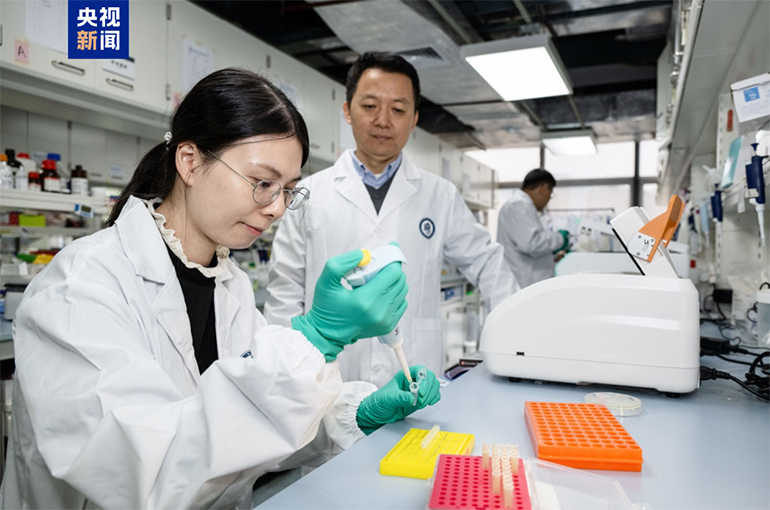
The research team from the Shenzhen Institutes of Advanced Technology, Chinese Academy of Sciences, in collaboration with Peking University First Hospital have developed a novel gene therapy strategy called AAVLINK, which significantly enhances the adeno-associated virus vector, or AAV, carrying capacity, according to a study published yesterday in life sciences journal Cell.
Gene therapy primarily involves delivering therapeutic gene fragments into target cells via specific vectors to repair genetic defects or abnormalities. AAV is an ideal vector for gene delivery but has a maximum carrying capacity of only 4,700 base pairs, or 4.7 kb.
The pathogenic genes that cause many conditions, including autism and epilepsy, exceed this capacity, severely limiting the development of gene therapy technologies for these disorders, said Liu Taian, an associate researcher at the SIAT and one of the authors of the study.
Furthermore, existing dual AAV delivery strategies face challenges such as low recombination efficiency and the production of ineffective or harmful proteins, making it difficult to achieve safe and effective therapeutic outcomes.
To address this issue, the research team divided the long gene into two segments, each packaged into separate AAVs. Using Cre/lox-mediated intermolecular DNA recombination technology, these segments undergo precise recombination after entering the cells, enabling the expression of a complete functional therapeutic gene.
In mouse experiments, the AAVLINK strategy successfully reconstructed and restored the full functionality of the autism-related gene Shank3 and the epilepsy-related gene SCN1A within the subjects, effectively improving the behavior and symptoms of the associated mice, according to the study.
Based on this achievement, the team constructed an AAV long-gene delivery vector toolkit and systematically screened 193 human pathogenic genes longer than 4 kb. As well as autism and epilepsy, these genes are connected to diseases such as Duchenne muscular dystrophy, hereditary deafness, and retinal disorders, with the longest therapeutic gene exceeding 11 kb in full-length expression.
In the future, the team will further optimize the delivery efficiency of AAVLINK, establish gene therapy models for related diseases, and carry out systematic validation and preclinical studies of the technology in primate models to advance its translational application, according to the SIAT.
Editors: Dou Shicong, Tom Litting