 Chinese Consumer Brands Are Expanding Fast in South Korean Market, Association’s Head Says
(Yicai) May 6 -- Chinese brands, from electric carmakers to new-style tea chains, are expanding quickly in the South Korean market amid heightened China-US trade tensions and a growing desire for "light luxury consumption" among young Koreans, according to the chairman of the Korea-China Association.
The pace of investment and store openings in South Korea by Chinese consumer brands has increased since the escalation of China-US trade tensions in 2019, and has become even more pronounced since the Covid-19 pandemic, Park Seung Chan, who is also a professor at Yong In University in Yongin-si, said in a recent interview with Yicai.
New-style tea brand Chagee opened its first cafes in South Korea in the Gangnam, Yongsan, and Sinchon districts of the capital Seoul on April 30. Its peers ChaPanda and Heytea entered the coffee-dominated market in 2024.
Chinese automakers are also pushing deeper into the country. BYD launched its passenger car brand in South Korea early last year and has sales networks in Seoul, Gyeonggi-do, Incheon, Busan, and Jeju. Zeekr, the premium electric vehicle unit of Geely Automobile Holdings, plans to open local showrooms by the end of this year, while Leapmotor Technology, the best-selling EV startup in China, is also considering to enter the market.
Park said the most striking development, even more so than the rise of Chinese consumer brands in South Korea, has been the success of Chinese artificial intelligence companies in the market. There are many cases of Chinese business-to-business brands successfully entering South Korea, Park said, adding that he sees no competition in this area between Chinese and South Korean firms. They complement each other and cooperate, he noted.
Hangzhou-based Deep Robotics has leveraged China's advantages in components and raw materials and South Korea's strengths in branding and local operations to successfully localize in South Korea, Park said.
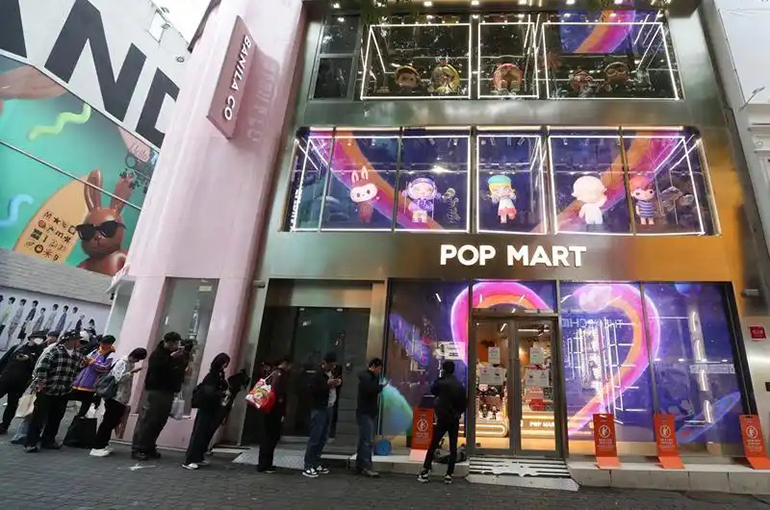
Chagee, Pop Mart International Group -- the toymaker behind Labubu -- and other Chinese consumer brands cater perfectly to the "light luxury consumption" needs of South Korea’s Generation MZ (those born between 1985 and 2006), he pointed out. This group faces major life pressures and difficulties in purchasing homes, making them willing to spend a small amount of money on such products for self-comfort, he noted.
Gen-MZ is highly sensitive to trends and prices, according to analysts. The number of 20- to 30-year-old South Korean shoppers on Chinese fast fashion platform Shein nearly tripled to 1.22 million in January from a year earlier.
South Korea's clothing imports from China jumped 8.1 percent to a record high of USD4.89 billion last year from 2024.
Thanks to China's visa-free policy, many young South Koreans can now travel more easily to Chinese cities such as Shanghai, sharing their local brand experiences online, Park said. "With the rapid spread of social media, the positive influence of Chinese brands in South Korea has been strengthened further,” he noted.
Editor: Martin Kadiev