



 Detonating the Cell’s ‘Bomb’ to Rally the Immune Army: Interview With 2026 WLF Prize Laureate in Life Science or Medicine Prof. Shao Feng
Introduction
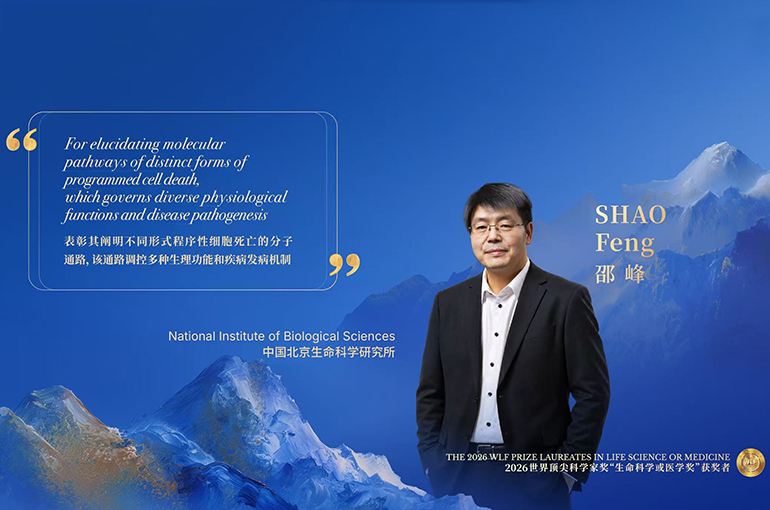
Professor Shao Feng is deputy director and senior investigator at the National Institute of Biological Sciences in Beijing and the first Chinese scientist to receive the WLF Prize Laureate in Life Science or Medicine, winning the honor this year.
Shao’s team has made landmark discoveries in innate immune recognition and pyroptosis. They showed that cells not only “shut themselves down” quietly, but they can also “blow themselves up” in a highly inflammatory form of cell death known as pyroptosis. They further identified the Gasdermin family of proteins, which form pores in the cell membrane to execute pyroptosis, revealing the molecular mechanism behind this cellular “self-detonation.”
1. The Breakthrough: ‘Pyroptotic Cells Alert the Entire Immune System to Invaders’
Q: If you were to explain the mechanism where cells “blow themselves up” in a highly inflammatory form of cell death known as pyroptosis to the general public using a simple everyday analogy, how does this cellular “self-destruction” actually help protect human health?
Shao Feng: Pyroptosis was first discovered in cells invaded by pathogenic bacteria, which is the classic setting for understanding its protective role in immunity. When harmful bacteria get inside our cells, those cells, especially macrophages, which play a key role in immune defense, detect the invasion through a variety of mechanisms and activate a program that triggers pyroptosis to “blow themselves up.” This deprives the invading bacteria of the physical and physiological space they need to survive and multiply.
More importantly, large pores open in the membrane of a pyroptotic cell -- the hallmark and central event of this form of cell death -- and through them the cell releases a range of alarm signals, including cytokines that promote inflammation and tissue repair. Many other types of cells in the immune defense system recognize and respond to these signals.
In other words, a pyroptotic cell, or a cell entering the pyroptosis process, alerts the body’s immune system to an invading enemy (here, a bacterial infection) and sends a signal to mobilize multiple immune cell types to clear the infection and repair tissue. Outwardly, this process manifests as what we call a local or systemic inflammatory response.
2. Overcoming the Bottleneck: ‘The Hardest Is Breaking Free of Conventional Thinking and Bringing Original Ideas to Scientific Questions’
Q: Your research identified the key “bomb protein” Gasdermin, which forms pores in the cell membrane and causes the cell to swell and rupture. When you first observed this process clearly under the microscope, what was the most difficult technical bottleneck, and what chain reaction did this discovery set off in subsequent cancer and anti-infective research?
Shao: Before we discovered Gasdermin D (GSDMD) in 2015, pyroptosis received very little attention. It was understood only superficially, and even partly misunderstood. The main reason was that pyroptosis, which at the time could only be observed in macrophages, requires a protease of the caspase family, namely caspase-1, so many researchers mistakenly regarded it as merely a special form of apoptosis.
However, we saw macrophage pyroptosis differently. As early as around 2009, we were actively searching for an effective research system and approach to systematically identify the molecules downstream of caspase-1 that play a key role in pyroptosis. When gene-editing technology emerged in early 2013, we immediately ran an unbiased, genome-wide gene-editing screen and identified GSDMD. We found that caspase-1, as well as caspase-11, which senses bacterial lipopolysaccharide, can cleave this molecule, and that this cleavage triggers pyroptosis.
Because our view of pyroptosis was different, once we found GSDMD, we suspected that its activated form might damage cell membranes. In one key experiment, we ectopically expressed the cleaved GSDMD fragment in a wide range of other cell types with membranes, even E. coli and yeast, and all of them died as their membranes ruptured. Then, using electron microscopy, we saw regular, intact pores assembled from GSDMD on artificial membranes.
That was a thrilling moment, because we finally understood the core mechanism of pyroptosis. After that, we easily proved a similar pore-forming function in the other four members of the Gasdermin family.
Looking back on this process, despite many technical challenges, the hardest part was breaking free of conventional thinking and bringing original, analytical ideas to scientific questions. That may well be the “bottleneck” behind many of the toughest scientific problems in many fields.
The discovery of Gasdermin executing pyroptosis as a pore-forming protein drew wide attention as soon as it was published, first in the anti-infective field. A large body of subsequent research has shown that this pathway plays a key role in defending against a range of bacterial infections. In addition, virologists have found that GSDME-mediated pyroptosis also frequently occurs during viral infection in recent years, an area that has seen significant progress.
In 2020, we also found that artificially inducing pyroptosis in tumor cells triggers a potent T cell–mediated antitumor immune response. Moreover, in tumor immunity and immunotherapy, the T cells that kill cancer cells can eliminate tumors by activating Gasdermin proteins and triggering pyroptosis, findings that quickly attracted attention from cancer researchers.
3. Lighting the Fuse to Destroy Tumors: ‘Inducing Pyroptosis in Tumor Cells May Open a Door to Treating Solid Tumors’
Q: Traditional chemotherapy and targeted therapies often aim to make cancer cells “shut down quietly” through apoptosis, yet tumors can evolve to escape. Your approach points instead to “lighting the fuse” and inducing pyroptosis in cancer cells, thereby alerting and mobilizing the body’s own immune system against the tumor. How could this strategy change cancer treatment?
Shao: On the antitumor side, pyroptosis agonists that are targeted to tumor cells by combining them with other technologies hold great promise. Antibody–drug conjugates, oncolytic viruses, and even messenger RNA technology are all possible routes, but they require further exploration by more researchers.
In addition, CAR-T cell therapy has been remarkably effective against hematologic cancers but has not yet succeeded against solid tumors. If we could engineer CAR-T cells to induce pyroptosis in tumor cells after recognition, this could open the door to CAR-T therapy in certain solid tumors.
4. Industrialization & Future Applications: ‘Defying the ‘Undruggable’ Label With Breakthroughs Expected in Multiple Diseases Within Five to 10 Years’
Q: What is the biggest bottleneck, either commercially or clinically, in turning the pyroptosis mechanism into new anti-cancer and anti-inflammatory drugs?
Shao: Going from basic research to drug development and successful clinical translation is a challenging and lengthy process. A common difficulty is pinpointing the right indication. Basic research tends to be theoretical and conceptual, while cell- and animal-level studies rarely identify the specific clinical setting for a new theory, molecular pathway, or target.
That is why disease-focused translational research using clinical samples is so important for overcoming this difficulty, and it is what our team has been working on for the past few years. Through extensive collaboration with clinicians across departments, we have observed Gasdermin activation in sepsis and inflammatory diseases affecting several organs, which has greatly strengthened our confidence in bringing new drugs to the clinical stage.
When it comes to Gasdermins as drug targets, the field faces another enormous challenge: druggability --how to develop efficient inhibitors against specific Gasdermin proteins. In small-molecule drug development, people conventionally thought proteins lacking enzymatic activity, such as Gasdermin, were essentially “undruggable,” or at least extremely challenging as drug targets. In fact, several biotech companies and multinational pharmaceutical companies gave up after years of unsuccessful effort.
The good news is that my colleagues at Pyrotech (a company Song founded) persevered and tried every possible approach. After five years of relentless work, they finally found a path to developing small-molecule drugs that target Gasdermin proteins. Small-molecule drugs that specifically inhibit GSDMD, GSDME, and GSDMB have entered, or will soon enter, human clinical trials, and some have already completed Phase I trials assessing safety and tolerability.
5. The Researcher’s Mindset: ‘Be Confident But Not Stubborn, Stay Focused, Enjoy the Research Process’
Q: You have often compared research to prospecting for gold: find a vein that no one has mined before, dig deeply and commit to it, rather than simply following what others are doing. Do you feel your team has now found its “gold mine,” and how will you continue to dig deeper?
Shao: The discovery of Gasdermin and pyroptosis might count as a “gold mine,” and there should still be plenty left to dig out. In particular, Gasdermin-perforated cells release many signaling molecules. Beyond the few we already know, what other molecules are there, and what are their functions? More broadly, what specific immunological effects do pyroptotic cells exert, and through what molecular mechanisms?
These effects should differ across contexts and cell types, so where exactly do the differences lie, and how do they map onto our understanding of disease? This could be the next “gold mine.” But without a research system and an effective approach, it’s not easy to mine right now, and we are thinking it over and exploring.
Beyond pyroptosis, our lab has also made several original discoveries in innate immunity, particularly in identifying entirely new innate immune receptors and sensor proteins. Before entering the pyroptosis field, we identified three distinct innate immune receptors for bacterial flagellin, lipopolysaccharide, and a class of bacterial toxins, and this work has become foundational to the field.
More recent findings include the ALPK1 receptor pathway that recognizes the bacterial metabolite ADP-heptose (published in 2018) and a non-canonical autophagy pathway that senses endomembrane damage (published in 2019). Intracellular innate immune recognition is a “gold mine” in its own right, and we are still digging. We have recently made some progress and obtained encouraging results, and I hope to see bigger breakthroughs in the next few years.
6. Science Relay: ‘In the Post–Molecular Biology Era, How Should Young Scientists Renew Their Research Paradigms?’
Q: As part of the “science relay,” if you were to leave an open scientific guess or question that you are most interested in recently to the next laureate, what would you ask?
Shao: The molecular biology revolution that began in the 1970s has propelled sweeping breakthroughs and progress across modern biomedical research with unprecedented force. It has also established a certain paradigm in biomedical research that has influenced several generations of scientists. In the post–molecular biology era, now and in the future, do young scientists need to discard the old and embrace the new in their research paradigms and ways of thinking? If so, how should they adapt to the defining features of this era?
7. Behind the Scenes: ‘Mind Primed With Questions and Habit of Associative Thinking Are Essential to Research’
Q: When you are thinking through an especially complex scientific problem, what kind of music do you most often listen to, or what is your favorite way to unwind?
Shao: I’m a very reflective person, and my head is full of scientific questions. When I’m in work mode, I mostly do task-oriented work that needs to get done: attending meetings, discussing projects, replying to emails, reading papers, looking things up, writing articles, and so on. In idle moments, or after work, those hard scientific problems often pop into my head, and I start thinking about them.
I like to jot down valuable information and questions as they come up, and sometimes I deliberately set aside time to go back over these notes. That way, when the right situation comes along, they are more likely to surface on their own. In short, I feel that a mind primed with questions and a habit of associative thinking are essential to research. That’s why I often tell my students to think deeply and think critically.
About the WLF Prize
The WLF Prize is initiated and organized by the World Laureates Foundation, with prize funding donated exclusively by HongShan and support from the Shanghai Lingang Science and Technology Innovation and Development Foundation. It aims to recognize and support eminent researchers and technologists worldwide for their contributions to science, and to select and support the world’s most promising young scholars.
It operates in a dual-prize framework that facilitates dialogue, collaboration, and shared growth between top scientists and top young scientists, aiming to advance global scientific and technological progress and add fresh momentum to Shanghai’s development into a global science and technology innovation center.
The prize comprises three categories: WLF Prize in Computer Science or Mathematics, WLF Prize in Life Science or Medicine, and WLF Prize for Young Scientists.
Editor: Martin Kadiev





