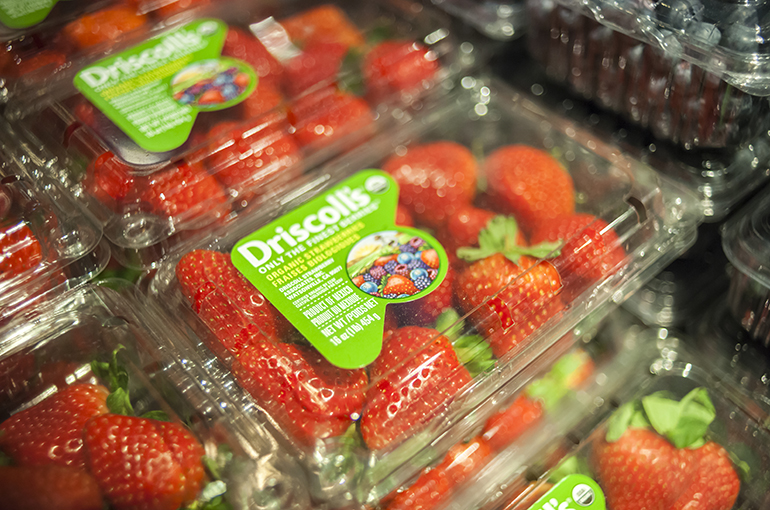
 As Driscoll’s Faces ‘Forever Chemicals’ Lawsuit in US, China Arm Says Berries Meet Country’s Safety Standards
Yicai) July 22 -- With Driscoll’s, the world's largest berry supplier, facing a consumer lawsuit in the United States for allegedly concealing “forever chemicals,” its China unit said it has ramped up sample testing of products sold in the Asian country and all results to date comply with national food safety standards.
Zhuomei Enterprise Management strictly abides by Chinese laws and regulations governing the cultivation and sale of berries, ensuring compliance with China's food safety standards, the Shanghai-based company said yesterday.
Earlier this month, a group of consumers in California, where Driscoll's is based, filed a lawsuit alleging that the firm concealed pesticide residues in strawberries from per- and polyfluoroalkyl substances, while also claiming the business uses false advertising. The litigation is ongoing.
According to documents available in the US federal court's electronic database, the laboratory tests commissioned by the plaintiffs allegedly detected eight types of PFAS pesticide residues in Driscoll's conventional strawberries, while no PFAS was found in its organic strawberries.
PFAS, commonly known as “forever chemicals,” have extremely stable carbon‑fluorine bonds that resist breakdown in the environment or the human body. Long-term ingestion is linked to health risks such as kidney cancer, damage to the thyroid, liver, and kidneys, elevated cholesterol levels, and weight gain, according to the court filings.
Responding to concerns, Driscoll’s stated on its website that cultivation of the strawberries in question complies with all US regulatory standards. Pesticide use on its berries is subject to rigorous oversight by US authorities, with regulators setting strict limits for pesticide residues in foodstuffs while continuing to monitor emerging risks, including PFAS, it stressed.
Driscoll's has long sold blueberries in China, with production bases for them and strawberries in Yunnan, a province in the southwest of the country.
Amid the controversy surrounding the lawsuit, some consumers report being unable to buy Driscoll’s products through various channels in China. But its produce remained on sale across major domestic e-commerce platforms as of late yesterday, with only a few showing temporary restocking notices.
PFAS detected in strawberries could stem from pesticides, or contaminated soil and irrigation water, an academic researcher specializing in pesticides told Yicai. Strawberries are prone to numerous pests and diseases, requiring pesticide use for effective pest management, the person added.
Mandatory pre-harvest intervals apply to pesticide use, yet some farmers repeatedly apply agrochemicals without observing these waiting periods, which may lead to elevated PFAS residues, the researcher pointed out.
Editor: Martin Kadiev