



 Fossil-Fuel Carmakers Will Not Go the Way of Nokia, Head of Volvo China Says
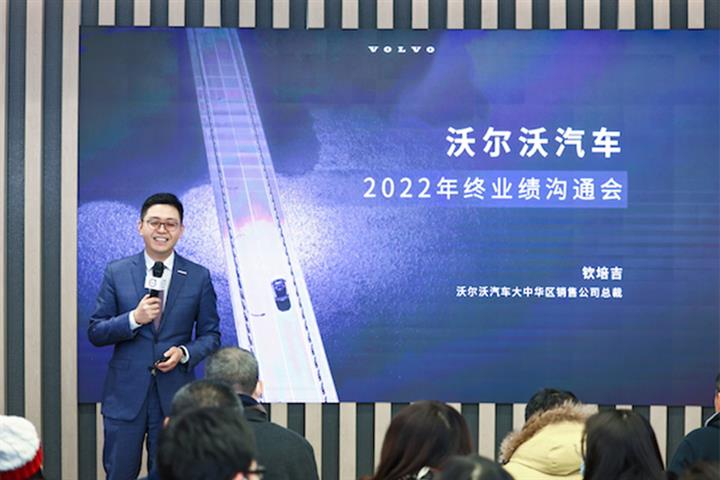
(Yicai Global) Jan. 6 -- All conventional auto manufacturers must accelerate electrification, including Sweden’s Volvo, but they will not become obsolete like Finnish mobile phone maker Nokia, the president of Volvo Cars China Sales told Yicai Global in a recent interview.
The auto industry will not change as drastically as the cellphone sector did after the emergence of US tech giant Apple, because all car companies know that electrification is inevitable, Qin Peiji said.
Also, durable consumer goods such as vehicles are different from ones that are easily replaced, as they can be used for a long time, which gives original equipment manufacturers more time to upgrade.
However, in the face of electrification, the market for gasoline-powered cars will indeed be compressed, leaving them less room, Qin said.
Sales of fossil-fuel autos tumbled 14 percent in the first 11 months of 2022 year on year to 13.3 million units, according to data from the China Passenger Car Association. While sales of new energy vehicles doubled to 5 million units.
Volvo sold 615,000 autos last year, a drop of 12 percent from a year earlier, due to supply chain issues and a shortage of parts, Qin said. Just over a quarter of these sales were on the Chinese mainland. Although the proportion of NEV sales was small, they still tripled year on year.
Luxury carmakers such as Mercedes-Benz, BMW and Audi are all going electric. Audi has said it will not introduce any new models with internal combustion engines from 2026. While all Mercedez-Benz’s newly released model architectures will be pure electric from 2025. And BMW expects to have an output of two million electric vehicles worldwide by 2025.
And Volvo is not far behind. The Gothenburg-based company plans to release four new pure electric models this year and will step up the digitalization of sales and service. It is preparing to achieve full electrification in 2025, when pure electric cars will account for half of its sales. In 2030, it will transform into a pure electric luxury car company.
“NEV startups and conventional car firms are not rivals in my view,” Qin said. “Rather it is a matter of seeing who can best meet market demand and who can upgrade faster.”
Editor: Kim Taylor





