



 [CIIE] France’s Biospringer by Lesaffre Draws From Chinese Food Brands as It Helps Them Go Global
(Yicai) Nov. 9 -- Biospringer by Lesaffre is supporting Chinese food companies in expanding overseas. During this process, the food ingredient business under French fermentation giant Lesaffre is also learning from them and their experience.
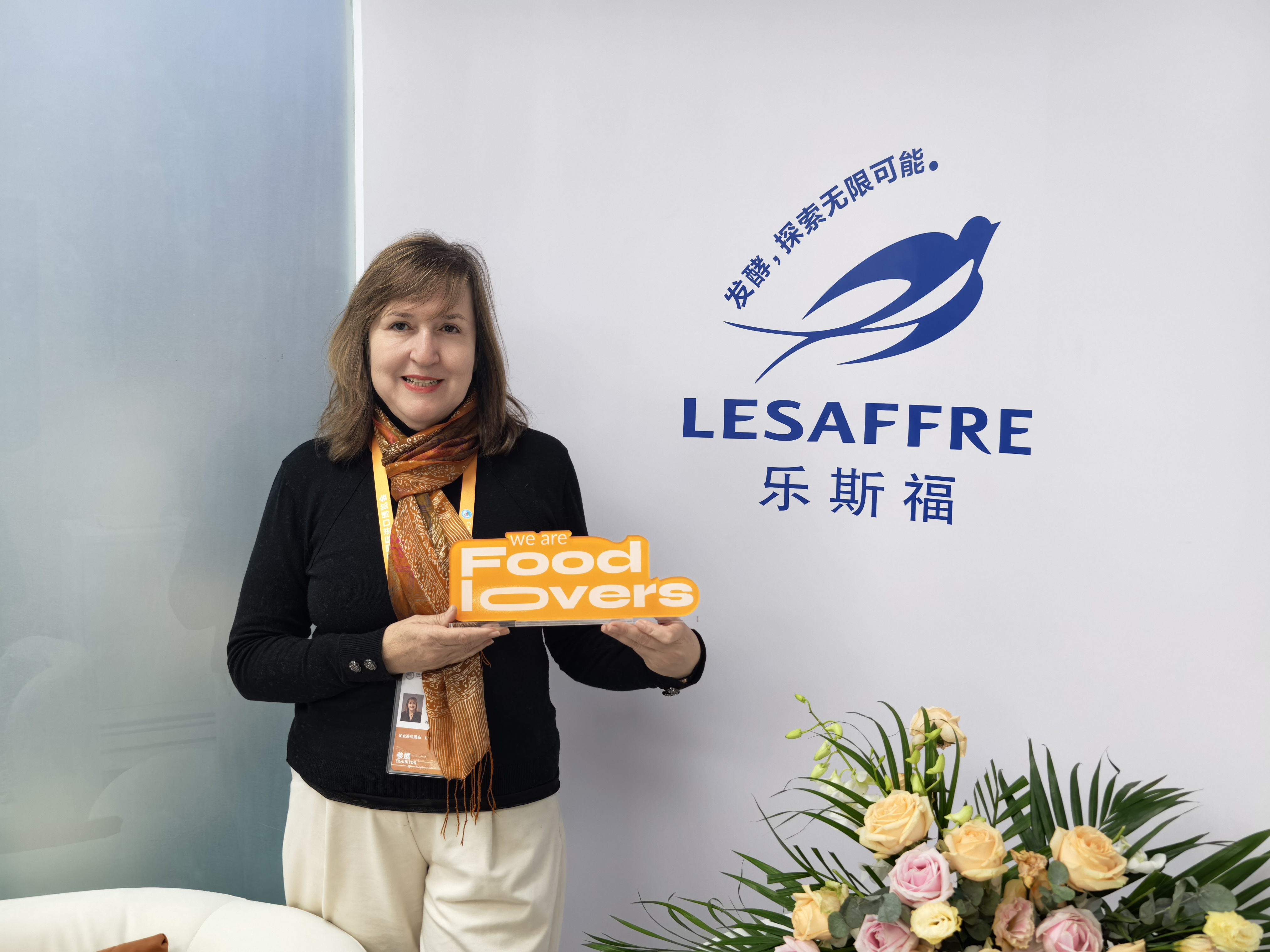
Chinese food brands going global need ingredient suppliers with production capabilities close to their target markets, allowing them to preserve familiar flavors while responding quickly to changes in demand, Carmen Arruda,Global General Manager of Biospringer, told Yicai at the Ninth China International Import Expo.
Biospringer makes yeast extracts and other fermentation ingredients, with production bases in Asia, Europe, North America, and Latin America, allowing it to supply ingredients locally and help Chinese brands recreate “the same taste from China” while adapting formulations to local preferences, Arruda explained.
Local production can also shorten lead times when a product takes off on social media. Demand can surge beyond manufacturers' forecasts, making it difficult to rely on ingredients shipped from China, she noted.
Asian cuisine, especially Chinese cuisine, is becoming very popular on the global stage because it combines taste, health, and nutrition, Arruda said, adding that this is the perfect moment for Chinese food companies to expand worldwide.
The overseas Chinese restaurant market has grown at an annual rate of about 7 percent in recent years and is expected to reach USD459.7 billion in 2027, Beijing News reported, citing a report released by the World Federation of Chinese Catering Industry in May. About 200 Chinese restaurant brands now operate abroad, the report noted.
The rising global popularity of Chinese food brands is also creating opportunities for ingredient suppliers to exchange recipes and develop new applications across different markets.
Arruda described Biospringer's relationship with Chinese food companies as "a partnership from both sides." Its Chinese local teams develop dishes for regional cuisines, including Vietnamese and Cantonese food, and share them with a global team that has a broader view of different markets, which then passes ideas to other regions, carrying food from China to other markets.
"China is more advanced in some areas compared to other regions, other countries," Arruda said. At a recent tasting session, Chinese chefs used yeast extract in a truffle cake. “It was amazing what they can do,” she pointed out, adding that such experimentation draws from China's diversity and openness to new experiences.
Local research is essential, she said. “We cannot bring just a scientific mindset from Europe or the United States to China because the research and development ecosystem here is important and knows what the local need is.”
Biospringer has an innovation department in China and an R&D center in Laibin,in Guangxi Zhuang Autonomous Region. The company has also transferred production to China. Springer Umami 2020, a premium range showcased at this year's CIIE, was previously made only overseas but is now produced in China, after its core technology was transferred locally.
New Formulations Driven by Healthier Food Demand
Chinese consumers are changing their expectations around health, nutrition, and taste, with growing demand for clean labels, natural ingredients, fewer additives, and familiar ingredients, Arruda said.
Monosodium glutamate has traditionally been used in products such as noodles and soy sauce, but yeast derivatives can offer a natural, clean-label alternative, she explained. Biospringer has helped customers replace MSG over the past five years.
Reformulation involves more than taste. Reducing salt, sugar, or fat can affect a food's texture, how its ingredients bind together, and its shelf life, Arruda noted. This means that manufacturers “need to completely rethink the food.” Yeast derivatives can help maintain umami and mouthfeel when salt or MSG is reduced.
Arruda also cited consumers' concerns about highly processed food. Lesaffre sees fermentation, which is an ancient, minimally processed technology, as one response, she pointed out. In bread, selected bacteria can inhibit mold growth by outcompeting mold, reducing the need for synthetic preservatives.
Biospringer is also expanding into “taste modulation, not just taste creation,” Arruda said. In late October, it announced the acquisition of ModuMaxTM, a natural taste modulation technology developed by dsm-firmenich. The company plans to launch ModuMaxTM at next year's CIIE, according to Arruda.
Moreover, Biospringer is developing protein and fiber ingredients for China, where microbial protein is an advanced area, she added.
Biospringer plans to continue investing and expanding. “We continue to grow and invest,” Arruda said. “We want to double our business.”
Editor: Futura Costaglione





