


 Huawei, CXMT Challenge South Korean Rivals in Advanced Memory Chip Research
(Yicai) Nov. 26 -- China's Huawei Technologies and ChangXin Memory Technologies are pushing into advanced memory chip technologies, stepping up competition with South Korean industry giants Samsung Electronics and SK Hynix ahead of one of the world's leading chip design conferences.
The four chip developers will showcase their latest research at the 2027 International Solid-State Circuits Conference (ISSCC), held in San Francisco next February. The ISSCC is a major international chip design conference organized by the Institute of Electrical and Electronics Engineers Solid-State Circuits Society, a professional body specializing in integrated circuit technology.
The conference agenda shows that Chinese chipmakers are expanding their research into high-bandwidth memory (HBM) architectures, vertical gate transistors, and wafer-level bonding, reflecting a broader shift in global competition toward advanced memory cell design, interface technologies, and chip packaging as artificial intelligence accelerators demand greater memory bandwidth and capacity.
Huawei will unveil its research into a customized HBM architecture at the conference. The Chinese telecoms giant's research paper, titled "A 64-Channel 4096-DQ Custom HBM with Memory Controllers and 5-Layer Wafer-on-Wafer Hybrid Bonding," describes a memory architecture that integrates memory controllers and uses five-layer wafer stacking to support high-bandwidth data transmission.
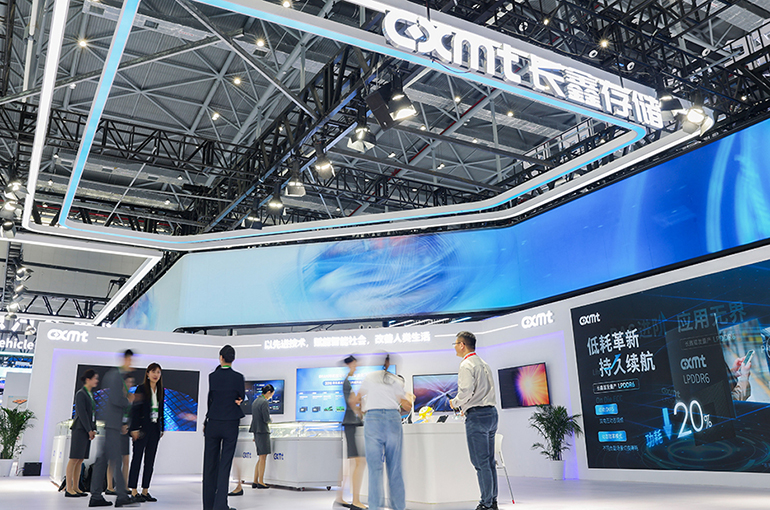
CXMT, meanwhile, will present research on 32-gigabit double data rate 5 (DDR5) memory featuring vertical surround-gate transistors, designed to improve memory density, and wafer-to-wafer hybrid copper bonding, an advanced technique for directly connecting stacked semiconductor layers. The company will also present separate research on low-power double data rate 6 (LPDDR6) interface technology.
South Korean chipmakers are also pushing the performance limits of HBM. Samsung will present a 48-gigabyte HBM4E memory chip, an enhanced version of HBM4, with a per-pin data transmission rate of 17 gigabits per second.
Editor: Emmi Laine