


![[In Photos] New AI Economy Comes to Life at 2026 Inclusion Conference in Shanghai](https://img.yicaiglobal.com/src/image/2026/09/130062838843077.jpg) [In Photos] New AI Economy Comes to Life at 2026 Inclusion Conference in Shanghai
[In Photos] New AI Economy Comes to Life at 2026 Inclusion Conference in Shanghai(Yicai) Sept. 10 -- The 2026 Inclusion Conference on the Bund, themed "Building the Artificial Intelligence Economy Together," has kicked off in Shanghai with over 300 companies gathered in a 15,000-square-meter exhibition area to show the latest product advancements and highlight AI's transition from "being able to generate" to "being able to act."
The four-day exhibition, which opened at the Huangpu World Expo Park yesterday, highlights that AI has fully transitioned from conceptual demonstrations to real operational use, with embodied intelligent robots moving out of the laboratory to perform sorting and assembly tasks in retail pharmacies and workshops.
In addition, AI agents are being integrated into catering and public service sectors, while small and micro enterprises can leverage lightweight AI agents to achieve cost-effective operational upgrades. The infrastructure for a new AI economy that covers the entire value chain is taking shape.
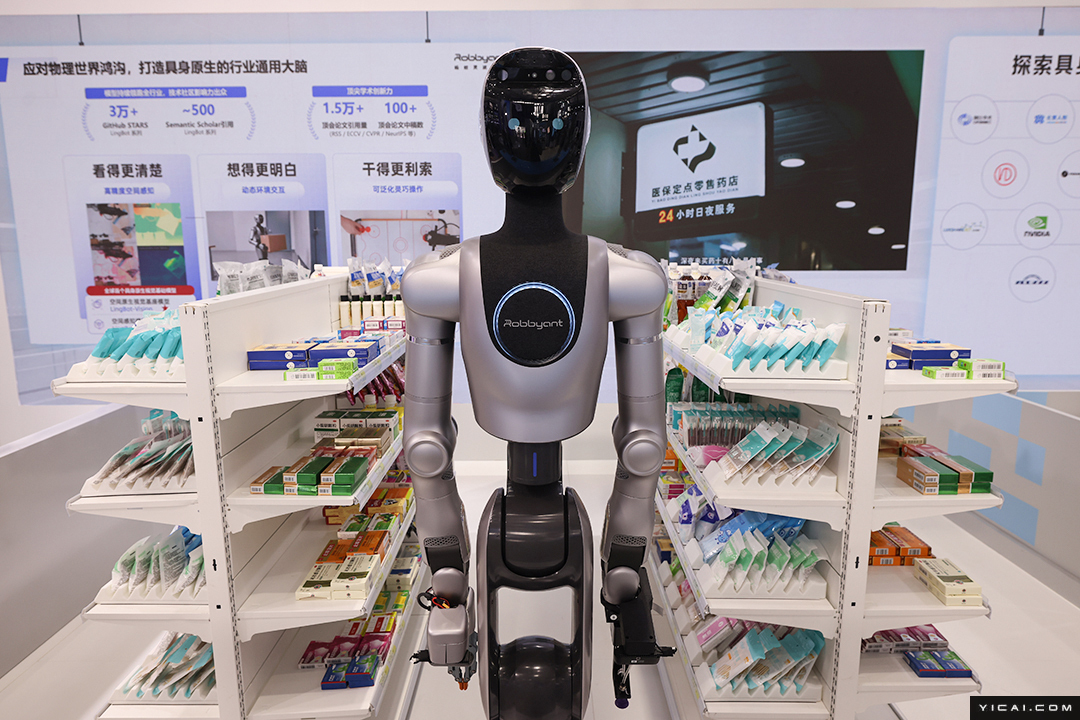
Pic. 1: Robbyant's service robot awaits guests at a pharmacy. Equipped with the universal brain developed by the embodied AI unit of Ant Group, the robot can autonomously sort drugs in aisles as narrow as 80 centimeters without requiring changes to the store's layout, significantly reducing the cost of automation upgrades, improving operational efficiency for chain pharmacies, and enabling unattended nighttime operations.
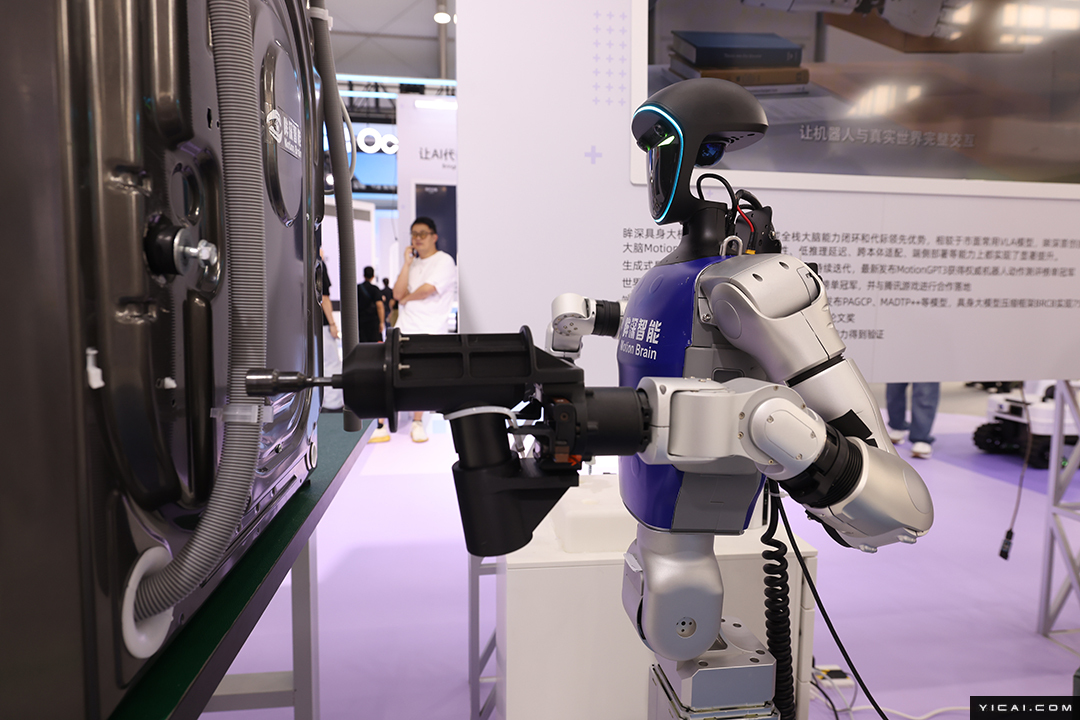
Pic. 2: A wheeled dual-arm robot powered by Fudan University's MotionGPT model with industrial-grade autonomous operation capabilities working on a washing machine. It can accurately identify, grab, position, and tighten bolts and their assembly-hole positions.
Pic. 3: A robot from KEENON Robotics folding clothes. The android has been deployed in commercial laundry scenarios, collaborating on the entire process of garment retrieval, equipment operation, and clothing folding.
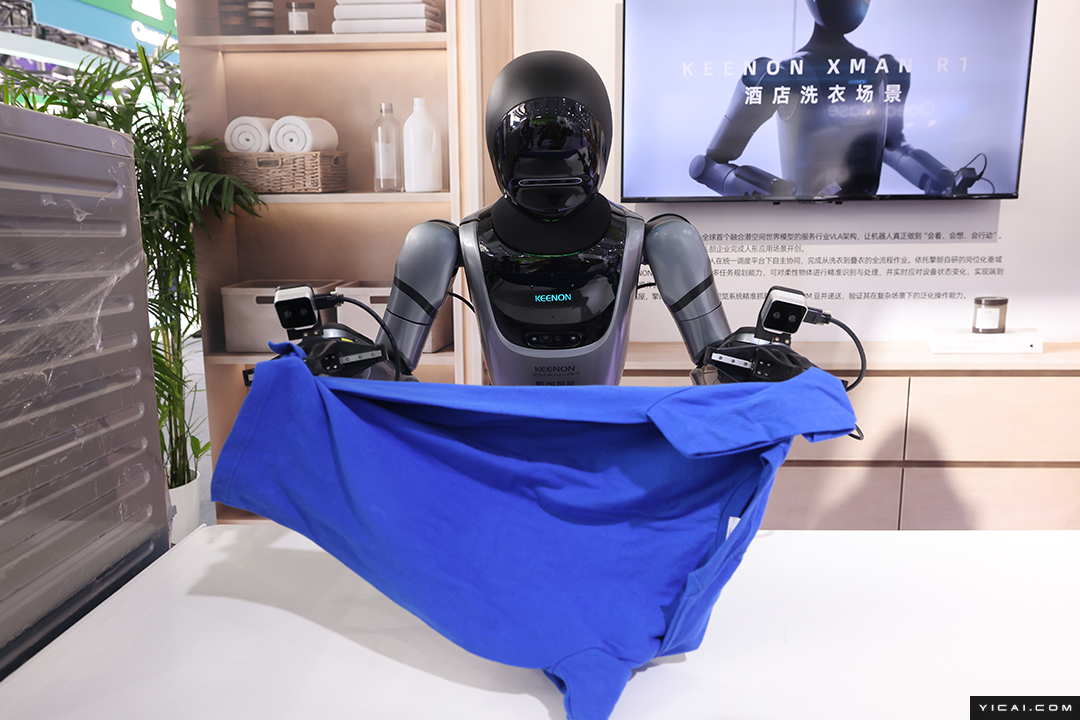
The commercial laundry market has long faced significant labor shortages during peak seasons and a high proportion of repetitive tasks, among other challenges. The large-scale deployment of humanoid robots will likely improve the productivity per worker in the sector.
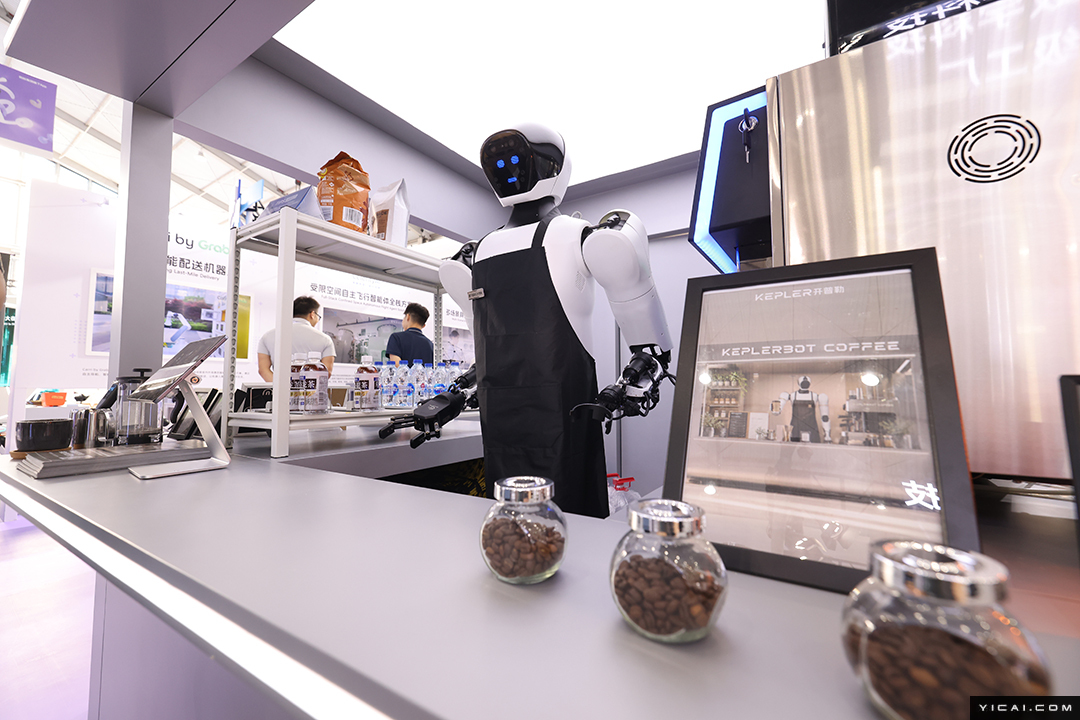
Pic. 4: A humanoid robot from Kepler Robotics at a small commercial coffee shop. It can autonomously grab a cup, prepare a beverage, and clean across various scenarios. The robot has been optimized for the spatial constraints of small stores, providing technical support to reduce costs and expand the network of unmanned outlets for coffee chains at very low renovation cost.
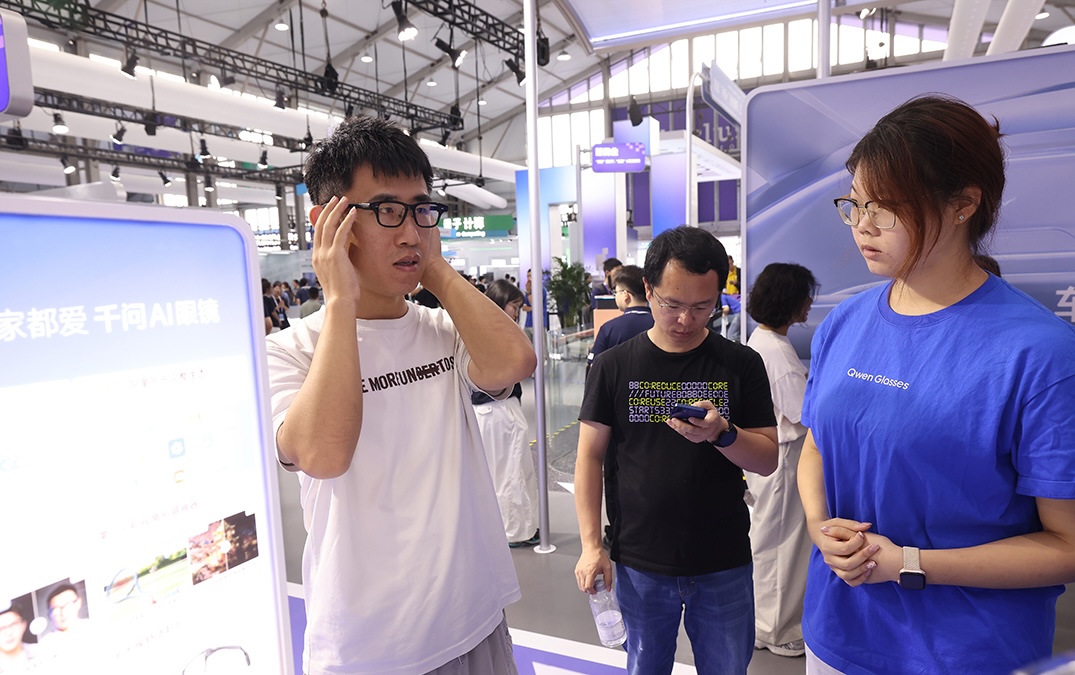
Pic. 5: A visitor tries the Qwen AI glasses, equipped with intelligent service capabilities that let users look up nearby dining discounts and vouchers. The product aims to break through phones' operational limitations and create a new traffic entry point for local lifestyle platforms.
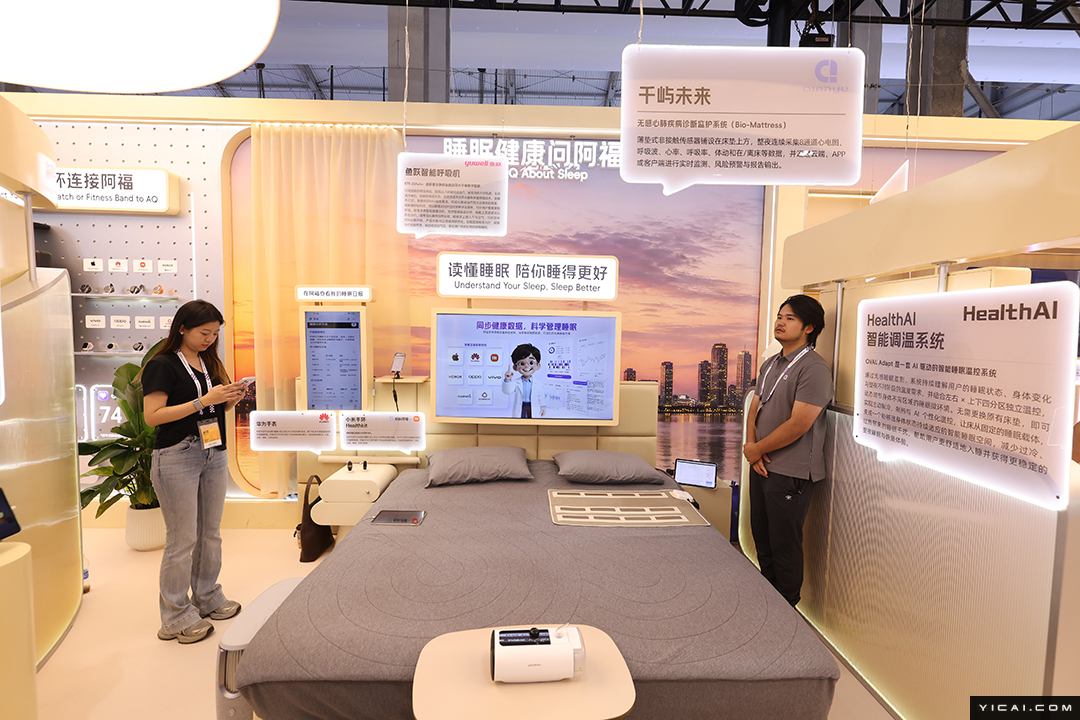
Pic. 6: OVAL's smart temperature-controlled bed cover, which uses AI algorithms to adjust four-zone temperature control based on real-time sleep data and environmental variables, catering to the comfort needs of two users sharing the same bed.
Editor: Martin Kadiev