



 Innovation Is China's Main Draw for Foreign Patients Over Cheaper Asian Rivals, Insiders Say
(Yicai) Oct. 29 -- Advanced treatments, medical devices, and other healthcare innovation are the main pull for foreign patients coming to China for treatment, though the country cannot match other Asian countries on price, according to several insiders.
Most foreign patients come to China for advanced treatments such as chimeric antigen receptor-T cell therapy, with price just one consideration, Men Shaohua, operations director at the Children's Hospital of Fudan University, said at a forum hosted by healthcare provider SinoUnited Health in Shanghai on Oct. 26. Treatment costs in Thailand are about a third lower than in China, with those in India down a further third, he estimates.
SinoUnited Health has treated more than 40 overseas CAR-T cell therapy patients from 12 countries and regions at an estimated cost of one-third to one-quarter that in the United States, founder and Chief Executive Kathy Shi pointed out.
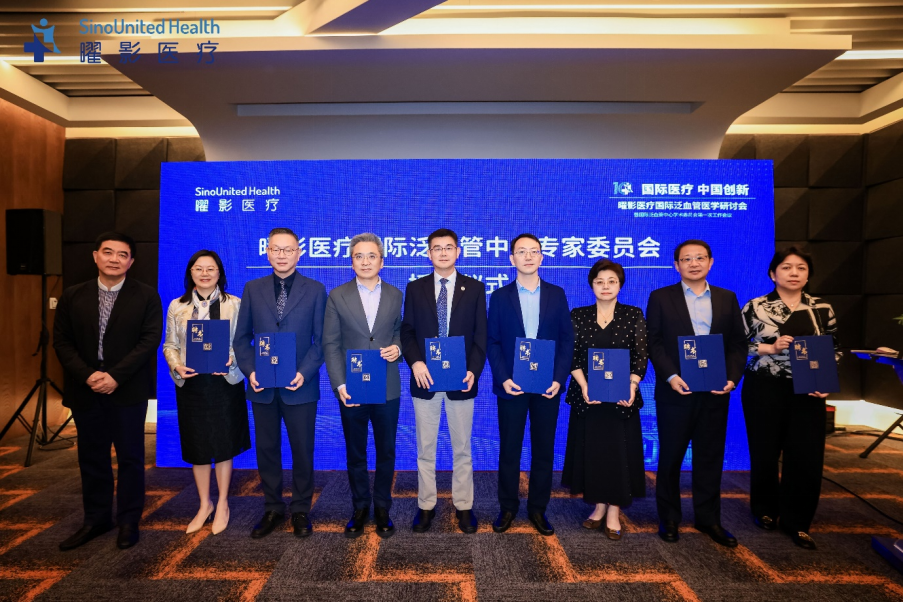
At the forum, SinoUnited Health officially launched its international pan-vascular second medical opinion service, covering cardiovascular, cerebrovascular and peripheral vascular conditions, as well as metabolic and systemic risks. The service offers medical record reviews, remote multidisciplinary consultations, treatment coordination, English-language post-treatment reports and wearable-device-based follow-up after patients return home.
Demand keeps growing, with Li Feng, founder and CEO of cross-border medical services platform Yilian Medical, who has 15 years of experience in inbound medical services, said that he received a message from a Malaysian patient seeking surgery at the forum.
From Cases to Devices
China's large caseloads also feed into device development, with Zhongshan Hospital performing more aortic dissection procedures than any other hospital worldwide, having a patient cohort of more than 7,000, said Chief Physician of Vascular Surgery Fu Weiguo.
The volume helped reveal a problem others had missed, with some patients dying suddenly after receiving stent grafts, Fu noted, adding that the grafts could rub against the swollen aortic wall, causing a new tear. Foreign stents were designed for aneurysms, where the wall is largely normal, he said.
Fu's team published the finding in Circulation in 2009 and worked with manufacturers on design changes, including tapered stents. Several companies, including US-based Gore, also reduced the spring-back force of their stents, Fu pointed out.
Fu also turned clinical needs into tools. Inspired by a gastroscope that bends 360 degrees, he worked with Shenzhen-based Lifetech Scientific for eight years to develop the FuStar steerable sheath, which has 510(k) clearance from the US Food and Drug Administration.
The team and Lifetech later developed Futhrough, which punctures a stent graft to reopen the subclavian artery and spares patients a bypass operation, with no comparable product existing before, according to Fu. Foreign doctors training at Zhongshan were more interested in specialized tools such as steerable sheaths and puncture needles than in stents, which are widely available, he added.
In addition, Pan Wenzhi, a cardiologist at Zhongshan Hospital, developed ValveClamp, the world's first transapical mitral valve clip, and RunFlow, China's first aortic valve dilation balloon that does not require interrupting blood flow. Both are already available on the market, while ReAces, the world's first atrial septal occluder that can be punctured through, has been submitted for approval.
Capital and policy support help accelerate medical device development and commercialization, Pan said. “Without them, we could only make small samples in our labs to play around with. There would be no way to commercialize them.”
Remaining Hurdles
However, barriers remain. Not every foreigner can afford treatment, said Chen Dan, director of Zhongshan Hospital's international medical department.
Payment terms are another hurdle, the head of a European federation of overseas Chinese medical and health groups pointed out. Foreign insurers are used to monthly settlement, while major Chinese hospitals ask for deposits up front, creating friction in payment arrangements, the person added.
In addition, information is inconsistent, with some new service providers using artificial intelligence to generate inbound medical websites, a few of which get Chinese hospital names wrong, said Li Feng, founder of cross-border medical platform Zhiyuan Yilian. Needs also differ by market -- Southeast Asian patients focus on budget, while those from Europe and the US scrutinize what a price quote does and does not cover, Li added.
Inbound medical services represent the image of Chinese healthcare and should not be treated as a get-rich-quick business, Li stressed.
Editor: Martin Kadiev





