


 Nearly 30 Chinese Robotics Firms Go Under in Last Two Years Despite Rapid Industry Growth
(Yicai) Nov. 25 -- At least 29 Chinese robotics companies have gone bankrupt, been dissolved or ceased operations since 2025, highlighting the challenges of turning technological development into commercially viable businesses despite the industry’s rapid growth, according to Yicai research.
The collapsed firms include several once-promising industry names, such as Dataa Robotics, Smorobot and Wujing Dynamics, according to Yicai’s analysis of data from business information platform ITjuzi and corporate database Qichacha. The latter reportedly ground to a halt just eight months after its establishment.
Most followed the same trajectory. They secured multiple rounds of funding from prominent venture capital firms or major technology companies after their launch and saw their valuations rise steadily. Some even achieved unicorn status, only to fail along the way.
One example is Infore Robotics and Automation, an industrial robotics company founded in March 2020 by Shen Gang, who holds a doctorate in mechanical engineering from the Tokyo Institute of Technology and who serves as the company’s chief executive officer.
The firm was incubated by Infore Group, which belongs to He Jianfeng, the son of Midea founder He Xiangjian. Infore Robotics attracted investment from several institutional investors, including entities affiliated with TikTok operator ByteDance and on-demand services giant Meituan. Its valuation reached USD500 million just 10 months after its founding.
However, the firm's products failed to achieve sales at scale and Infore Robotics entered bankruptcy liquidation proceedings in July this year. The law firm appointed to act as administrator of the liquidation recently told Yicai that the creditors' meeting held in October had yet to reach a conclusion. The company's outstanding liabilities are still being assessed and another meeting will be held later, it added.
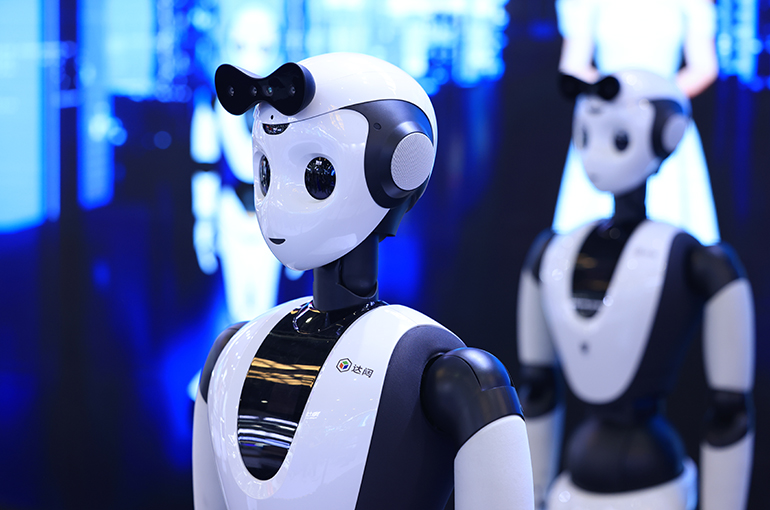
Other robotics firms have encountered different challenges. For example, Shanghai-based Dataa Robotics, which positioned itself as the world's first cloud-based robot operator, was unable to establish a viable market and generate sustainable revenue at scale, eventually leading to a cash-flow crisis. While Smorobot managed to sell its swimming pool-cleaning robots, but was weighed down by delays in collecting payments from customers.
Embodied artificial intelligence remains at an early stage of development, said Shen Meng, executive director of Chanson Capital. It will take considerable time for firms to deploy the technology in commercial applications and generate revenue in phases.
Another wave of robotics companies could face closure in the period ahead, said Wang Han, a partner at Laurel Ventures.
For a firm seeking to achieve long-term sustainability, it must be able to translate technology and products into measurable productivity, said a senior executive at a leading robotics company. This means delivering tangible operational value to customers while also taking total operating costs into account.
Editor: Kim Taylor