



![[Opinion] AI Could Add Up to 0.5 Percentage Point to China’s GDP Growth in 2025–2026](https://img.yicaiglobal.com/src/image/2026/06/121413956891333.jpg) [Opinion] AI Could Add Up to 0.5 Percentage Point to China’s GDP Growth in 2025–2026
[Opinion] AI Could Add Up to 0.5 Percentage Point to China’s GDP Growth in 2025–2026(Yicai) June 4 -- Artificial intelligence is expected to boost China’s economic growth by between 0.3 and 0.5 percentage points in 2025 and 2026, according to estimates. This impact comes not only from greater investment in AI, but also from the expansion of related industries, spillover effects across upstream and downstream sectors, and stronger exports of AI-related products.
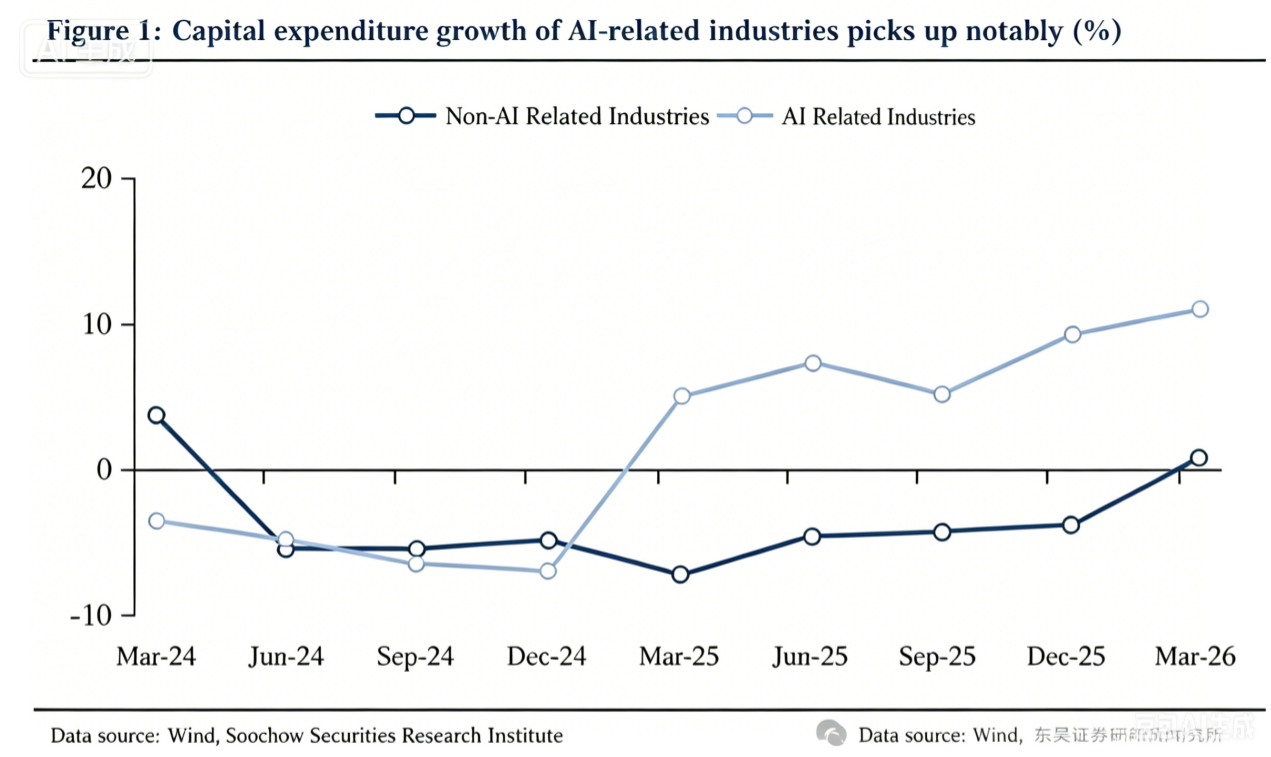
From the perspective of capital investment, Chinese tech firms are continuing to hike their investment in AI and are constantly raising their expectations for the growth of future AI spending.
Last year, capital expenditure, or spending on long-term assets that support business growth, among listed companies in AI-related industries surged 9.3 percent year on year, a gain of 16.3 percentage points from the year before. In the first quarter, growth expanded 11.1 percent, significantly higher than capex growth in non-AI industries.
The contribution of AI to economic growth is even more evident in its broad enabling effect on traditional industries. For example, the integration of AI with mainstream consumer goods is creating new consumer demand.
As AI model compression technology matures and edge computing capabilities improve, new devices such as AI phones, AI computers, and AI glasses are being adopted more quickly.
Boosted by the adoption of AI, shipments of personal computers, tablet computers, and smartphones in China are expected to achieve compound annual growth rates of 2.6 percent, 1 percent, and 1.3 percent respectively from 2026 to 2030, according to US market intelligence firm International Data Corporation.
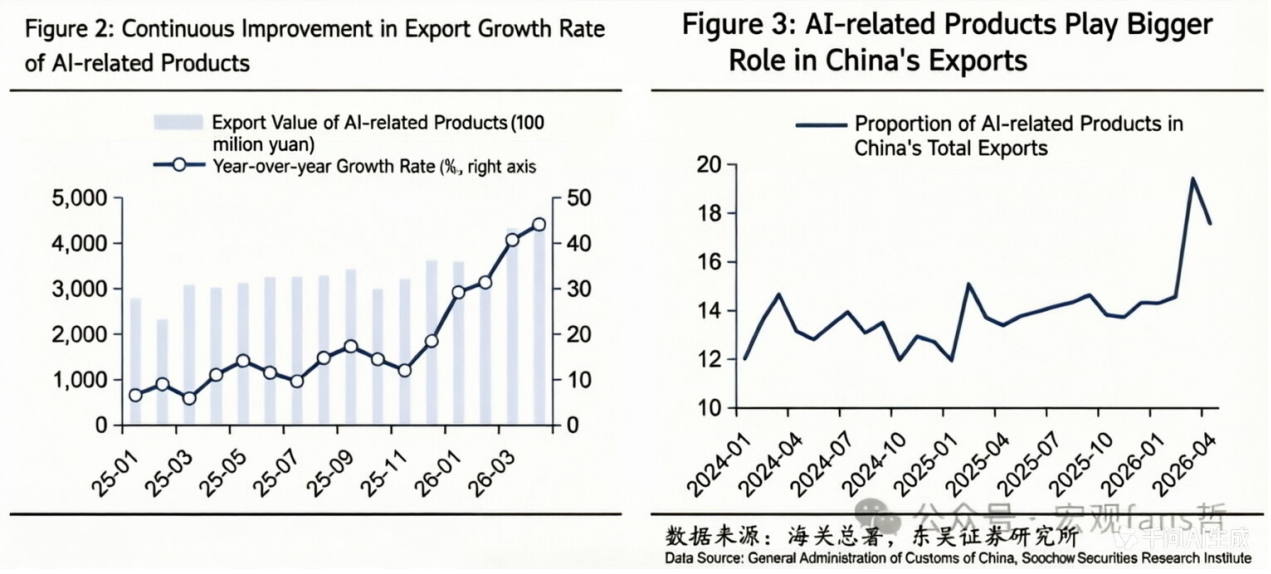
In addition, global expansion in AI investment is increasing demand for related products, further strengthening China’s competitive edge in exports. In the first four months, the value of China’s exports of AI-related products surged 37 percent from a year earlier to CNY1.5 trillion (USD221.4 billion), contributing 44 percent of total export growth over the period.
In the United States, some institutions calculate AI’s impact on economic growth using two main factors, namely AI-related investment’s impact on GDP growth and AI-related imports’ contribution to GDP growth. Using this method, AI is estimated to have added about 0.3 percentage point to China’s GDP growth last year, and the figure is expected to remain the same this year.
From an input-output perspective, AI is estimated to have contributed approximately 0.4 percentage point to China’s GDP growth last year. If China’s core AI industry maintains a high growth rate of between 20 percent and 30 percent this year, AI’s contribution to GDP growth could reach around 0.4 and 0.5 percentage points.
AI’s short-term impact on economic growth may be relatively limited, but in the long term it will provide strong support to the economy, according to some institutions. By 2035, China’s potential GDP growth rate could surge by 3.5 percentage points compared with a scenario without AI.
The author, Lu Zhe, is chief economist at Soochow Securities.
Editors: Dou Shicong, Kim Taylor





