



 Over Half of Chinese Provinces See First-Half Trade Grow, Led by Three Autonomous Regions
(Yicai) Aug. 4 -- Nineteen of China's 31 provincial-level regions logged growth in imports and exports in the first six months of the year, with that of Xinjiang Uygur Autonomous Region, Inner Mongolia Autonomous Region, and Guangxi Zhuang Autonomous Region surging the most.
The international trade of eight regions rose by more than 10 percent each in the six months ended June 30 from a year earlier, with Shanghai the only large provincial-level region reporting an 11.4 percent increase, according to official figures. Of the regions posting a drop, five were among the top 10 in China by total amount.
Xinjiang ranked first, with its trade in goods surging 65 percent to CNY149.6 billion (USD20.9 billion), followed by a 43 percent jump by Guangxi to CNY339.1 billion. Inner Mongolia's trade rose 33 percent to CNY90.3 billion (USD12.6 billion) to rank third.
The imports and exports of the three autonomous regions grew the fastest among China’s provincial-level regions and reflected the main destinations of the Chinese mainland's external trade: the Association of Southeast Asian Nations, Central Asia, and Russia.
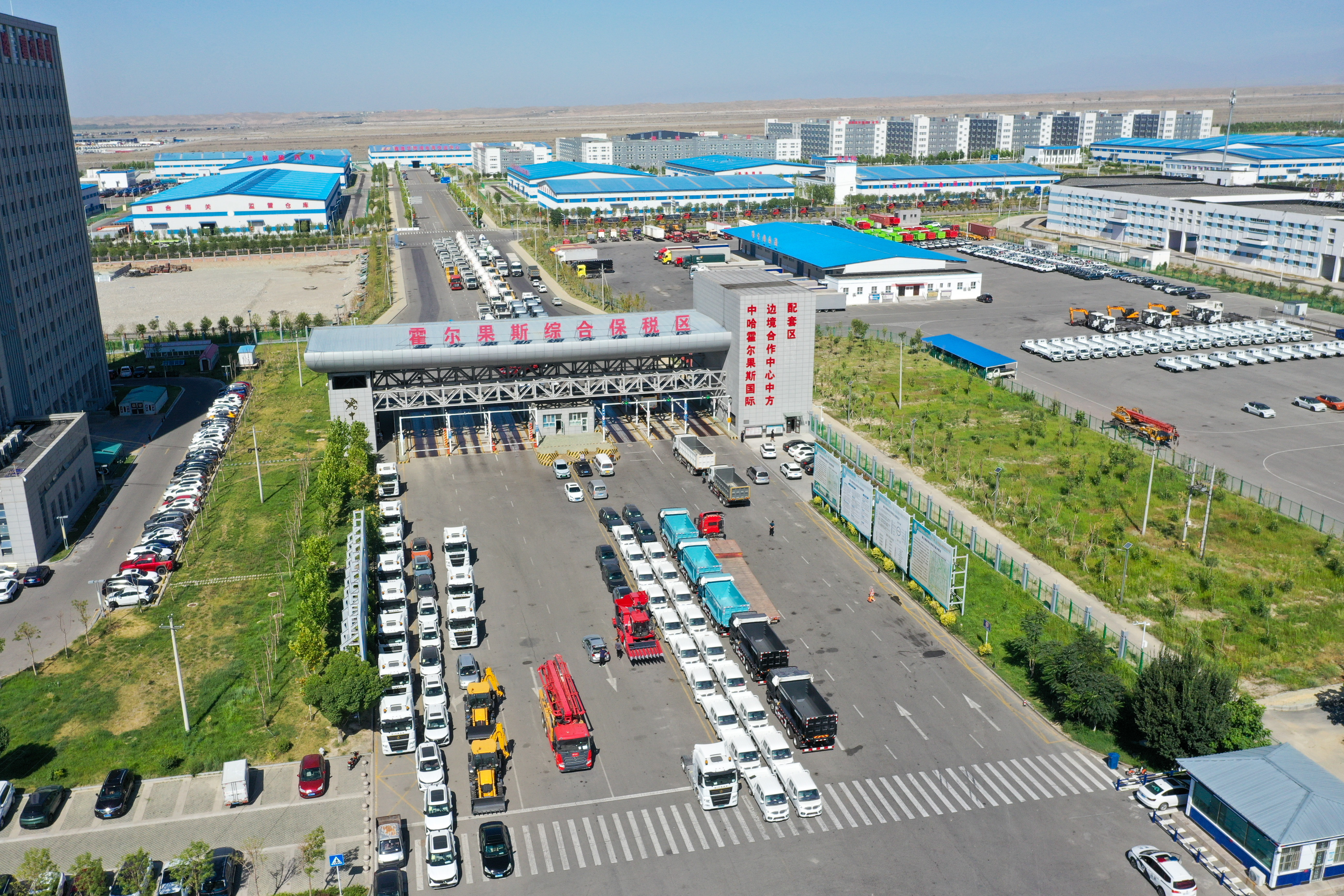
Five central Asian countries made up the largest share of Xinjiang's trade over the period, said Li Qinghua, deputy head of Urumqi Customs District. Xinjiang's trade with these nations climbed 75 percent to CNY119.7 billion, accounting for 87 percent of its total imports and exports involving countries along the Belt and Road Initiative, Li noted.
Border trade also continued to play a role in stabilizing Xinjiang’s trade, Li added. Imports and exports through small border trades shot up 85 percent, accounting for 62 percent of the autonomous region’s total and boosting its foreign trade growth by 47 percentage points.
The fast increase in trade between China and ASEAN has benefited Guangxi’s flows, especially after China and SE Asian regional union became each other's biggest trading partners in 2020, said Lei Xiaohua, deputy director at the Southeast Asia research institute of the Guangxi Academy of Social Sciences.
Many of China’s western provincial-level regions use Guangxi as an avenue for cooperation with ASEAN, which has also boosted development of the autonomous region's external trade, Lei added.
Against this backdrop, the recovery of border trade played a positive role in the growth of Guangxi's imports and exports. Sales and purchases by border residents and small cross-border transactions soared 126 percent to CNY62.6 billion in the first half, notching up double-digit growth from February to June.
According to data from Nanning Customs District, the imports of Chongzuo, a city adjacent to Vietnam, surged 131 percent to CNY111.8 billion to equal more than 30 percent of Guangxi's total.
Inner Mongolia's international trade along the BRI increased significantly, jumping 55 percent to CNY61.7 billion in the six-month period, accounting for 68 percent of its total, data from the Hohhot Customs District showed. The region’s Mongolia trade soared 92 percent to CNY32.6 billion, while that with Russia jumped 85 percent to CNY16.1 billion.
China’s overall first-half trade rose 2.1 percent to CNY20.1 trillion (USD2.81 trillion) from a year ago, according to data from the General Administration of Customs. Exports rose 3.7 percent to CNY11.46 trillion, while imports fell 0.1 percent to CNY8.64 trillion (USD1.21 trillion).
Editors: Shi Yi, Martin Kadiev





