


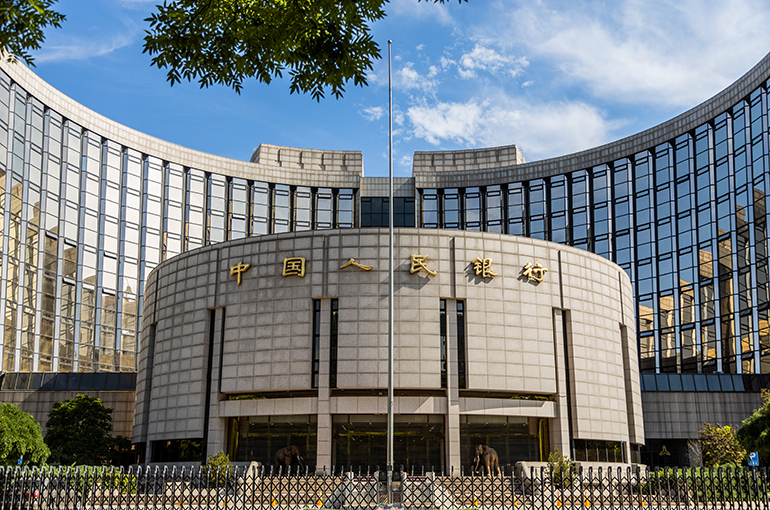
 PBOC’s View on the RMB Exchange Rate
(Yicai) Oct. 8 -- The RMB exchange rate, as an important price in the financial market, has been a subject of attention for a lot of people, with increasing discussions recently. Against this backdrop, the People’s Bank of China (PBOC) hereby shares its view on the RMB exchange rate as follows:
● China adopts a managed floating exchange rate regime based on market supply and demand with reference to a basket of currencies. Market forces play a decisive role in determining the RMB exchange rate.
● The RMB exchange rate has floated in both directions over the past two decades. It has experienced several cycles of appreciation and depreciation since 2010, with more pronounced two-way floating and greater flexibility.
● China’s trade growth is driven by its growing industrial competitiveness in the global market. China has no need or intent to gain competitive advantages through currency devaluation, nor has it ever resorted to competitive devaluation.
● Exchange rate dynamics are driven by a number of factors including economic growth, monetary policy, financial market, geopolitics and sudden shocks. There is no straightforward relationship between exchange rate and current account.
● There is no well-established methodology for evaluating the equilibrium level of exchange rates internationally. Therefore, citing idiosyncratic assessment findings as “official evidence” for RMB undervaluation is a misinterpretation and misuse of those findings.
● Global economic imbalances are deeply intertwined with shifting global division of labor, inherent flaws in the international monetary system, and persistently high fiscal deficit and high consumption in some countries. Addressing global imbalances requires collective actions from all stakeholders. Attributing one’s decline in industrial competitiveness, weakened fiscal discipline, and complicated structural issues simply to others’ exchange rates is nothing but shifting the responsibility for adjustment onto others and dodging accountability.
● China has long been a contributor to global economic rebalancing. During the 15th Five-Year Plan period, China will stay the course in transforming its economic growth model, expand domestic demand, improve business environment, deepen the high-standard opening up, and pursue a more open, inclusive and balanced global economy.
Ⅰ.China’s exchange rate regime
The market-oriented reform of the RMB exchange rate regime is an important part of China’s efforts to build a socialist market economy. China has a firm and consistent commitment to advancing the reform. The Third Plenary Session of the 14th Central Committee of the Communist Party of China (CPC) in 1993 proposed establishing a managed floating exchange rate regime based on market supply and demand. The Third Plenary Session of the 16th CPC Central Committee in 2003 called for improving the RMB exchange rate formation mechanism. In 2005, China deepened the market-oriented reform of the RMB exchange rate formation mechanism, and then in 2013, the Third Plenary Session of the 18th CPC Central Committee made important arrangements for further improving it. As China is a major economy, a market-oriented exchange rate mechanism is aligned with China’s strategic interests and development needs, and also provides solid support for enhancing monetary policy autonomy and effectiveness.
China adopts a managed floating exchange rate regime based on market supply and demand with reference to a basket of currencies. This regime has the following features:
First, market forces play a decisive role in determining the exchange rate. After years of development, a fully functional multi-tiered foreign exchange (FX) market has gradually taken shape in China, with growing market depth and breadth. Market participants take part in FX trading based on commercial considerations and their own judgment. Market supply and demand plays a decisive role in determining the RMB exchange rate. The PBOC maintains exchange rate flexibility and two-way floating. It neither targets a specific level for the RMB exchange rate, nor seeks to determine its longer-term trajectory. The PBOC has phased out regular intervention in the FX market since 2017.
Second, the focus is laid upon preventing short-term fluctuations in the exchange rate from undermining financial stability, in particular sharp depreciation within a short time. Under certain circumstances where exogenous shocks hit the country, such as the sudden outbreak of the pandemic and the tariff war in April 2025, the PBOC will use macroprudential tools to guide expectations, or even market interventions in extreme cases, to correct herd behavior and irrational market expectations, in particular the self-reinforcing irrational expectations for depreciation, to prevent disruptive short-term overshooting of the exchange rate.
Such measures are consistent with international rules and practices. For example, during the 2008 global financial crisis, some emerging economies experienced sharp fluctuations in their currencies, so they intervened in the market to stop excessive currency depreciation from triggering financial risks. In July 2026, the Japanese yen hit its 40-year low against the US dollar, prompting joint intervention by relevant countries.
Third, the exchange rate policy has become more transparent. Since its subscription to the International Monetary Fund’s (IMF) Special Data Dissemination Standard (SDDS) in 2015, China has released balance of payments and related foreign exchange data in line with higher international standards, with greater granularity and higher frequency. In response to the IMF’s call for greater transparency, China will start reporting foreign exchange operation data to the IMF in 2027.
Ⅱ.RMB exchange rate movements
The RMB has moved in both directions since the exchange rate regime reform in 2005, and has remained strong among peers. In bilateral terms, the RMB has strengthened against the US dollar from 8.27 per dollar in July 2005, when the reform was launched, to around 6.7 per dollar recently, appreciating by 23 percent cumulatively. In multilateral terms, the RMB nominal effective exchange rate (NEER) calculated by the Bank for International Settlements (BIS) has appreciated by over 50 percent since the exchange rate regime reform in 2005, while its real effective exchange rate (REER) up by 35 percent.
The RMB exchange rate has experienced several cycles of appreciation and depreciation since 2010, with more pronounced two-way floating and greater flexibility. The RMB went through three appreciation-depreciation cycles against the US dollar, trading broadly within the range of 6.04 to 7.35 per dollar. In each cycle, the magnitude of change, be it to the upside or downside, both exceeded 10 percent.
The RMB exchange rate has floated in both directions and appreciated in an orderly manner since 2025. The RMB has strengthened by about 9 percent against the US dollar since 2025. In particular, while non-dollar currencies have weakened broadly amid surging US dollar index and Treasury yields since 2026, the RMB has extended its upward trend against the dollar. Looking forward, the RMB exchange rate is shaped by a diverse array of drivers. There are both factors pushing for appreciation and depreciation, and there are still uncertainties surrounding the RMB’s trajectory.
Ⅲ. China has no need or intent to gain trade competitive advantages through currency devaluation
China’s trade growth is driven by its growing industrial competitiveness in the global market. In history, most major surplus countries boasted strong industrial competitiveness. China’s trade growth is built on four decades of reform and opening up, supported by a super-large market, a complete industrial chain and infrastructure ecosystem, abundant, high-caliber and diligent labor resources, as well as sustained R&D and innovation capacity. Apart from China, some other economies have also seen a rapid increase in exports, driven by goods that cater to global demand, rather than by currency devaluation.
Empirical evidence didn’t suggest that RMB appreciation in the past negatively affected China’s trade expansion, nor did RMB depreciation contribute to an increase in exports. The RMB strengthened against the US dollar by 21 percent from 2005 to 2008, by 10 percent from 2010 to 2014, and by 9 percent from 2020 to 2021. Despite a stronger currency, China’s share in global exports still rose by 2.4, 2.8, and 1.7 percentage points in the corresponding period. By contrast, the share fell in 2016 and 2022, each by 0.7 percentage points, though the RMB depreciated by 7 percent and over 8 percent against the US dollar, respectively.
In recent years, China’s trade has become significantly less sensitive to exchange rate movements, which is an important structural change. In terms of trade structure, China’s export structure has been upgrading from labor-intensive low-end products to diverse mid-to-high-end products. In the past five years, China’s exports and imports of high-tech products grew at an average annual rate of 7.9 percent, and the year-on-year growth rate rose to 11.4 percent in 2025, contributing nearly 60 percent to the growth of total trade. Chinese exporters are no longer merely price takers. Instead, they are now deeply integrated into global supply chains, and can share the costs of exchange rate fluctuations with upstream and downstream firms. In terms of trade-related financial services, a growing number of exporters and importers now proactively hedge against exchange rate risks. At present, about 30 percent of trade is settled in RMB, and around 30 percent of export and import firms deploy FX hedging tools, further reducing the sensitivity of trade to exchange rate movements. These numbers are expected to rise further in the future.
China is a responsible country. It had never resorted to competitive currency devaluation or RMB depreciation to boost exports to offset intensive external shocks in the past. During the Asian financial crisis in the 1990s, some countries saw their currencies depreciate significantly, but the Chinese government pledged no depreciation of the RMB, a commitment that proved instrumental in safeguarding regional economic and financial stability. During the global financial crisis in 2008, many currencies slid sharply against the US dollar, but the RMB remained broadly stable. In recent years, while most non-dollar currencies were under considerable depreciation pressure as a result of trade war and in response to aggressive rate hikes by the Federal Reserve, the PBOC has made great efforts to prevent the RMB from excessive depreciation by adopting a host of macroprudential measures.
Given the sheer size of today’s global FX market, it is very difficult to conduct sustained intervention in the market and make a meaningful impact. In 2025, the average daily trading volume in the global FX market was close to $10 trillion, and the average daily trading of the RMB exceeded $800 billion, around 80 percent of which took place in the offshore market. Exchange rate is shaped by each and every transaction in the marketplace. No central bank can be expected to affect the underlying trend of exchange rate, and no country can be expected to boost its trade competitiveness through sustained currency devaluation.
Ⅳ. There is no straightforward relationship between exchange rate and current account
An exchange rate is the price of one currency in terms of another, and it is driven by a number of factors including economic growth, monetary policy, financial market, geopolitics and sudden shocks. Therefore, when assessing exchange rates, one should not only look at trade in goods, but also trade in services; not only current account, but also financial account; and not only economic fundamentals, but also market expectations and other factors.
In terms of trade channel, it did play an important role in history in determining exchange rates. Yet, as financial liberalization and globalization continued to advance after the collapse of the Bretton Woods system in the 1970s, volume of global trade dropped from about 1/35 of global FX transactions in the 1990s to around 1/70 in 2025. The correlation between trade and exchange rate is constantly on the decline.
In terms of financial channel, since the early 2000s, as the size of world’s financial assets has continued to grow, valuation changes and cross-border asset allocation is having an increasing impact on global imbalances and greater spillover effects. History has shown that sharp swings in the exchange rates of emerging markets were, in most cases, triggered by capital flows under the financial account. The exit of quantitative easing (QE) in the US from 2014 to 2016, and the aggressive monetary tightening by central banks in the US, Europe, and other advanced economies after 2022 both led to capital outflows and currency depreciation in emerging markets. In the first half of 2026, South Korea’s current account surplus widened significantly amid artificial intelligence (AI) boom, but the Korean won continued to slide, just another example of capital flow-induced depreciation. Over the same period, the Japanese yen had also been losing ground, despite an increase in Japan’s current account surplus.
In terms of expectations channel, tariff threats faced by China escalated significantly as a result of trade war in 2025, which seriously affected market expectations. The RMB exchange rate came under strain, despite a relatively large current account surplus during the same period. Recently, the back-and-forth between the US and Iran over the navigation issue in the Strait of Hormuz has again heightened market uncertainty. Any news of escalation in tensions could trigger a surge in global oil prices and currency depreciation in some oil-importing economies.
In practice, there is no straightforward relationship between exchange rate and current account. On the one hand, current account surplus does not necessarily imply currency undervaluation and the need for appreciation. In recent years, many current account surplus countries, including Japan, Switzerland and Germany, have seen their currencies depreciate. In China’s case, capital inflows from current account surplus are reallocated globally through outward investments by firms and banks, and the balance of payments has remained broadly balanced. Therefore, current account surplus does not automatically push up the value of local currency. On the other hand, current account deficit does not necessarily pull down the value of local currency. The US has long run a large current account deficit, yet the US dollar has remained strong.
Ⅴ. There is no well-established methodology for evaluating the equilibrium level of exchange rate
A number of models for assessing the equilibrium exchange rate have emerged from academic studies over the years. These models are built on different theoretical foundations, data sources, parameter settings and econometric methods. Plus, exchange rate dynamics are driven by many forces, often in complex ways. Therefore, objectively speaking, pinning down a precise equilibrium level is a formidable task, as assessment results from different models often vary widely. And this may explain why no compelling conclusion has been reached yet so far.
Citing the IMF’s External Balance Assessment (EBA) results as evidence for RMB undervaluation is misinterpretation and misuse of the findings. It reflects a misconception due to insufficient professional understanding of exchange rate. In fact, the EBA is primarily positioned as a tool for analyzing external imbalances rather than a dedicated model for estimating the equilibrium exchange rate. It consists of three modules: the Current Account Model, the REER Model, and the External Sustainability Approach. The Current Account Model, which sits at the heart, seeks to estimate the current account gap through econometric modelling, and building on this, works backwards to estimate the degree of misalignment in the REER. It implicitly assumes a linear causal relationship between current account and the REER. In addition, the IMF has built the REER Model that adopts index-based and level-based estimation models. However, the above three models often produce sharply divergent or even opposite results, suggesting that no single method is sufficiently reliable on its own.
EBA assesses the REER, and the result should not be misinterpreted as a view on the nominal exchange rate. The REER is determined by both the NEER and relative prices at home and abroad. It is therefore more a reflection of macroeconomic and structural forces such as supply and demand. Yet some views, whether deliberately or not, have framed the IMF’s EBA results to point to the RMB nominal exchange rate, even the bilateral exchange rate of the RMB against the US dollar, and used such findings as “official evidence” to make arbitrary remarks on the exchange rate level. In fact, the IMF’s policy recommendations to China focus on structural adjustments such as actively expanding domestic demand—not on pushing RMB appreciation.
It warrants attention that while the EBA methodology is relatively transparent and iterative, it also faces challenges. For example, the latest EBA model, which spans 40 years and covers 52 economies, has increased the sample size considerably. Over the sample period, the global economy and the industrial structure of sample economies have undergone major changes, but the model fails to account for structural shifts and differences across time and across economies in its parameter settings and econometric tests. Another example is that adjusting the variables in the existing model produces markedly different results, indicating that the model’s robustness can be further improved. In addition, large residuals suggest that the model leaves a substantial part unexplained, and point to room for improving the explanatory power. Overall, the results of such econometric models may inform academic discussion, but they cannot serve as a definitive basis for assessing external imbalances or equilibrium exchange rates.
Ⅵ. Reducing global imbalances calls for collective actions from both deficit and surplus countries
Global economic imbalances are driven by a confluence of factors, such as shifts in the industrial division of labor, inherent flaws in the international monetary system, and the savings-investment gap in each economy. They are not caused by surplus countries or deficit countries acting alone. Therefore, reducing global imbalances calls for collective efforts from all.
In history, major industrial countries all ran a current account surplus at some point. In the 1950s and 1960s, the US posted the largest surplus in trade in goods, with its manufacturing value added representing approximately 40 percent of the global total. Since the 1970s and 1980s, adjustments in the global division of labor have driven the shifts in current account surplus landscape, first from Japan and Germany to the Four Asian Tigers, and then to China, ASEAN countries and other economies. As the share of manufacturing in Germany’s and South Korea’s GDP is higher than the global average, they have also run a persistent current account surplus.
The fact that there are different surplus countries, while the key deficit country remains unchanged is deeply embedded in the current international monetary system. In the international monetary system with one dominant sovereign currency, the issuing country of the reserve currency can achieve debt build-up and fiscal expansion, and sustain high consumption and a low savings rate for a prolonged period. This will not only result in a stubborn trade deficit, but also weaken fiscal discipline and manufacturing competitiveness, increasing fiscal and balance of payments risks.
Declining trade competitiveness in some countries, more often than not, reflects their own structural problem. Persistently high energy prices, elevated manufacturing costs, lagging infrastructure, regulatory rigidity, underinvestment in innovation and digitalization, and path-dependent industrial development, among others, are the causes for declining industrial competitiveness in some economies.
Each country should do its own homework by advancing structural reforms. Deficit countries should consolidate fiscal positions, raise domestic savings rates, and strengthen industrial competitiveness, while surplus countries should boost consumption and investment. To blame the RMB exchange rate for the embedded problems in the international monetary system and structural difficulties will not help find a solution. Such an act is nothing but an avoidance of responsibility for adjustment, and it is a de facto political maneuver in the context of protectionism and unilateralism.
Medium and long-term policy commitments are what helps to stabilize expectations. Countries should map out medium and long-term policy plans, with explicit commitments and the resolve to deliver, and avoid policy flip-flops. It is unrealistic to expect that embedded structural issues in the global economy can be resolved in a short span of one or two years, and a U-turn in policy might even be counterproductive. For instance, the global tariff war in 2025 triggered the front-loading of imports, which exacerbated imbalances and undermined global economic growth.
Ⅶ. China is actively transforming its economic growth model, and pursuing a more open, inclusive and balanced global economy
The global economy has undergone several major rebalancing episodes since the beginning of this century. Each time, China was deeply engaged and made important contributions. From 2001 to 2007, China effectively expanded global supply following its accession to the World Trade Organization, which helped curb global inflation. In the wake of 2008 global financial crisis, China vigorously boosted domestic demand, and managed to maintain its contribution to global economic growth at around 30 percent, becoming a major growth driver and helping avert global deflation. During the Covid-19 pandemic, global inflation surged. China’s proactive efforts to keep supply chains stable contributed to global disinflation and economic rebalancing.
During the process, China’s economy also went through profound structural adjustments and dynamic balancing. China’s current account surplus as a percentage of GDP fell sharply from its peak of 9.9 percent in 2007. The contribution of consumption to economic growth rose from 37 percent in 2010 to 52 percent in 2025, providing a strong boost to global economic rebalancing.
China remains committed to the strategic direction and priorities set out in the 15th Five-Year Plan. It will press ahead with the transformation of economic growth model, expand domestic demand, and pursue high-standard opening up, to contribute to the new round of global economic rebalancing. Guided by the strategy of expanding domestic demand, China will boost consumption, scale up effective investment, combine investment in physical assets with investment in human capital, and strengthen the domestic economic circulation while promoting unimpeded domestic and international economic flows. China will improve its business environment to create a level playing field for all market entities, and harness sci-tech innovation to raise productivity. To make growth more inclusive, China will focus on increasing disposable income for residents and households, and improve income distribution and social security system. China will steadily expand high-standard opening up. Building on its role as a global manufacturing powerhouse, China will expedite its endeavor to become a major global demand hub. The vast consumer market here in China will offer new opportunities for the rest of the world. China will also strengthen international economic and financial cooperation, actively take part in and advance global financial governance reform, and safeguard global economic and financial stability.