


 Reebok Targets Up to 35 New Stores in China Next Year as US Sportswear Brand Stages Comeback, ABG Exec Says
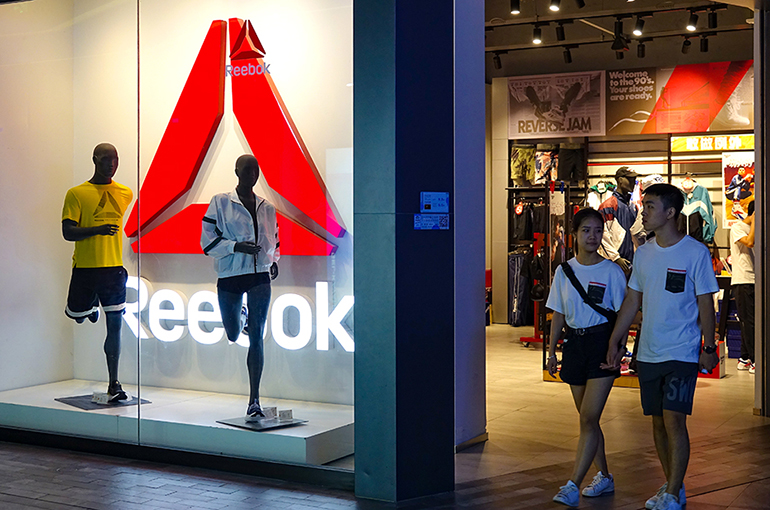
(Yicai) Nov. 23 -- Reebok, which opened its first brick-and-mortar store in China on a trial basis in Shanghai last month, plans to open between 30 and 35 stores next year as the US sportswear brand ramps up its relaunch in the country, Steve Robaire, executive vice president of Reebok at US brand management firm Authentic Brands Group, which owns the athletic footwear and apparel maker, recently told Yicai in an interview.
Reebok plans to open a second outlet in China later this year, Robaire said. The brand aims to expand its total store network in the country to 200 outlets by 2029 and achieve annual sales of USD1 billion by 2036.
The relaunch comes after a difficult few years following the sale of Reebok by German sportswear giant Adidas to New York-based ABG in 2021. ABG adopted a regional licensing model, allowing local operating partners to oversee product development, manufacturing and retail operations in their respective markets.
In 2022, Reebok’s China business was entrusted to Hong Kong’s Tristate Holdings. However, the business continued to incur losses, resulting in the closure of a large number of brick-and-mortar stores. At the end of 2025, Tristate terminated its Reebok China franchise agreement ahead of schedule.
Earlier this year, Xinrui Sports Shanghai was appointed as the principal licensee for the Reebok brand in China, paving the way for the brand’s return to the Chinese market.
Robaire sees the next six to 12 months as a critical period for the business. During this phase, the brand will focus on testing its retail model, product mix and brand positioning before accelerating its expansion.
Reebok will adopt a strategy combining “global products with locally developed offerings,” said Eva Xu, vice president of strategy at Xinrui Sports, Reebok’s partner in China. The locally developed apparel will be designed primarily by the Chinese team, subject to approval by Reebok’s global management. In the first season of locally designed products, women’s footwear accounted for 80 percent of the lineup.
Stiff Competition
However, Reebok’s return to the Chinese market comes at a time when market conditions are no less challenging than during its previous attempt.
Nike and Adidas continue to dominate the mainstream sportswear market in terms of brand recognition and consumer position, Chen Jingjing, founder of Jingjie Brand Consulting, told Yicai. Meanwhile domestic brands such as Anta and Li-Ning have built strong product offerings and distribution networks.
Competition has also intensified in specialized sports categories. On and HOKA have established strong positions in running, while Salomon has gained traction in outdoor sports. As sports consumption becomes increasingly specialized, consumers are no longer willing to buy products simply because an international brand has a long history or strong name recognition.
Reebok’s core strengths lie in its iconic footwear designs and brand heritage, Robaire said. The challenge is to make these classic products relevant and appealing to today’s consumers.
“We have built a roadmap to bring Reebok back into individual product categories through extensive research, development and product launches. We will start with running, return to competitive basketball with NBA players and then expand into global football and golf,” he said.
Legacy Challenges
The brand must address challenges inherited from the past. Towards the end of its previous operating period in China, large volumes of Reebok products flooded outlet and discount retail channels. As a result, some footwear and apparel products remained in the low-price segment for extended periods, potentially weakening the brand’s premium positioning.
The extensive discounting was linked to the transition period between Reebok’s previous China operating partner and the new partnership, Robaire said. These heavily discounted products are mainly held by third-party sellers carrying old inventory, he added.
Removing unauthorized third-party online sellers will take time, but the situation has already improved, he said. Going forward, Reebok hopes to win over consumers who are less focused on heavily discounted goods by offering new product collections, refreshed store concepts and enhanced brand communications.
Editor: Kim Taylor