



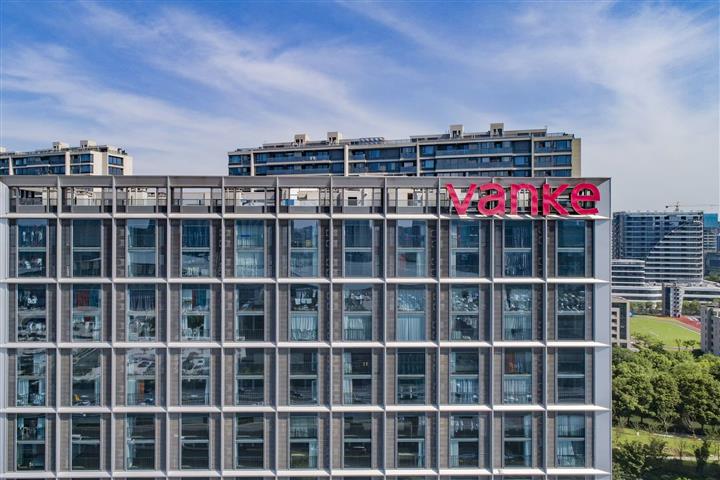
 China Vanke’s USD2.2 Billion Private Placement Could Be in Doubt, Sources Say
(Yicai Global) Feb. 14 -- China Vanke’s proposed CNY15 billion (USD2.2 billion) private placement of new shares could yet be scuppered by the real estate developer’s shareholders, according to industry insiders.
If Vanke sells the new stock at less than the net asset value per share, it will dilute the holdings of the Shenzhen-based company’s smaller investors, casting doubt on their voting intentions at a general meeting of shareholders, the insiders said.
To fund 11 property projects and boost capital reserves, Vanke plans to sell as many as 1.1 billion Chinese mainland-listed shares, representing 9.46 percent of the homebuilder’s total share capital before the issuance, to up to 35 investors, the firm said in a stock exchange filing on Feb. 12. The move requires the approval of shareholders and regulators.
Concern centers on the fact that Vanke said the issue price would not be less than 80 percent of the average trading price of its shares [SHE: 000002] in the 20 days prior to issuance. Its share price was CNY17.73 (USD2.60) as of 2 p.m. today, or about 85 percent of the NAV per share.
“If the issue price is lower than the net asset value per share, the net asset value per share will drop, and the equity of existing shareholders, including small and mid-sized investors, will be diluted,” said Wang Jiayi, a lawyer at Guanghe Law Firm.
China’s latest rules on stock issuance do not require the issue price of private placements to be higher than a firm’s NAV per share, but other developers that have revealed similar plans in the wake of the new rules, including Poly Developments and Holdings Group, vowed that their issue prices would not be lower than the NAV per share, an industry insider said.
Twenty-three listed real estate firm have proposed private placements since restrictions on developer borrowing were lifted on Nov. 28, according to Yicai Global’s calculations. Unlike Vanke, the others have pledged that the issue price will not be lower than the NAV per share.
Poly and Huafa Industrial are making progress with their plans, as the China Securities Regulatory Commission has already accepted their applications.
Editor: Futura Costaglione





