



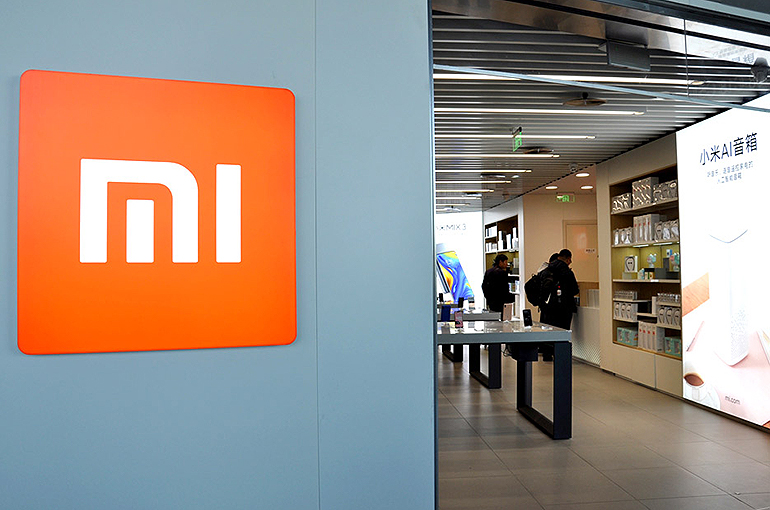
 Xiaomi’s Revenue Gains for First Time in Six Quarters as Profit Soars
(Yicai) Nov. 21 -- Chinese phone giant Xiaomi reported its first year-on-year increase in revenue in six quarters thanks to higher handset shipments and posted a 183 percent surge in profit.
Revenue inched up 0.6 percent to CNY70.9 billion (USD9.9 billion) in the three months ended Sept. 30 from a year earlier, the Beijing-based company’s earnings report showed yesterday. Adjusted net profit soared 183 percent to CNY6 billion (USD842 million), and its gross profit margin widened for a fourth straight quarter to 22.7 percent.
In an earnings call with investors, President Lu Weibing said the figures were “the reason why I’m very bullish about our core business and for our new business, EV business.”
Shares of Xiaomi [HKG: 1810], the world’s third-biggest smartphone maker, came off 4.9 percent to close at HKD15.38 (USD1.97) each in Hong Kong today, after climbing 62 percent from a June low. The stock is up more than 40 percent this year to date.
Revenue from smartphones fell 2 percent to CNY41.6 billion, mainly because of a drop in the average selling price, which was partially offset by increased handset shipments, per Xiaomi’s report. Its phone shipments rose 4 percent to 41.8 million in the quarter, despite a 1.1 percent dip in global smartphone shipments, according to Canalys data.
“Overall speaking, the macro environment remains challenging,” Lu said. But all of Xiaomi’s “business segments achieved a very high balance growth and operate efficiently.”
Xiaomi's ASP sank 5.8 percent to CNY997 (USD140) from CNY1,058 (USD150) per unit, according to Canalys, mainly due to the strong shipment growth in emerging markets such as Latin America, Africa, and the Middle East. Its ASP in the Chinese mainland rose.
R&D Spending
R&D expenses rose 22 percent to CNY5 billion in the period, primarily because of higher investment in the firm’s electric vehicle business, which reached CNY1.7 billion. In the whole year, Xiaomi spent CNY13.6 billion (USD1.9 billion) on R&D, according to Lu.
Xiaomi plans to invest more than CNY100 billion (USD14.1 billion) in R&D in the five years from 2022 to 2026. As of Sept. 30, the number of Xiaomi's R&D employees reached 17,563, accounting for over 53 percent of its total staff.
Revenue from Xiaomi's internet of things and lifestyle product segment rose 8.5 percent to CNY20.7 billion in the third quarter, with the gross profit margin jumping to 17.8 percent.
As of Sept. 30, the number of connected IoT devices on Xiaomi's artificial intelligence plus IoT platform jumped 25 percent to 698.9 million units from a year ago.
Internet service revenue jumped 9.7 percent to CNY7.8 billion in the quarter, while its gross profit margin climbed 2.3 percent to 74.4 percent. As of the end of September, global monthly active users of Xiaomi's Miui operating system reached 623.1 million, up 11 percent.
Advertising and gaming revenue grew 16 percent and 5.6 percent to CNY5.4 billion and CNY1.1 billion, respectively.
Xiaomi's total inventory in the third quarter plunged 31 percent from a year ago to CNY36.8 billion, the lowest in the past 11 quarters.
Electric Vehicles
Xiaomi will release its first electric vehicle next year. The firm will likely ship between 50,000 and 60,000 units at less than CNY300,000 (USD42,050) apiece, according to Ming-Chi Kuo, a leading information technology sector analyst. Shipments may be higher if the price drops to nearly or lower than CNY250,000, he added.
Xiaomi offered the first glimpse of its debut EV last week, less than 20 months after announcing its entry into the EV market. The five-seater Xiaomi SU7 and SU7 Max sedans appeared in a catalog released on Nov. 15 by China's Ministry of Industry and Information Technology.
The monthly catalog lists new vehicle models that have passed official tests, been certified, and are about to go to market, suggesting that Xiaomi is set to begin mass production of the EVs.
Editors: Shi Yi, Futura Costaglione





