


 Xiaomi’s Third-Quarter Profit Plunges 68% as Memory Chip Costs Keep Rising
(Yicai) Nov. 26 -- Chinese consumer electronics giant Xiaomi has reported a 68 percent drop in net profit in the third quarter of the year, mainly because of rising costs of key components, such as memory chips, and intensified competition.
Net profit totaled CNY3.9 billion (USD581.5 million) in the three months ended Sept. 30, compared with CNY12.3 billion (USD1.8 billion) a year earlier, the Beijing-based company said in its latest earnings report on Nov. 24. Adjusted net profit shrank 57 percent to CNY4.9 billion, and gross profit margin fell to 20.2 percent from 22.9 percent.
Xiaomi’s revenue fell 5.2 percent to CNY107.2 billion (USD16.1 billion) in the third quarter from a year ago. Revenue from the smartphone business inched down 0.8 percent to CNY45.6 billion, as global shipments plunged 29 percent to 30.7 million units, but the average selling price surged 40 percent to record CNY1,486 (USD223). The business’s gross profit margin improved to 9.2 percent from 8.5 percent.
Memory chip prices are expected to remain elevated through the second quarter of next year, and dynamic random-access memory costs will likely further increase, Xiaomi’s President Lu Weibing said on the earnings call on Nov. 24. There have been no clear signs of weakening demand, and supply is unlikely to increase significantly in the near term, he added.
Revenue from the new energy vehicle, artificial intelligence, and other new initiatives segment declined 18 percent to CNY23.9 billion in the period, with an operating loss of CNY3.4 billion and a gross profit margin of 19.2 percent.
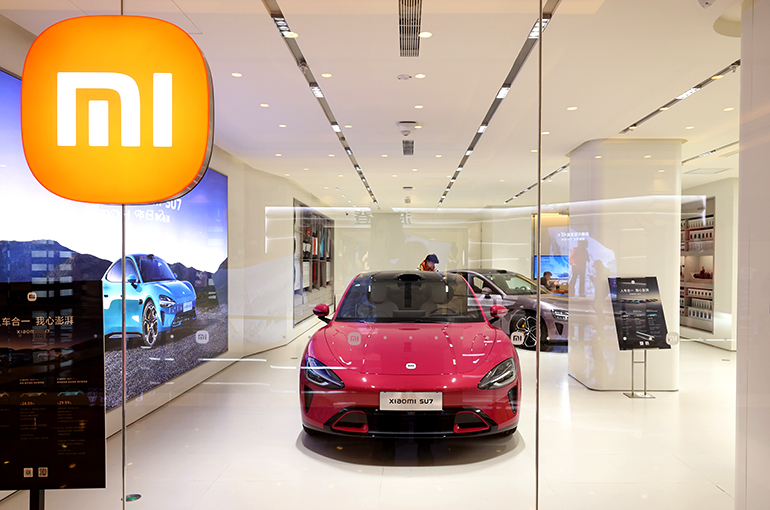
NEV revenue alone plunged 20 percent to CNY22.7 billion, mainly because of lower deliveries and a shift in the product mix, including a smaller proportion of deliveries of the premium Xiaomi SU7 Ultra.
Xiaomi delivered 100,975 vehicles in the third quarter, down 7.2 percent from a year earlier and 3.1 percent from the second quarter, bringing its total deliveries in the first nine months of the year to 286,030 units. On Sept. 7, the firm launched its extended-range electric sports utility vehicle series.
In October, Xiaomi’s overall vehicle deliveries exceeded 50,000 units, a monthly record this year.
Xiaomi signed memoranda of understanding with eight German auto dealergroups at the IFA consumer electronics trade show in Berlin in September. European automotive trade barriers will not change the company’s globalization strategy, Lu said, adding that its cars will enter the German market first in the second half of next year, probably in the third quarter.
Xiaomi’s revenue from the Internet of Things and lifestyle products business reached CNY27.2 billion in the third quarter, while internet services revenue stood at CNY9.5 billion. Its global monthly active users rose 4.1 percent to record 772 million in September.
Research and development expenses increased 2 percent to CNY9.2 billion in the third quarter from a year earlier, with AI-related spending accounting for more than 30 percent of the total in the first three quarters.
Editor: Futura Costaglione