Reporter Xu Shuai
Both the chairman of PV giant Trina Solar and authoritative experts from the PV industry association regard this year's adjustment period of the PV industry as the "most serious challenge" in history.
At the 7th China International Photovoltaic and Energy Storage Industry Conference 2024 held in Chengdu, Wang Bohua, honorary chairman of the China Photovoltaic Industry Association, used a series of data to describe this "most serious challenge" and concluded that the scale of losses caused by industry fluctuations far exceeded the previous three industry fluctuations.
Although it is still winter, industry insiders believe that "the next spring will definitely come". The reporter of "Daily Economic News" learned from many industry insiders that if you are optimistic, you may see the industry pick up next year, and if you are pessimistic, it may not be until 2026.
The scale of the loss is much greater than in the past
In 2024, China's photovoltaic industry will encounter an unprecedented winter.
From the price side alone, in the first half of 2024, China's polysilicon, wafer, cell and module prices fell by 40%, 48%, 36% and 15% year-on-year, respectively, all hitting record lows, and breaking through the cost line of enterprises, resulting in the overall loss of the industry.
In the keynote speech session on the morning of November 18, domestic photovoltaic giant Trina Solar (688599. Gao Jifan, chairman of the board of directors of SH, described this cycle as the "most severe challenge in history" that China's photovoltaic industry is experiencing with three "ones" - wide coverage, great adjustment, deep impact, and one "unprecedented". Gao Jifan also noticed that the relationship between photovoltaic supply and demand is seriously unbalanced, and the industry has fallen into "involution" vicious competition.
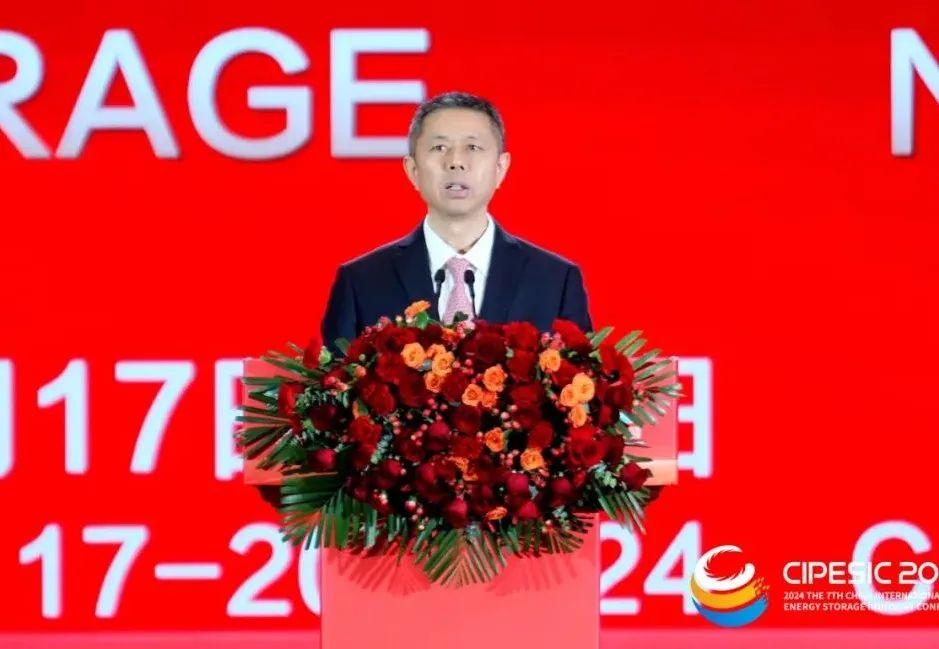
Gao Jifan, deputy to the National People's Congress, honorary chairman of China Photovoltaic Industry Association and chairman of Trina Solar, delivered a speech
But Gao Jifan was also on the scene to cheer for the industry, and he said in an accentuated tone: "There is no winter that will not pass, and the next spring will definitely come!" ”
In the afternoon, Wang Bohua, honorary chairman of the China Photovoltaic Industry Association, used a "far exceeding" to describe the degree of adjustment of the current round of photovoltaic industry - the scale of losses caused by industry fluctuations far exceeded the previous three industry fluctuations.
According to the data given by Wang Bohua on the spot, among the 121 listed photovoltaic companies, 39 have a net profit loss this year; This year, the prices of all links in the photovoltaic industry will drop by 60%~80% compared with the high point in 2023, and most links will operate at a loss in the second half of this year; In the first three quarters of 2024, the output value of the manufacturing end fell by more than 44.7% year-on-year.
The long-term loss of enterprises will affect R&D investment and technological progress, and reduce the long-term competitiveness of the industry.
Li Dong, vice president of JA Solar, spoke more directly: "The entire industry may face greater pressure. I would suggest that companies that may not be doing well should consider transformation early. ”
The
intensification of the "involution" of the photovoltaic industry is the unavoidable reason for this round of photovoltaic winter. In Gao Jifan's view, the reason for the intensification of the industry's "involution" itself is that some enterprises carry out simple low-price competition, such as the bidding and sales below the cost price he mentioned. In addition, he believes that the lack of effective protection of intellectual property rights in the photovoltaic industry is also the reason for the intensification of "involution".
"This round of adjustment is mainly caused by overcapacity, which leads to an imbalance between supply and demand, leads to price fluctuations, and intensifies the industry's involution." Wang Yicheng, general manager of Jiangsu Meike Solar Energy Technology Co., Ltd., told the "Daily Economic News" reporter that in the process of "involution", some small enterprises or some excess capacity are also accelerating the elimination.
He Tanggui, executive deputy general manager of Meishan Liansheng Photovoltaic Technology Co., Ltd., also expressed a similar view to reporters: "The supply and demand relationship of the entire photovoltaic industry is indeed very stressful. ”
Wang Lubao, chairman of Jiangsu Meike Solar Technology Co., Ltd., said with a smile: "You can't do this (loss)." ”
If optimistically estimated, the industry may pick up next year
On November 17, Liu Hanyuan, chairman of the board of directors of Tongwei Group, said in an interview with reporters that the "involution" of the photovoltaic industry has a dual nature.
Liu Hanyuan said that it is not that the "volume" is necessarily good, but it has at least a duality, in this process, to ensure that China's technology is leading in the world, and to ensure the speed of technological iteration and development of the entire industry. He believes that we must see clearly the positive and negative sides of the "volume", guide the photovoltaic industry to "volume" moderately, but avoid the vicious "volume", maintain a certain competitive intensity and development speed at the same time, and maintain a good development trend. Liu Hanyuan said: "The greatness of the market lies in the constant pressure that forces people to sleep and 'lie flat'. You can sleep in and 'lie flat', but breakfast tomorrow and the day after tomorrow will naturally not be yours. ”
On the other hand, he believes that vicious competition and excessive competition also make it impossible for the industry to promote the energy transition, "we must clarify the positive and negative sides of competition, guide the industry to compete moderately, and avoid vicious competition."
NAURA (002371. Ji Ankuan, deputy general manager of SZ), also had to sigh: "The photovoltaic track has brought us higher capacity improvement than other tracks, because it (photovoltaic) is fully competitive in the market." Zuo Guojun, chairman of Jiejia Weichuang, expressed a similar view: "This is a competition faced by a fully marketized industry. ”
Although the photovoltaic "involution" is a serious challenge, in the view of industry insiders, the photovoltaic industry will usher in a recovery next year.
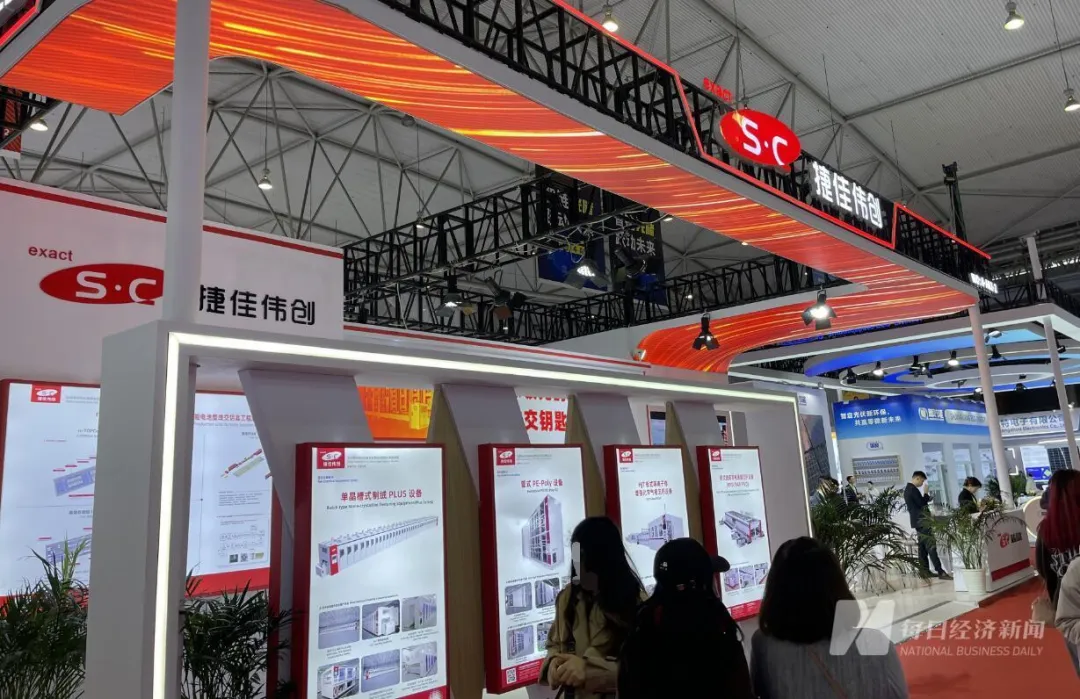
Image source: Photo by reporter Xu Shuai
"Now, it is indeed a trough of photovoltaics, but in the general direction, there is a high probability that it will pick up next year." He Tanggui told reporters that from a long-term perspective, the photovoltaic industry is still a fast-growing incremental market. On the one hand, by 2050, nearly 40% of China's electricity generation will come from photovoltaics, which still account for a small proportion of China's current energy mix. On the other hand, the rise of artificial intelligence will bring huge demand for electricity. He explained: "Especially the algorithm and its related computing power, the requirements for power consumption are very huge. In my opinion, PV is now at the starting point of rapid development, in the 'teenage period'. ”
Wang Yicheng said that for the speed and time of the completion of the reshuffle of the photovoltaic industry, each has its own judgment, optimistic people think that it may be in the second half of next year, and pessimistic people think that it may have to wait until 2026. "For us, every time the industry reshuffle will cause some production capacity to be eliminated, if there is superior production capacity, these companies can still cope better. From a cyclical point of view, it still depends on how long the process of supply and demand adjustment lasts. Wang Yicheng thinks.
It is also reported that Wang Lubao also said that it is estimated that in the second quarter of next year, the photovoltaic industry will pick up as a whole.
Wang Bohua is also optimistic about the future of the photovoltaic industry based on the installed demand. He expects that in 2024, the global new installed capacity will be 390GW~430GW (GW), and China's new installed capacity will be 190GW~220GW (GW), both in the global and Chinese markets, and the installed capacity will remain at a high level.
"In the short term, a series of measures such as the liberalization of the red line and the acceleration of the construction process of the power grid are also lifting the demand for installed capacity." Wang Bohua said.
Of course, the main thing is still the cost advantage of photovoltaics. Wang Bohua believes that the decline in photovoltaic costs is a booster for global installed capacity. From 2010 to 2023, the global LCOE (levelized cost of electricity) of centralized PV decreased from US$0.46/kWh (kWh) to US$0.044/kWh (kWh), a decrease of nearly 90%. The reduction of construction costs has strongly promoted the growth of photovoltaic installed capacity in the past ten years, and "the new photovoltaic installed capacity in 2023 is about 12.9 times that of 2011". He said that the downward trend of PV LCOE continues, and will continue to promote the growth of global PV installed capacity through direct and indirect means in the future.
The expectation of a pick-up has not yet been reflected in orders
Although the industry is still in a "cold winter", the liveliness of the exhibition area of the 7th China International Photovoltaic and Energy Storage Industry Conference 2024 has not been affected. The reporter of "Daily Economic News" noticed at the scene that in addition to domestic exhibitors, some foreign merchants are also very interested in photovoltaic products. At the booth of LEAD Intelligence, there are foreign customers who are organizing groups to watch the promotional film of LEAD intelligent photovoltaic equipment.
As Gao Jifan said, 2024 is a big year for photovoltaic policy, and the industry has woken up and quickly joined hands to act - on October 14, China's photovoltaic industry issued an industry self-discipline convention, taking a critical first step.
On November 18, the reporter learned from a number of exhibitor staff that after the release of relevant policies, the downstream did not show immediate expansion demand, and the customer's focus is still on digesting inventory capacity. Some staff members said that although the overseas market has increased significantly, the scale of a single production line is still difficult to compare with the domestic one. Based on the views of the above-mentioned market participants, although the market has expectations for the recovery of photovoltaics next year, it has not yet been directly reflected in new orders.
In this round of photovoltaic adjustment period, the performance of "a hundred flowers" cell technology routes such as heterojunction and TOPCon in the market has also diverged.
The so-called TOPCon technology is to prepare a layer of ultra-thin silicon oxide on the back of the solar cell, and then deposit a thin layer of doped silicon to form a passivation contact structure, which has a high conversion efficiency and low costHeterojunction technology has the advantage of high theoretical conversion efficiency, but the cost is high, and it is currently working together to reduce costs and increase market share.
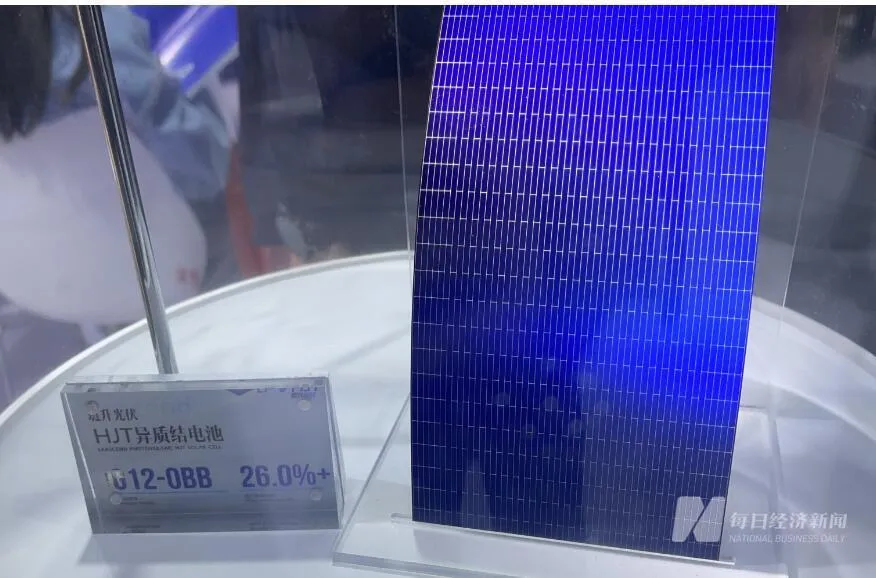
Image source: Photo by reporter Xu Shuai
The staff at the exhibition site told reporters that because the industry is in a period of adjustment, downstream customers will have more consideration for cost. Comparatively speaking, at this stage, the demand for TOPCon technology is higher than that of HJT equipment.
According to the China Photovoltaic Industry Development Roadmap compiled by the China Photovoltaic Industry Association, the market share of TOPCon cells will increase rapidly from 23% in 2023 to 60% in 2024. By the end of 2024, TOPCon cell production capacity will be about 941GW, accounting for about 66.3%. According to reports, the China Photovoltaic Industry Association also predicts that the market share of heterojunction solar cells will grow from 2.6% in 2023 to 34.3% in 2030.
The difference in the cost of TOPCon and HJT is reflected in the amount of silver paste, which is usually about 109mg/piece for TOPCon battery bifacial silver (aluminum) paste (95% silver), and about 115mg/piece for TOPCon cell bifacial low-temperature silver paste. He Tanggui told reporters that the company has reduced the use of silver paste in heterojunction cells through technological innovation, "which will gradually develop into an advantage in an orderly manner under the condition of continuous leading efficiency."
In LONGi Green Energy (601012. According to Li Wenxue and Li Dong, vice presidents of SH, the entire industry can also develop towards multi-scenario applications and internationalization in the future.
In addition to the photovoltaic industry, we can also see that industries such as liquor are expanding the use scenarios of photovoltaics to reduce carbon emissions. Hua Tao, deputy secretary of the Party Committee and general manager of Wuliangye Co., Ltd., told reporters that Wuliangye has set foot in and laid out the photovoltaic industry chain and is also carrying out industrial cooperation. He said: "The combination of our and photovoltaic is ecological environmental protection and improving carbon emission reduction...... In terms of product application, Wuliangye has carried out the construction of photovoltaic panels in some public occasions. ”
Ticker Name
Percentage Change
Inclusion Date








