



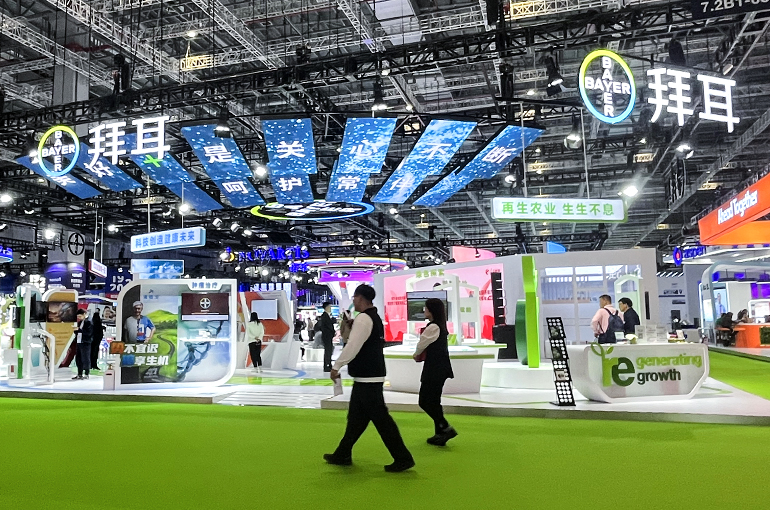
 Bayer Deepens China Innovation Bet as Pharma Unit Eyes 30% Margin
(Yicai) April 3 -- Bayer's pharmaceuticals division is targeting a 30 percent operating margin by 2030 and a return to mid-single-digit revenue growth from 2027, as the German drugmaker seeks to move beyond pressure on older patent-exposed products and deepen China’s role in its global innovation strategy.
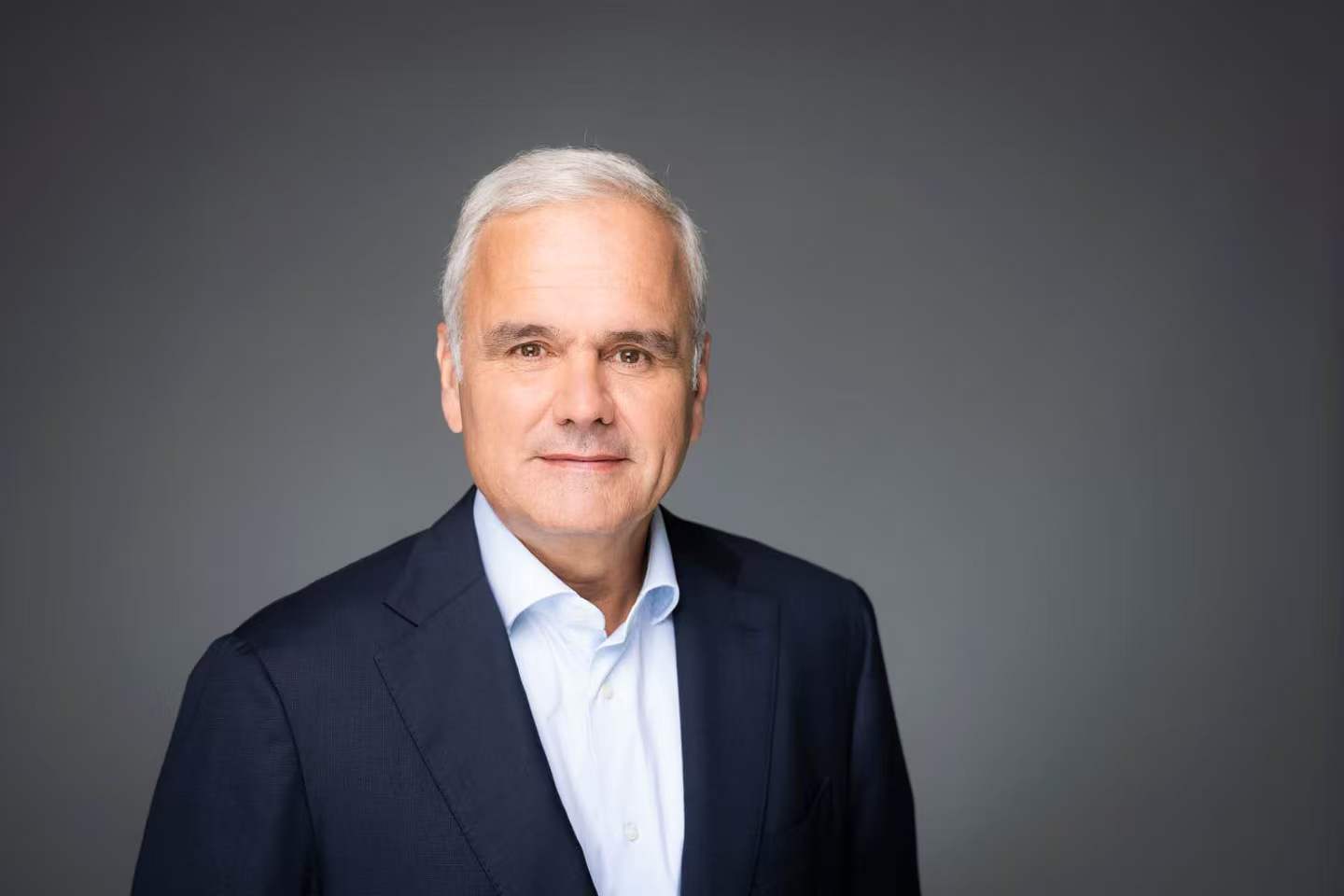
Bayer set out the targets at its recent Pharma Media Day, where Stefan Oelrich, head of the Leverkusen-headquartered company’s pharmaceuticals division, said the business was entering a new phase after a record year for pipeline progress.
The push matters because Bayer is trying to offset declines in key legacy medicines while building growth around newer assets. According to the release, the division’s EBITDA margin before special items was 25.4 percent in 2025, leaving about five percentage points to close by 2030.
The same document said sales of blood thinner Xarelto fell 33 percent in 2025 to about EUR2.3 billion (USD2.7 billion) and are projected to drop a further 35 percent to 40 percent in 2026, while retinal disease treatment Eylea is expected to contract 20 percent to 25 percent over the same period.
Oelrich said pipeline execution would underpin the recovery. Bayer reported five regulatory approvals and six positive Phase III readouts in 2025. “This is unheard of for a company of our size,” he said, adding that 2025 marked the end of the business’s “resilience phase” ahead of a return to growth from 2027. The company highlighted five growth drivers for the business: darolutamide (prostate cancer), finerenone (heart failure and chronic kidney disease), acoramidis (transthyretin-mediated amyloid cardiomyopathy), elinzanetant (vasomotor symptoms associated with menopause), and asundexian (recurrent stroke).
China is central to that strategy. “China today is clearly the world’s second-largest biopharmaceutical market. It has emerged as an important global source of pharmaceutical innovation, which is very different from the past,” Oelrich said.
China: From Market to Innovation Node
Bayer’s recent moves in China, including expansion of its incubator and innovation-center network, reflect that broader shift from treating the country mainly as a commercial market to positioning it as a source of science, partnerships, and globally relevant development work.
During the past year, aflibercept 8 mg, sold as Eylea HD, was approved for an eye disease called neovascular age-related macular degeneration, with commercialization accelerated by three to six months through early engagement in Beijing tendering. Darolutamide, sold as Nubeqa, has secured three approved indications in China since 2021.
On patient access, Oelrich said the goal is “not just fast approval, but first and foremost, fast access to patients.” Finerenone, sold as Kerendia, was included in China’s national reimbursement list six months after initial domestic approval, an unusually fast reimbursement cycle, and an application for its heart failure indication has since been filed. Bayer’s release also said that finerenone applications in heart failure in additional markets, including China, are under review.
Bayer’s China research and development center completed the first global patient enrollment for a pan-tumor study of larotrectinib, sold as Vitrakvi, underscoring the country’s capacity to run complex multinational trials at scale.
On competition, Oelrich said, “It’s not just local competition. They are local partners to us in many ways,” citing collaborations with local biotech companies and academic institutions, including Tsinghua University and Peking University. Bayer has said it has built long-term ties with both universities and has supported more than 100 joint research projects in China.
Bayer is also emphasizing open innovation in China rather than relying primarily on out-licensing deals. Together, Bayer Co.Lab China and the Bayer E-Town Open Innovation Center form a "dual innovation engine," Oelrich said, where one focuses on early discovery and entrepreneurship, and the other integration and translation across the biopharmaceutical value chain.
In March, Bayer welcomed Abalone Bio, bringing the number of startups at Bayer Co.Lab China to 12 in just over a year, underscoring its vitality as a global biotech innovation hub, he added, referring to Bayer Co.Lab Shanghai’s role in connecting Chinese biotech firms with Bayer’s global expertise and investor networks. Bayer’s Beijing-based Bayer E-Town Open Innovation Center, which opened last November, is intended to connect innovation originating in China with global development pathways at an earlier stage.
Artificial intelligence is another pillar of the effort. Bayer is integrating AI across its research and development value chain and is targeting a 40 percent improvement in research and development productivity by 2030. “We continue to invest with a clear focus on early-stage science and breakthrough technologies, including digital health and AI-enabled drug discovery, where China has developed very strong capabilities and where global collaboration is essential,” Oelrich said.
Across the industry, however, financial benefits from AI-led efficiency gains remain uneven, reflecting uncertainty about how quickly such improvements can translate into measurable returns.
Pipeline: Key Assets for China and Beyond
Bayer’s near-term growth outlook is anchored in five main assets: darolutamide, finerenone, acoramidis, elinzanetant, and asundexian. Among them, asundexian is viewed as an important late-stage candidate. The factor XIa inhibitor recently completed a Phase III trial in secondary stroke prevention, showing reduced recurrent ischemic stroke. The compound has also received fast-track designation from the US Food and Drug Administration.
That profile could be especially relevant in China, where stroke incidence remains high, helping doctors to change the standard of care to prevent recurring strokes while also limiting bleeding when added to antiplatelet therapy. “That is exactly the trade-off physicians have been struggling with in this field for decades,” Oelrich said.
Darolutamide and finerenone continue to support Bayer’s existing commercial base, both with established or expanding positions in China. Other assets are at different stages of development and market penetration, reflecting a broader shift in product mix rather than a simple volume-driven rebound.
Editor: Emmi Laine





