



(Yicai) April 1 -- British financial technology company Checkout.com is positioning payments as the core infrastructure of "agentic commerce," as artificial intelligence agents begin to shop and pay on behalf of consumers, creating new opportunities for Chinese cross-border merchants seeking global expansion.
The London-based digital payments firm is working with partners including OpenAI, Visa, Mastercard, and Google to establish standards for tokenized, AI-authenticated transactions, as the industry prepares for what the company describes as a structural shift in how online purchases are completed.
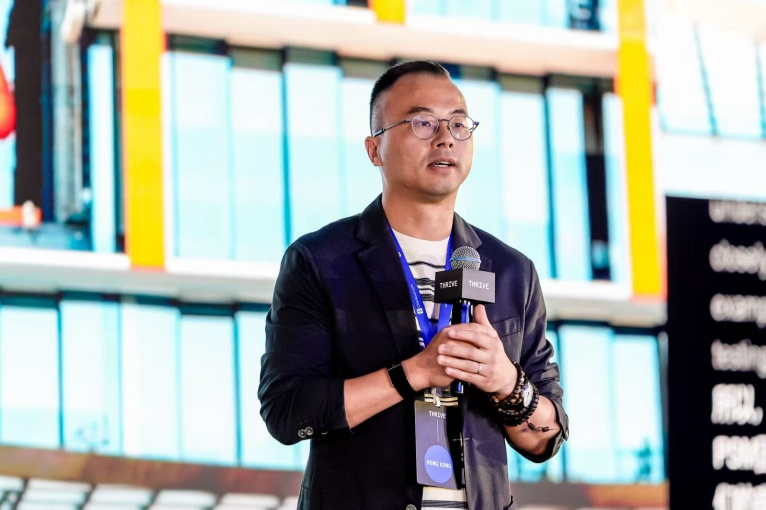
Checkout.com adopted OpenAI's Agentic Commerce Protocol last November, enabling AI agents to discover, select, and complete purchases directly within platforms such as ChatGPT. Xiang Yao, China general manager at Checkout.com, told Yicai ahead of the company's second annual Thrive summit held in Hong Kong recently. "We are not just providing a service, we are building a standard in this ecosystem," Xiang said. “Payment is the most critical link in agentic commerce.”
As AI agents increasingly replace humans at checkout, the company expects new compliance and liability challenges to emerge, particularly around authorization, traceability, and fraud management. "Was the order confirmed by the user, or was it an error made by the AI?" Xiang said. "These questions all require a unified standard built into the payment chain." Checkout.com estimates AI agents could handle more than 21 percent of consumers' monthly household spending within five years.
Checkout.com entered the Chinese market about four years ago and has since built a client base spanning globally expanding internet companies, cross-border e-commerce platforms, direct-to-consumer brands, and digital entertainment firms. The company processed more than USD300 billion in total payment volume in 2025, up 64 percent from a year earlier.
"The external environment -- geopolitics, tariffs -- has forced Chinese merchants to open their eyes," Xiang said. “You cannot put all your eggs in one or two markets. You need a global view.”
While Chinese merchants previously focused on the United States and Western Europe, the company now sees growing expansion into the Middle East, Latin America, and Southeast Asia, each with distinct local payment methods, regulatory requirements, and consumer preferences. This complexity is turning payment strategy into an operational differentiator rather than a commodity service.
Checkout.com argues that payments should be viewed as a revenue driver rather than a cost center. Xiang illustrated this with a conversion funnel example, noting that when consumers reach the checkout page, each point of friction reduces the likelihood of completing a purchase. Many transactions are lost due to poorly optimized payment flows, significantly lowering e-commerce conversion rates.
"For companies spending heavily on customer acquisition, that loss is enormous," Xiang said. “Optimizing the full payment chain -- not just negotiating a lower fee -- is where the real return on investment lies.”
The company said its AI-driven payment acceptance product, trained on more than 20 billion global transactions, has helped clients, including Deliveroo, improve payment success rates by as much as 10 percentage points.
"A 1 percent or even 0.5 percent improvement in payment success rate translates directly into real revenue," Xiang said. “For large merchants, that difference is substantial.”
Xiang also highlighted what he described as a shortage of professional platforms in China where payment specialists can exchange insights on data, strategy, and regulatory developments. He cited the Merchant Risk Council, an industry forum that connects merchants, card networks, and regulators in Western markets, as a model without a direct equivalent for Chinese outbound businesses.
Checkout.com launched the Thrive summit partly to address this gap. Moving the event from Shaoxing last year to Hong Kong allows mainland Chinese merchants to engage more directly with international peers on topics such as agentic commerce readiness.
At the summit, Checkout.com also announced the acquisition of licenses in the US, Japan, and Canada, as well as expanded operations in Brazil, reinforcing its strategy of offering merchants global coverage through a single integration.
"Everyone knows this is coming," Xiang said. “But most merchants do not yet know how to act on it, or how to balance the risks. That is exactly the conversation we need to be having.”
Editor: Emmi Laine





