



 Foreign Auto Joint Ventures Mount NEV Counter Offensive in China
(Yicai) April 13 -- After seeing their market shares eroded by Chinese new energy vehicle brands, the China joint ventures of foreign carmakers such as Nissan, Volkswagen, and General Motors have begun a fightback over the past week with the launch of their own NEV models.
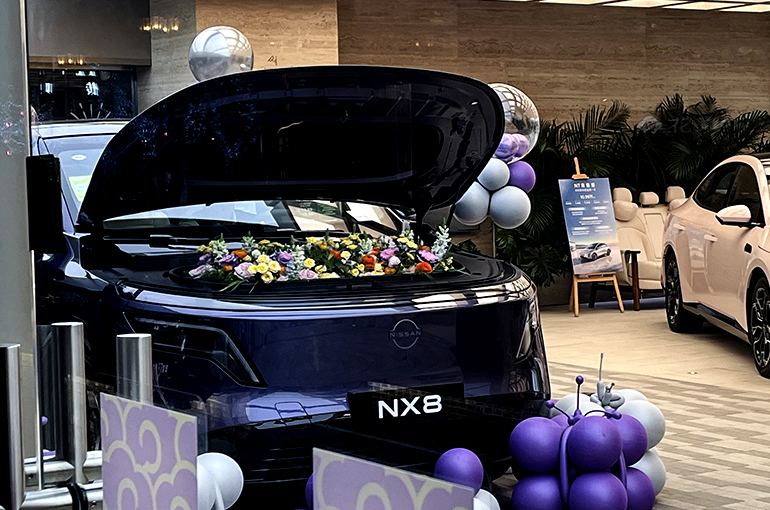
Dongfeng Nissan debuted its new sports utility vehicle NX8 on April 8. On the same day, Volkswagen China held an event to promote three upcoming models from its Chinese joint ventures, including FAW-Volkswagen’s ID.Aura T6.
On April 10, SAIC-General Motors’ Buick brand kicked off presales for the Zhijing E7, the first SUV of its premium NEV sub-brand Zhijing, while Hyundai Motor launched its electric vehicle brand Ioniq along with two concept cars, the Venus and the Earth, exclusively for the Chinese market.
These new models all embrace a “China solution” -- localized supply chains and products designed for the Chinese market. The NX8, for example, uses batteries from Contemporary Amperex Technology, Momenta smart-driving technology, and a smart cockpit jointly developed by Qualcomm and iFlytek.
This counter offensive reflects both market and policy pressures. Over the past five years, the market share of joint venture brands has dropped to 35 percent last year from 64 percent in 2020, while China’s NEV adoption rate climbed to 54 percent from less than 6 percent.
The NEV adoption rate for Chinese brands reached 74 percent last month, with their share of the EV market nearing 67 percent, according to data from the China Passenger Car Association. For mainstream JV brands, the figure stood at only 6.2 percent and 3.4 percent, respectively.
Policies are also pushing JVs to speed up their shift to NEVs. The authorities use a points-based system to evaluate carmakers registered in the country each year, assessing the fuel efficiency of the passenger vehicles they produce and import as well as their share of NEV sales.
Those with negative points must offset them within 90 days of the results being the released, either by using positive points carried over from previous years or by buying some from other automakers. Failure to do so results in penalties.
In last year’s evaluation of 87 manufacturers and 21 importers, 25 received negative points for failing the fuel consumption rating, and 15 for missing the NEV target. JV brands made up a high share of both groups.
In this environment, moving too slowly on the shift to new energy is no longer just about losing market share for joint venture brands. It is becoming a question of survival. “JV brands need to move fast, understand the Chinese market, and dare to take bold action,” Xin Yu, general manager of Dongfeng Nissan, recently told media, including Yicai.
To stay competitive, most newly launched JV NEV models have abandoned premium pricing and are now competing directly with domestic brands. Prices are determined by the market, but production costs are controlled by carmakers and can be lowered through technology, economies of scale, and supply chain integration, Xin said.
Better supply chain pricing usually only comes after sales reach a certain volume, he added.
Editors: Tang Shihua, Futura Costaglione





