



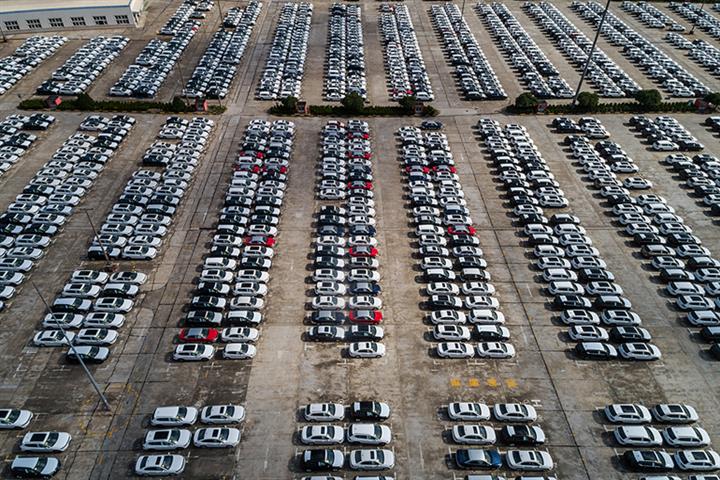
 China’s Car Sales Fell 10% in March From 2019 as Chip Shortage Hampers Recovery
(Yicai Global) April 12 -- China’s passenger vehicle sales tumbled over 10 percent in March from the same period in 2019, a widening of January and February's decline in sales from two years earlier, most likely due to a shortage of chips, according to a recent report.
Around 1.9 million passenger autos were shifted in March, the China Association of Automobile Manufacturers said. This was a 62.2 percent jump from February's figures and a 77.4 percent leap from the same period last year due to the low baseline when the Covid-19 pandemic hammered sales.
In the three months ended March 31, some 5.1 million units were shifted, a 75.1 percent surge from 2020 but a 3.6 percent drop from 2019. In January and February car sales were 7 percent and 7.8 percent below 2019 levels, it added.
The falling sales could be due to a lack of chips, CAAM Chief Engineer Xu Haidong told Yicai Global. The recent sharp rise in the price of raw materials is also not helping matters, putting additional pressure on manufacturers.
The impact on the second quarter is likely to be greater than on the first quarter, Xu said. Therefore, it is necessary to maintain a cautiously optimistic attitude towards trends in the auto market. The situation is not likely to improve much until the end of the year, he added.
The chips that are in short supply are relatively easy to make, unlike the core chips, so the pressure on the industry is short-term, said Cui Dongshu, secretary-general of the China Passenger Car Association. In addition, auto demand is at its lowest over the summer, when the chip situation should be better, he added.
Market prices stayed stable in the first quarter despite the chip shortage, Cui said. However, the continuing dearth of semiconductors, made worse by a recent fire at Japanese chipmaker Renasas Electronics’ factory in March, casts a cloud over April’s sales figures, he added.
Editor: Kim Taylor





