



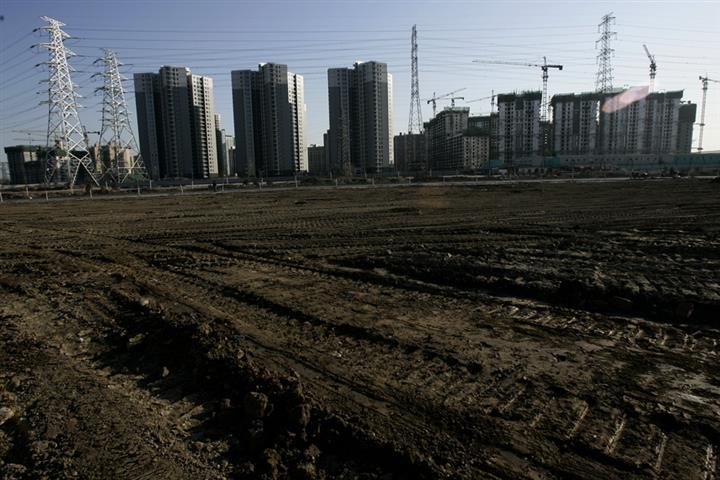
 China’s Cities Have Failed to Sell Nearly 22% of Auctioned Land, Report Shows
(Yicai Global) April 24 -- Chinese cities have failed to sell 21.8 percent of the land they have put up for auction as of April 21, an increase of 5.8 percentage points on last year, according to the findings of a new report.
Their land sales have steadily rebounded since last month, topping 10 million square meters in each of the past three weeks, The Paper reported, citing the report issued yesterday by the research center of China Real Estate Information. That marks a return to levels seen in the same period last year, despite auction failures.
As much as 8.7 percent of land available for bidding in the cities CREI monitors was left unsold in the third week of April, up 3 points from a year-to-date low seen in the fourth week of March and 1.6 point from the same period last year. Auctions for 79 plots of land bombed between March 1 and April 19.
For about 80 percent of the 79, mediocre conditions and remote locations caused the failure, the report said. Demanding transfer terms resulted in over 10 percent, while about 3 percent were due to excessive minimal accommodation value -- the cost of the land divided by the gross floor area which is allowed to be built on the land. The bidding process for several plots flopped because the highest bid was below the floor price.
The CRIC’s research center believes that judging from recent policy moves, more adjustments are likely in the limits placed on land auctions, which were tightened at the start of the year after the Chinese government reiterated its stance that housing should be for living in not for speculation.
This will likely trigger a further increase in the amount of remote plots with mediocre conditions up for auction, so the failure rate looks set to increase further. But failed auctions have become increasingly rare for high-quality plots, the report said. Bidding for these is likely to become more competitive, with a better home financing environment and land transfer prices that have returned to normal levels.
Editor: Peter Thomas





