



 China’s Consumer Prices Climb More Than Forecast in March, Hitting a Three-Month High
(Yicai Global) April 11 -- China’s consumer inflation rate quickened by more than expected last month, reaching a three-month high, because of the resurgence of Covid-19 in the country and surging energy prices, according to official data.
The consumer price index rose 1.5 percent in March from a year earlier, the National Bureau of Statistics said today. The rate was 0.9 percent in January and February.
The increase was more than the average 1.3 percent forecast by 17 chief economists surveyed by Yicai Global, but within the indicated range of 1.1 percent and 1.6 percent.
Non-food prices, which include energy, gained last month due to two retail fuel price hikes and broad increases in the retail prices of industrial consumer goods, said Liu Xuezhi, a senior researcher at Bank of Communication's financial research center.
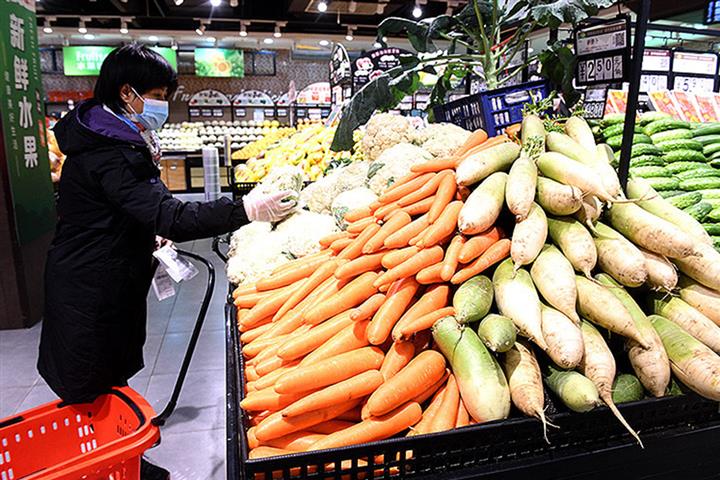
Non-food prices rose 2.2 percent in March, lifted by the rising cost of gasoline, diesel, and liquefied petroleum gas, the NBS data showed. Food prices fell 1.5 percent, mainly because of a more than 41 percent drop in pork. Fresh vegetable prices increased.
The influence of vegetable and pork prices on the CPI will gradually ease in the second quarter, according to Orient Securities, which also said consumer inflation could rise further if crude oil prices remain high.
China has set a CPI target of about 3 percent for 2022, the same as last year.
Producer Price Gains Ease
Meanwhile, the producer price index, a measure of industrial profitability, jumped 8.3 percent in March from a year ago, slowing from an 8.8 percent clip in February, mainly due to higher commodity prices, NBS data also showed today.
The figure was slightly above the 8.1 percent increase forecast by the chief economists polled by Yicai Global, but was still within the indicated range of 7.5 percent and 8.5 percent. It also marked the 15th straight month of increase.
The Commodity Research Bureau Index, which tracks international commodities prices, surged 27 percent in the first quarter, the biggest quarterly increase since 1994, according to Chinese financial data provider Wind.
Higher oil prices are being passed on, greatly affecting the PPI, said Wang Qing, chief macro analyst at Golden Credit Rating International. Downstream companies in general face weightier cost pressures as the PPI’s annual growth has remained high over recent months.
Inflation is expected to stay under control amid policies aimed to ensure supplies and stabilize commodity prices, said Wen Bin, chief researcher at China Minsheng Bank. But rising global prices makes imported inflation a risk, Wen added, noting that the pass-on effect of the high-level PPI on the CPI needs special attention as producer price growth has slowed.
Editors: Zhang Yushuo, Futura Costaglione





