



 China's Financial Opening-Up Helps to Boost the Health of Its Stock Markets, CSRC Vice Chief Says
(Yicai Global) Jan. 23 -- China is looking to welcome more diverse types of foreign firms to enter the country, which will improve the quality of the capital markets, according to the vice chairman of the nation's securities regulator.
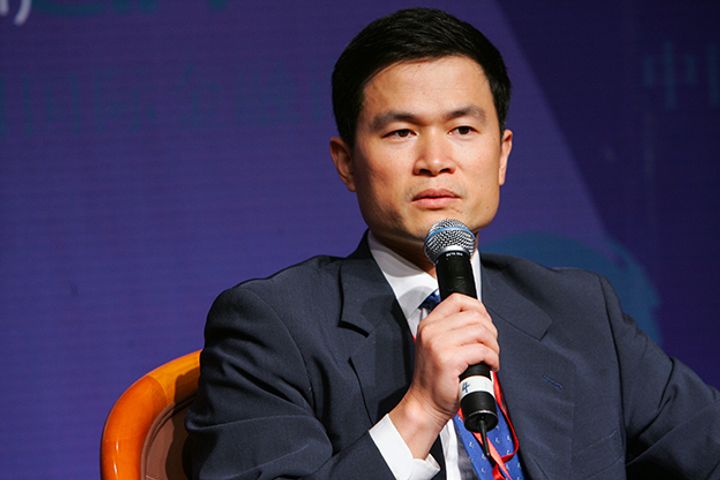
China would like to see foreign companies from different sectors to enter and it also wants to expand two-way capital flows, Fang Xinghai from the China Securities Regulatory Commission said during a panel discussion held yesterday at the World Economic Forum's annual meeting in Davos.
Opening-up benefits China, Fang said, giving two examples. Morgan Stanley Capital International added Chinese A-shares to its global indexes last year, which improved the quality of the Chinese capital markets. Last August, the Shanghai Stock Exchange also adapted to international investors' wishes by adopting a call auction at the end of each trading day to determine prices for the following day in order to curb manipulation.
China will strive to introduce international medium and long-term funds into the Chinese stock market, Fang said on Jan. 12, adding he expects that foreign capital flowing into the A-share market, meaning the Chinese mainland stocks, will increase further this year.
Last year, the A-share market had a net inflow of CNY300 billion (USD44.1 billion), Fang said earlier, adding that the number is expected to reach CNY600 billion, considering global index providers' plans. The MSCI is considering to increase the weighting of Chinese stocks in its indexes up to 20 percent. The FTSE Russell will start adding Chinese stocks to its indexes in June, gradually raising the weighting up to 25 percent by 2020. The S&P Dow Jones indexes may also bring USD15 billion of inflows into the markets.
The CSRC opened the country's financial sector last year in allowing foreign securities companies, fund management firms and futures traders to acquire up to a 51 percent stake in their joint ventures with local partners. Full ownership may be in the cards after three years. Swiss UBS was the first to take the chance to increase its stake while several American, Japanese and European investment banks are pursuing the same path, according to Fang's earlier statement.
China is capable of risk management, even if the country hasn't experienced a serious financial crisis before, Fang said in Davos. The prowess comes from a thorough management system, according to him. The central government communicates with the financial sector frequently and intervenes if risks build up. Some loopholes in the system may cause volatility in the market but the system is also quick to contain issues. Once the economic growth accelerates, the risks will be dispersed, Fang added.
China has a relatively high savings rate, but the country is also continuously investing in overseas markets, Fang said. China won't significantly reduce its US debt holdings since the US Treasury bonds are still an ideal investment destination, according to him. China reduced its holdings of US government debt for the fifth consecutive month in October, with the holdings dropping USD12.5 billion monthly to the lowest level since May 2017.
Editor: Emmi Laine





