 China Issues Guidelines to Keep Its Auto Price War From Spreading Overseas
(Yicai) Sept. 2 -- China has brought out guidelines aimed at preventing the fierce price competition that has gripped its auto market for more than three years from spilling over into foreign markets, as the country’s carmakers expand production, sales, and market share abroad.
The new guidelines, made public yesterday by the Ministry of Commerce, the Ministry of Industry and Information Technology, and the State Administration for Market Regulation, are China’s first on how its automakers should compete overseas, urging them to avoid frequent and significant price changes with rules on pricing, promotions, and brand marketing.
In four chapters and 20 articles, the guidelines cover market competition and other business activities by Chinese car manufacturers with business overseas, even setting out general guidance on compliance in areas such as production safety, quality management, labor protections, data security, intellectual property, antitrust, and the green and low-carbon transition.
With Chinese auto brands competing more aggressively overseas, some foreign markets have seen them undercut one another on price to secure bigger market shares, while pricing for the same vehicle models can vary widely from one country to another.
Automakers may set prices based on costs and guided by global supply and demand, but should not "disrupt the order of market competition to gain unfair competitive advantages," according to the guidelines. When setting suggested retail prices abroad, they should form clear price tiers for different vehicle configurations to “avoid harming the interests of overseas consumers and their brand image through frequent and sharp price adjustments.”
On the issue of price difference between countries, the guidelines require reasonable disparities based on factors such as local market conditions, taxes, and logistics costs to avoid disorderly sales and respect the independent pricing rights of dealers and agents in host countries.
Regarding sales, automakers should label prices transparently and clearly, and not arbitrarily charge above the listed price or collect undisclosed fees. Discounts, financing offers, and other promotional schemes should follow local laws and commercial practices, while brand marketing must disclose information truthfully and completely, without false advertising.
China's auto industry is "in a period of upgrading from exporting products to exporting supply chains," the National Business Daily reported, citing Shi Yonghong, vice chairman of the China Chamber of Commerce for Import and Export of Machinery and Electronic Products.
Building production plants overseas and running localized operations involve deeper compliance requirements in environmental protection, taxation, employment, data localization, and other areas, Shi noted, adding that the new guidelines will help carmakers, parts suppliers, and service networks go global together.
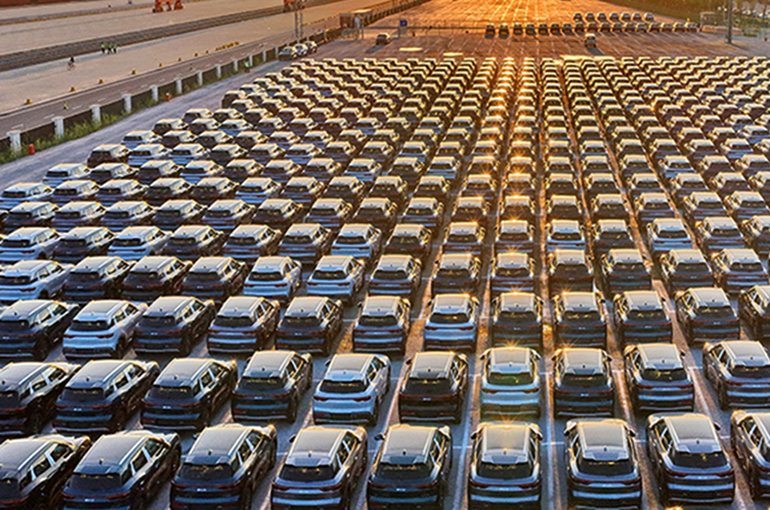
China's auto exports surged to 8.32 million units last year from below one million in 2020, having expanded into more than 200 countries and regions, according to the China Association of Automobile Manufacturers. Chinese companies have invested in auto manufacturing in over 80 countries and regions.
Editor: Martin Kadiev