



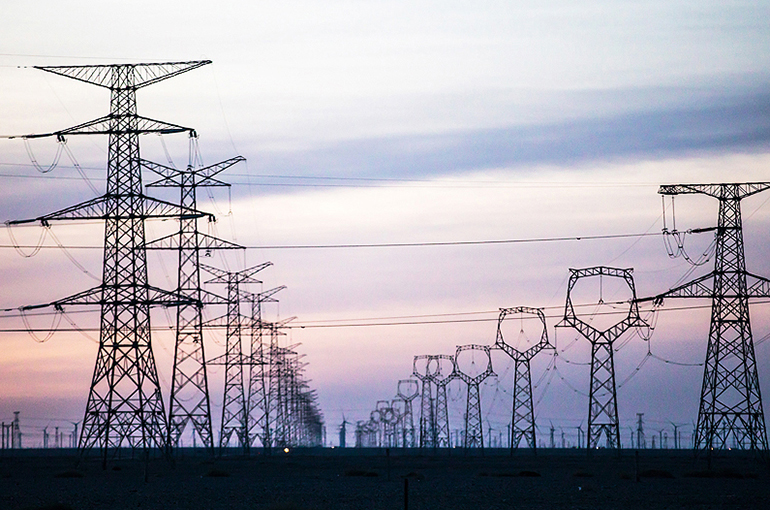
 China Sets 2030 Target for Unified National Power Market
(Yicai) Feb. 12 -- China aims to basically establish a nationwide unified power market system by 2030, with market-based transactions accounting for around 70 percent of total electricity consumption, under new guidelines released by the General Office of the State Council.
By 2030, all types of power sources and electricity users, except those receiving guaranteed supply, will directly participate in the power market, according to the guidelines released yesterday.
By 2035, the system is expected to be fully established, with seamless integration of inter-provincial, inter-regional, and intra-provincial transactions so that the multidimensional value of electricity resources -- including energy, regulation, environmental impact, and capacity -- is fully reflected by the market.
The guidelines set out 19 key tasks, a representative of the National Development and Reform Commission said. These include optimizing electricity resource allocation nationwide, improving market functions, facilitating equal and broad participation by various business entities, building a unified power market framework, and strengthening policy coordination.
The plan proposes a gradual shift from “individual pricing and trading by each province” to “unified pricing and joint trading.” It encourages neighboring provinces to voluntarily cooperate or integrate their markets, expand inter-provincial and inter-regional power transmission, and raise the share of clean energy deliveries. It also calls for building and operating an integrated power market in southern China and improving electricity mutual assistance mechanisms in the Yangtze River Delta.
The guidelines state that authorities will explore establishing a capacity market to compensate supporting and regulating resources -- such as coal-fired power, pumped hydro storage, and new energy storage -- for their role in maintaining grid stability and facilitating renewable energy consumption. For projects including large-scale renewable energy bases in desert regions and distributed renewable energy, differentiated market access pathways will be introduced. The plan also proposes exploring long-term green electricity contracts to better meet demand from export-oriented enterprises and foreign-invested companies.
The document further calls for greater participation by private enterprises in the power market. It encourages new types of market entities, primarily led by private firms, to flexibly engage in trading through innovations such as new energy storage, virtual power plants, and intelligent microgrids. Small and medium-sized commercial and industrial users that currently purchase electricity through grid agents will gradually be allowed to participate directly in the market.
In a research report, CITIC Securities said the capacity market could become a key focus in the next stage of market development and suggested investors pay attention to opportunities in base-load power sources, energy storage, and related industry chains.
Editor: Emmi Laine





