



 China’s CATL Aims to Mass Produce Sodium-Ion Batteries as Lithium Alternative, CTO Says
(Yicai) Jan. 28 -- Contemporary Amperex Technology, the world's biggest maker of electric car batteries, intends to mass produce sodium-ion batteries as a substitute for lithium-ion products, marking the start of a broader energy sector shift, according to its chief technology officer.
Sodium-ion batteries, which are achieving scalability in particular applications, have clear pros and cons compared with lithium-ion batteries, Gao Huan said in a recent media interview.
The benefits include easier access to sodium resources compared with lithium, better low-temperature performance, improved safety, and limited temperature rise during fast-charging, Gao pointed out. The disadvantages include higher industrialization costs, a less mature supply chain, and lower energy density relative to lithium batteries, he said.
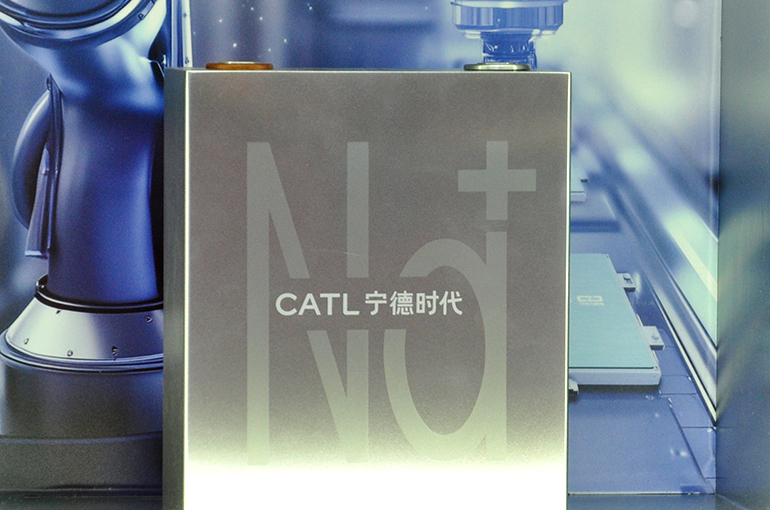
Sodium-ion power packs have become a hot topic in battery circles after Ningde-based CATL released its Tianxing II series for light commercial vehicles on Jan. 22. The low-temperature variant included in the lineup is the first mass-produced sodium-ion battery available in the light goods vehicle market.
CATL launched its sodium-ion battery brand Naxtra last April, but the use of such batteries in light commercial vehicles marks the company’s first true mass production of the technology. Industry observers see this as a sign that sodium batteries are moving rapidly toward commercial adoption.
Gas stressed that these batteries remain at an early development stage but their development path could mirror lithium’s, and may even progress more quickly, so CATL plans for sodium to match lithium for cost-effectiveness and energy density within the next three years.
At a suppliers’ conference held at the end of last year, CATL said the batteries would be widely used in battery swapping, passenger vehicles, commercial vehicles, and energy storage this year, potentially paving the way for parallel sodium and lithium product development.
The Aion UT Super, a joint model launched by JD.Com, GAC Group's new energy vehicle arm GAC Aion, and CATL, will reportedly have a sodium-ion battery version, with mass production expected to begin in the second quarter of this year.
Shipments of sodium-ion batteries across vehicle and non-vehicle segments will likely exceed 100 gigawatt-hours by 2030, according to data from think tank China EV100.
Morgan Stanley predicts that as supply chain capacities improve over the next three years, costs will fall quickly. When production capacity reaches 100 GWh, sodium-ion batteries could be more than 30 percent cheaper than lithium-iron phosphate ones.
Editor: Martin Kadiev





