



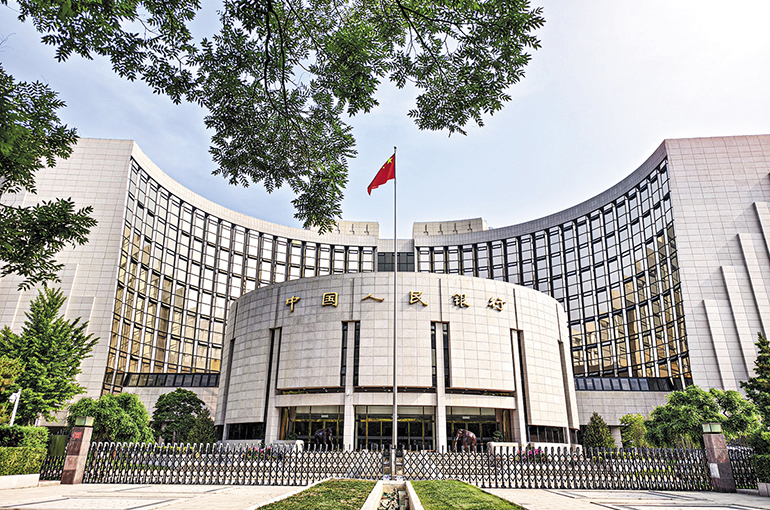
 China’s Central Bank Turns Tap Back On With CNY100 Billion Net Liquidity Injection via MLF
(Yicai) May 25 -- China’s central bank resumed net injections through its medium-term lending facility this month, adding CNY100 billion (USD14.7 billion) in liquidity as rising government bond issuance increased pressure on bank funding conditions.
The People's Bank of China conducted a one-year MLF operation worth CNY600 billion through a rate tender process today to offset CNY500 billion of maturing funds and maintain ample liquidity in the banking system. The move came as government bond issuance accelerated and pressure from maturing bank certificates of deposit increased.
The latest operation marked a reversal from April, when the PBOC reduced MLF issuance and recorded a net withdrawal of CNY200 billion, ending a 13-month streak of net injections. Earlier this month, the central bank’s three-month and six-month buyout reverse repo operations also resulted in net withdrawals of CNY500 billion each. Combined with the MLF operation, medium- to long-term liquidity recorded a net withdrawal of CNY900 billion this month.
The central bank’s decision to maintain liquidity indicates that its current policy stance remains focused on substantial easing, Ming Ming, chief economist at Citic Securities, wrote in a research note, citing increased government bond supply, pressure from maturing certificates of deposit, and weak credit demand.
Government Bond Issuance Adds Liquidity Pressure
The liquidity-draining effect of government bond issuance may be one of the key reasons behind the PBOC’s renewed easing efforts. On May 22, China’s finance ministry issued the first tranche of this year’s special government bonds intended to inject capital into central financial institutions. Issuance of ultra-long special government bonds, which began in late April, is scheduled to continue through mid-October.
China plans to issue CNY1.3 trillion (USD191.7 billion) in ultra-long-term government bonds and CNY300 billion in special government bonds for bank recapitalization this year. The ultra-long bonds will support major national strategies and security capacity building in key sectors, while the special bonds will replenish the core capital of large state-owned commercial banks.
Against the backdrop of rising external uncertainties, such as the Middle East conflict that led to soaring oil price and inflationary pressure, domestic monetary policy will maintain ample market liquidity and may periodically prioritize price stabilization, Wang Qing, chief macroeconomic analyst at Golden Credit Rating International, said in a note. As a result, the timing of interest rate cuts and reserve requirement ratio reductions may be delayed, he added.
Wang noted that if external shocks increasingly weigh on China’s economy, particularly through weaker external demand, monetary policy easing could intensify further. The central bank still has ample policy space, he added.
Editors: Dou Shicong, Emmi Laine





