



 China’s Consumption, Industrial Output Growth Slow in May Due to Year-Earlier Base Effect
(Yicai Global) June 15 -- China’s key economic indicators slowed last month, mainly as a result of a jump in the base level of the same period last year, according to the National Bureau of Statistics.
China’s total retail sales of consumer goods jumped 12.7 percent in May from a year earlier, easing from an 18.5 percent clip in April, per data released today by the NBS.
Industrial production rose 3.5 percent, slowing from a 5.6 percent increase the month before, the data showed, and in the first five months, annual fixed-asset investment rose 4 percent, down from 4.7 percent in the first four months.
Last month’s fallback was mainly because the base in the same period of last year rose, NBS spokesperson Fu Linghui said at a press conference, adding that the economy is still growing stably overall. The economy was much affected by the Covid-19 pandemic last April, but rebounded the following month, resulting in a higher base for May.
Consumption growth dropped somewhat from April, again because of the higher year-earlier base, Fu said, adding that market sales growth was stable in May.
The overall improvement in the employment situation is conducive to rising incomes and consumption capacity, Fu noted. The authorities have also introduced policies to promote consumption. The deep integration of online and offline consumption and accelerated development of new consumer and business models will also help expand consumption, Fu said, and the expected uptick will further promote economic recovery.
In terms of investment, the global economic downturn and insufficient effective demand have inhibited businesses from expanding production, according to a report released by the National Economic Research Center of Peking University.
Infrastructure investment mainly relies on the issuance of new special bonds to maintain a high growth rate, but there may be pressure on this source of funding following their concentrated issuance in the first half of the year if revenues from land sales remain limited in the third quarter, said Li Chao, chief economist of Zheshang Securities.
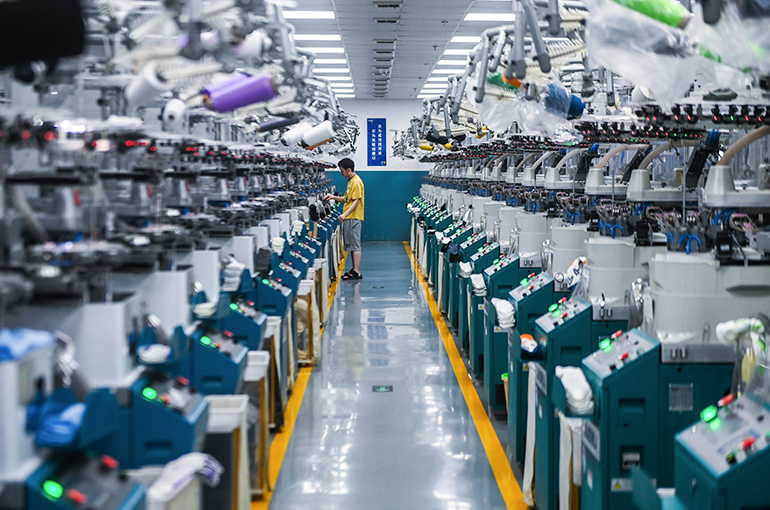
China’s industrial sector is still under pressure, Fu noted, mainly due to the global economic downturn, which has hampered industrial exports. There is also insufficient domestic demand, falling industrial product prices, slack production in some industries, difficulties in business operations, and pressure on small and micro enterprises, Fu added.
Despite the pressure and challenges, the long-term outlook for China’s economy is still bullish, given its resilience and room for development, Fu said. In the third and fourth quarters of the year, economic indicators will regain normal growth, Fu added, as there are still many favorable factors that will help China to achieve its economic development goals this year.
Early in March, the Chinese government set a gross domestic product growth target of “about 5 percent” for 2023, one of the lowest in decades. The economy grew 3 percent last year.
Editor: Tom Litting





