


 China's LandSpace Sends 10 New Satellites Into Space
(Yicai) Oct. 15 -- LandSpace Technology, a private Chinese rocket launch service provider, has put eight compute test satellites and two communications test satellites into their planned orbits, adding to the 10 satellites it sent into space less than a month ago.
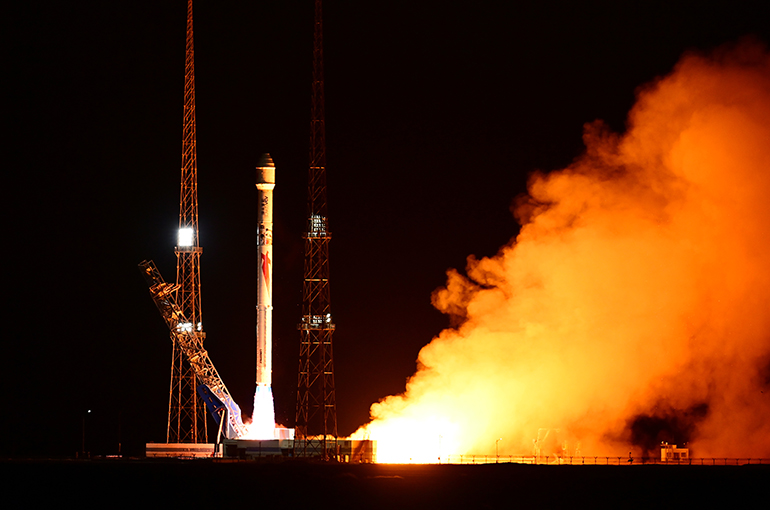
The Zhuque-2E, an upgraded version of the Zhuque-2 rocket, launched yesterday carrying eight compute satellites developed by Guoxing Aerospace Technology and two next-generation laser data transmission test satellites developed by Lanta Intelligence.
The Zhuque-2E is a two-stage cryogenic extended liquid carrier rocket powered by liquid oxygen-methane propellant, with a payload capacity of six tons to low Earth orbit and four tons to a 500-kilometer sun-synchronous orbit. The same type of rocket placed 10 low-Earth-orbit internet satellites into orbit on Sept. 15.
The new launch was not only another successful payload deployment, but also a demonstration of Zhuque-2's ability to support the construction of space infrastructure, such as compute satellite constellations, Ma Haijing, general manager of LandSpace's marketing department, told Yicai. The success means the rocket can provide launch services for deploying space-based computing constellations, marking a breakthrough in the firm's commercial services in this emerging field, Ma stressed.
The eight compute satellites are the first in the Group 02 constellation Guoxing Aerospace sends for tech verification of its space computing network. China Aerospace Science and Technology Corporation launched the 12 satellites in Group 01 of the program into orbit last May.
The two Lanta Intelligence satellites are intended to verify its key satellite networking technologies. Zhuque-2E also launched the first two satellites in this program in November 2024, which have since completed multiple on-orbit technology verification tests.
The rideshare launch model, which combines satellites of different types from different customers on a single rocket, offers customers a more flexible way to access space, Ma pointed out. By coordinating launch demand from multiple clients, LandSpace can make full use of the rocket's payload capacity and fairing space, improve payload utilization efficiency on each launch, and help create conditions to lower customers' overall launch costs, Ma said.
The upgraded Zhuque-2 is one of the key rocket models LandSpace uses for routine commercial launch missions, while the company's reusable Zhuque-3 rocket is designed to meet launch demands requiring greater payload capacity and higher launch frequency. In August, the Zhuque-3 became China's first launch vehicle to both place a satellite into orbit and complete a first-stage land recovery.
Editors: Tang Shihua, Martin Kadiev