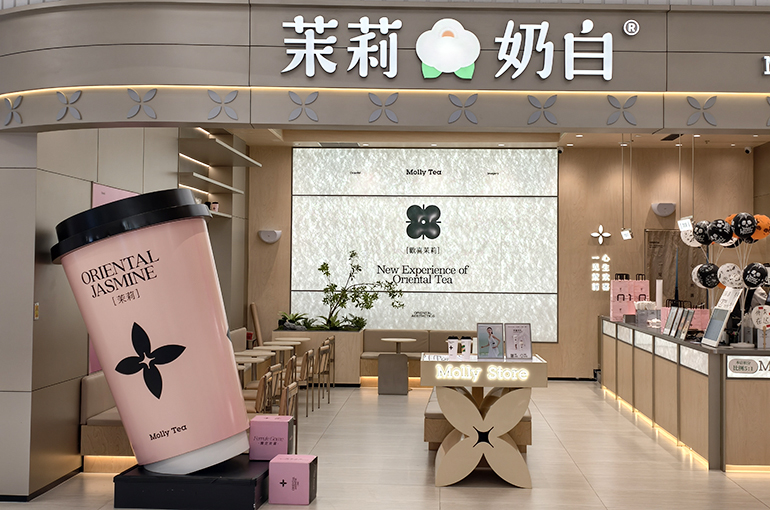
 China’s Molly Tea Is Ordered to Pay Louis Vuitton Over USD1.5 Million for Trademark Breach
(Yicai) July 3 -- A Chinese court has ruled in favor of French luxury giant Louis Vuitton in its trademark infringement lawsuit against Molly Tea Catering Management, ordering the Chinese tea chain to pay CNY10 million (USD1.5 million) in damages and CNY300,000 (USD44,200) in reasonable legal costs.
In a recent first-instance ruling, the Suzhou Intermediate People's Court found that Molly Tea and its franchise outlet Dongxia Beverage Shop in Suzhou’s Wuzhong Economic Development Zone had infringed seven registered trademarks for four-petal floral graphics owned by LV. It gave the defendant 10 days to pay.
LV argued that the floral designs used on Molly Tea's storefronts, cup sleeves, and other items were highly similar to the Paris-based company's trademarked four-petal flower design in terms of overall shape and design layout, and were sufficiently similar to cause consumer confusion.
Shenzhen-based Molly Tea told Yicai that it would appeal the ruling. LV has not yet responded to a request for comment.
Late yesterday, Molly Tea updated its official mini-program member center, replacing its standard black logo with a multicolored version. The chain, which targets young female consumers, operates more than 2,300 self-operated and franchised stores across 68 Chinese cities, alongside more than 50 outlets in seven overseas markets including the United States, Canada, and Australia.
The dispute falls within the scope of cross-category protection for well-known trademarks, You Yunting, a partner at Shanghai-based Debund Law Offices, said to Yicai. He said LV’s four-petal floral motif has a high level of recognition and distinctiveness, and clearly should have been avoided by the defendant.
Molly Tea’s rapid store build-out led to extensive use of the infringing logo and far-reaching adverse impacts on LV's brand rights, You pointed out. “This may explain the relatively high compensation amount awarded at first instance,” he said.
Molly Tea’s appeal will likely center on whether the compensation level is reasonable, You said, adding that in the food and beverage sector, consumer decisions are driven more by taste, price, and brand positioning than trademarked graphics.
If Molly Tea proceeds with an appeal, the reasonableness of the damages awarded should serve as a key point of argument in the second-instance proceedings, he said.
The ruling may encourage luxury brands to step up cross-industry rights enforcement, You noted. More luxury brands may launch similar trademark lawsuits, as several other new tea brands have previously faced allegations that their packaging and paper bags share similar design aesthetics with registered trademarks, he said.
Historically, luxury brands have focused their litigation on counterfeit manufacturers and distributors, but rulings were often difficult to enforce in practice, as defendants were often unable to pay court-ordered damages, he said.
Editors: Tang Shihua, Martin Kadiev