 China’s Yangtze River Delta Sets Up USD186.3 Million Basic Research Fund
(Yicai) Sept. 14 -- The Yangtze River Delta region, which comprises the eastern Chinese city of Shanghai and parts of Zhejiang, Jiangsu and Anhui provinces, has unveiled a CNY1.25 billion (USD186.3 million) fund to address financing challenges in cross-provincial research collaboration.
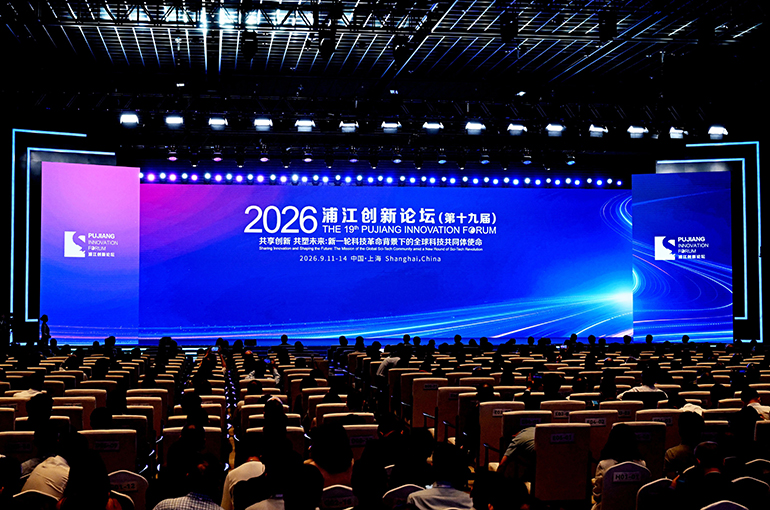
The fund was jointly launched by the National Natural Science Foundation of China, the three provinces, and Shanghai at the Pujiang Innovation Forum held in the city on Sept. 12. Following the principles of unified funding and joint management, each party will contribute CNY50 million (USD7.5 million) a year, forming an annual pool of CNY250 million (USD37.2 million) from next year through 2031.
China's local finances have long been restricted by policies and can only support local science and technology innovation projects, creating institutional obstacles to raising and using funds once cross-provincial research cooperation is involved. To address the issue, the Yangtze River Delta region introduced the first regional regulation supporting cross-provincial sci-tech innovation collaboration in September last year, proposing the establishment of the basic research fund.
A major breakthrough in forming the fund is the focus on unified decision-making and top-level planning in its mechanism design, Xu Xiaochuan, director of the basic research office at the Shanghai Science and Technology Commission, told Yicai. A special management committee composed of the three provinces, the city, and the NSFC has been formed to review the fund's overall layout plan over the five years and decide which projects to support each year, Xu noted.
The first five-year phase of the fund will focus on biomedicine and future materials, with per-project funding set between CNY3 million and CNY10 million (USD 447,200 and USD1.5 million), Xu said. In addition, compared to traditional natural science foundations that focus on researchers' personal interests, the fund will be industry-oriented, inviting firms to propose topics around global scientific frontiers and major industrial needs, Xu pointed out.
The fund's ultimate goal is to integrate advantageous regional resources to jointly overcome major industry bottlenecks, achieve significant sci-tech breakthroughs with global impact, and promote high-quality industrial development, Xu stressed.
Editors: Dou Shicong, Martin Kadiev