 China’s Zero-Tariff Policy for 53 African Nations Is Innovative, Mutually Beneficial, Trade Expert Says
(Yicai) April 30 -- China’s policy offering tariff-free treatment to 53 African countries that will take effect tomorrow is an innovative and mutually beneficial trade agreement, according to a trade facilitation and customs administration expert.
“This is a key practice of China leading the global development landscape through voluntary opening-up,” Wang Chunrui, director of the Georgia Research Center at China’s University of International Business and Economics, told Yicai.
China will remove tariffs on all products imported from the 53 African countries with which it has diplomatic relations from tomorrow, becoming the world’s first major economy to offer unilateral, full-coverage zero-tariff treatment to all African nations and all least developed countries, after eliminating import tariffs on goods from the latter on Dec. 1, 2024.
“The policy comes with no political strings attached, does not interfere in any other countries’ internal affairs, and does not take full reciprocal opening-up as a prerequisite,” Wang said. “It stands in sharp contrast to preferential policies adopted by Western countries, which are often tied to political screening and intermittent implementation.”
The arrangement is also a highly pragmatic institutional design, according to Wang. “African countries generally value the market opportunities offered by China’s vast consumer base,” she noted. “However, due to differences in industrial foundations, they inevitably have certain concerns over the competitiveness of Chinese goods.”
China’s initiative to fully open its market will help stabilize African countries’ expectations of accessing the Chinese market.
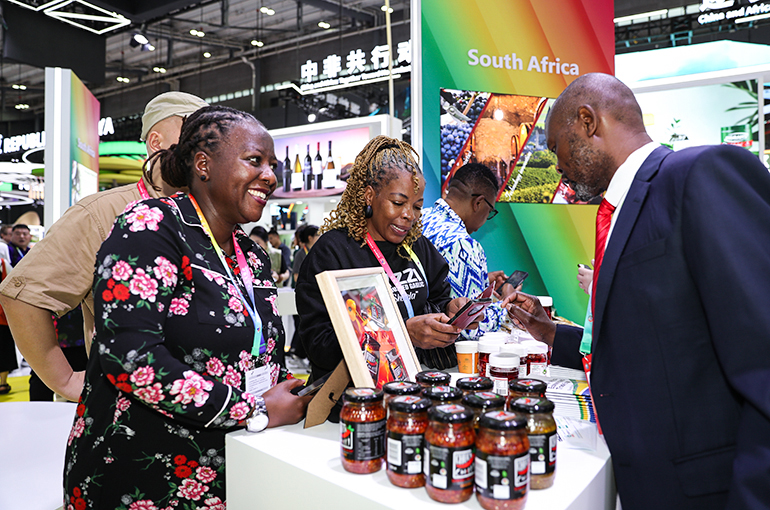
The zero-tariff policy will inject strong momentum into Africa’s development, Wang believes. By eliminating tariff costs for products entering China from Africa, it will effectively facilitate easier access for African agricultural goods, mineral products, and manufactured goods to the Chinese market.
Moreover, the policy will directly boost African nations’ export expansion and local production and help them attract more international investment, including capital from China, creating more local jobs and enhancing Africa’s local processing capacity and product added value, Wang pointed out.
Under a normal tariff structure, raw materials are subject to the lowest tax rates, followed by intermediate goods, while finished products are the heaviest taxed, Wang explained. Following the implementation of zero tariff treatment, African countries can gain far greater tariff relief dividends by exporting higher value-added finished products to China than raw materials alone.
“This profit gap will generate strong investment appeal for local processing projects and create room for production capacity cooperation between Chinese and African enterprises,” Wang said.
Chinese firms will have stronger incentives to set up processing bases in Africa, conduct deep processing using local raw materials, and export the finished products to China tariff-free, she noted. African countries will also take a more proactive approach to inviting Chinese investors to develop industrial parks and supporting infrastructure facilities on the continent.
The policy will also drive local African enterprises to upgrade equipment and expand production capacity, fueling their industrial transformation, Wang believes. Moreover, it will likely draw investors from other regions to build factories in Africa, as products manufactured there in compliance with the rule of origin can also enjoy zero tariffs when exported to China, she pointed out.
Wang also stressed that the policy is not a one-sided aid but a deep win-win arrangement featuring mutual benefits. “Zero tariffs offer a crucial opportunity for Africa to pursue economic diversification and industrial upgrading,” she added. “In particular, cumulation will help foster regional value chains and closer supply chain cooperation within Africa.
“As the early arrangement moves forward, African countries will make tariff concession commitments, directly benefiting Chinese export enterprises,” Wang told Yicai. “At the same time, Chinese manufacturers that use African agricultural and mineral products as raw materials will lower input costs thanks to zero tariffs, thereby improving their global competitiveness.”
Editors: Tang Shihua, Futura Costaglione