



 Chinese Carmakers’ Sales in Europe Surge 127% in December
(Yicai) Jan. 22 -- Sales of Chinese automakers in Europe climbed 127 percent in December despite the European Union’s substantial tariffs on electric vehicles from China.
Chinese carmakers sold 109,900 units in Europe last month, surpassing the 100,000 mark for the first time, according to preliminary data from market research firm DataForce. Their market share in Europe more than doubled to 9.5 percent from 4.5 percent a year earlier.
Auto sales in Europe grew 7.6 percent to 1.15 million units in December from the same period last year, reaching a total of 13.3 million units in 2025, up 2.3 percent from the year before, DataForce figures also showed. Among them, pure electric and plug-in hybrid vehicle sales jumped 30 percent and 34 percent, respectively.
For the whole year, Chinese automakers achieved sales of 810,000 units in the European market, marking a year-on-year growth of 99 percent, with their market share expanding to 6.1 percent from 3.1 percent, according to DataForce.
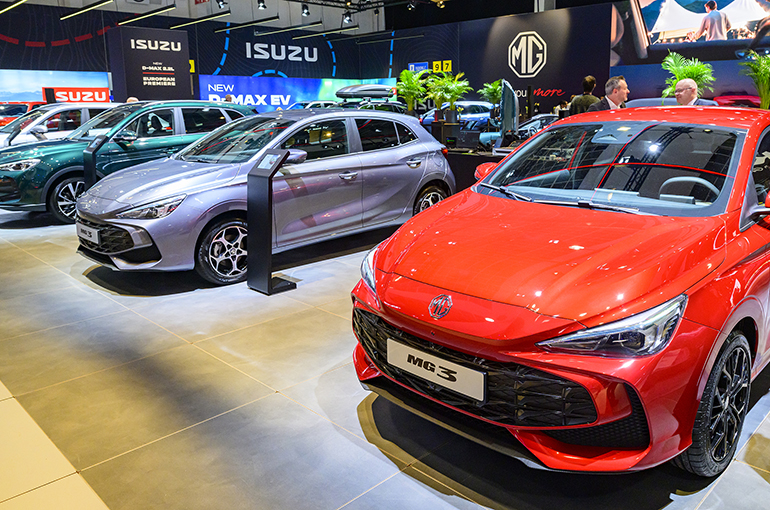
SAIC Motor’s MG was the best-selling Chinese brand in Europe last year, with sales rising 26 percent to 307,000 units. It was the only Chinese brand making it into the top 20 of overall car sales in the European market, ranking 16th.
BYD ended the year second with 187,000 vehicles sold in Europe, up 276 percent from the previous year and climbing to 22nd from 31st place in the overall ranking. Chery Automobile’s Jaecoo and Omoda brands and Geely Automobile Holdings’ Polestar completed the top five.
In the past two years, Chinese automakers have experienced rapid sales growth in the European market. In October 2024, EU member states voted to impose a maximum countervailing duty of 35.3 percent on China-made EVs, in addition to the existing 10 percent tax, for a period of five years.
On Jan. 12, China and the EU made significant progress in negotiations regarding the EV import tariffs. The Chinese commerce ministry then said that the parties intend to replace the high countervailing taxes with a price commitment mechanism.
In the initial stages of implementing the price commitment mechanism, some carmakers may experience short-term fluctuations in sales due to adjustments in product pricing and structure, said Cui Dongshu, secretary-general of the China Passenger Car Association.
However, as companies adapt to the new regulations, local production capacity will be released, and product competitiveness improved, promoting the gradual recovery of Chinese EV sales in the EU market, he added.
From this year to 2028, exports of Chinese electric cars to the EU will maintain an average annual growth rate of around 20 percent, becoming an important driver for the global EV market, Cui predicted.
Editor: Futura Costaglione





