
(Yicai) Dec. 26 -- Chinese companies are adopting a new strategy that sees the Malaysian state of Penang more as a global launchpad than an overseas base with tariff advantages, according to the chief executive officer of InvestPenang, the main investment promotion agency of Penang.
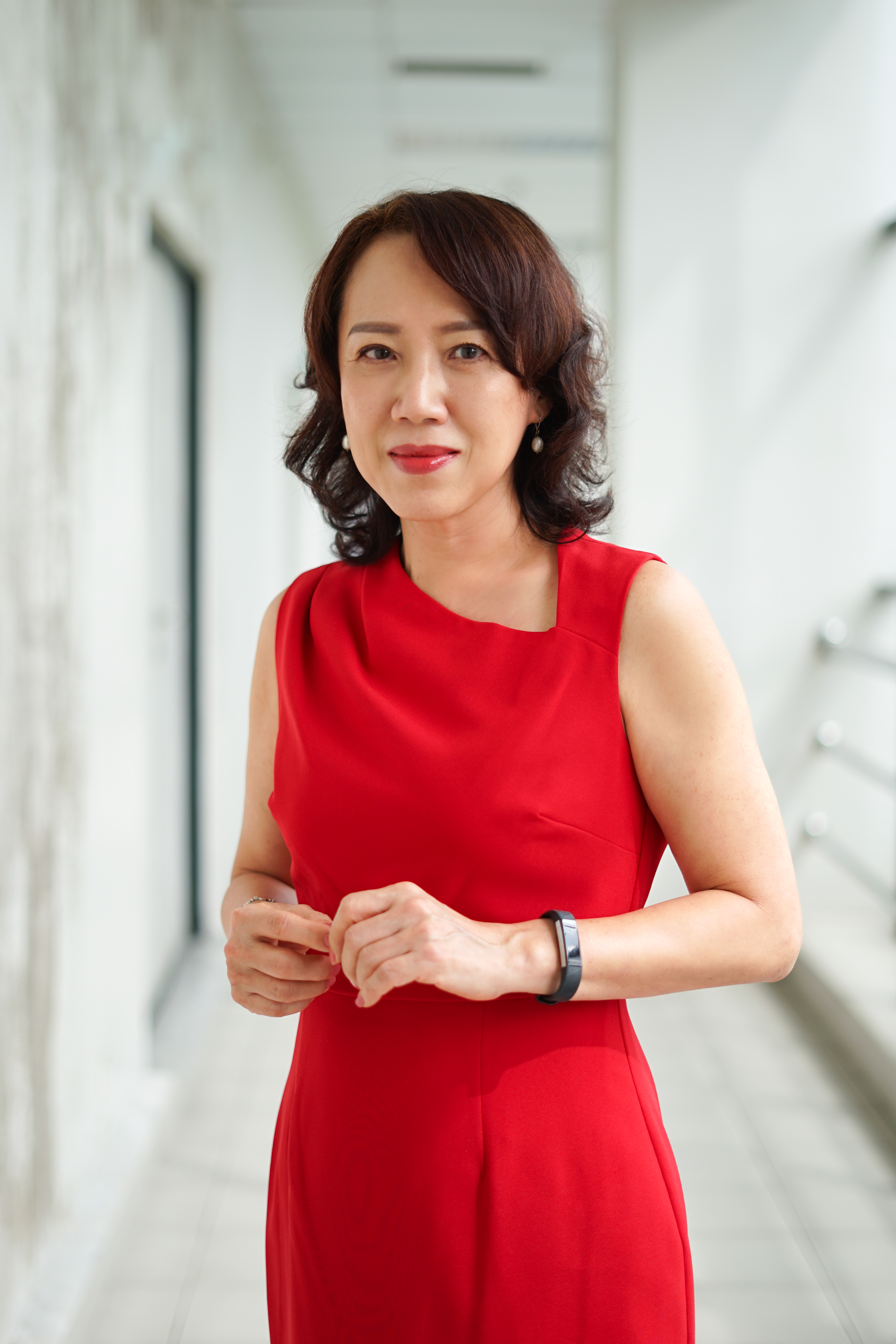
"When I talked to the companies this week, all of them were talking about 'China for China and Penang for the rest of the world,' which I think it's their new strategy," Loo Lee Lian told Yicai in an interview during her visit to China, during which she and her team toured 14 companies in six cities, including Shanghai, Shenzhen, and Wuxi.
In contrast, the first wave of Chinese companies that arrived in Penang after the first US-China trade tensions in 2018 and 2019 were only focusing on quickly relocating production.
"During that time, many of the manufacturers were just reacting to the new tariff, they were relocating very fast," Loo explained. “Some of the methods of relocation were more rushed, they were not very sophisticated in their site evaluation, and the products were also lower-value products.”
But in the past year, there has been a shift - higher-end semiconductor companies, in the supply chain, are moving to Penang as they are thinking more strategically and looking beyond just tariff, she added.
Manufacturing foreign direct investment in Penang surged about 22% percent to CNY21.4 billion (USD3.0 billion) in the first nine months of the year from a year earlier, with China being the second-largest investment source, according to data from InvestPenang and the Malaysian Investment Development Authority.
The companies Loo met this month were mostly high-end semiconductor firms with clear global expansion plans. "All of them have ambitions to go outside of China," Loo said. “They have very sophisticated branding, and some of them have second-generation owners who are very global and have ambitions to go global.”
Jingsheng Mechanical and Electrical, a leading Chinese high-tech firm in advanced materials and equipment for the semiconductor and photovoltaic industries, better known as JSG, announced in July that its subsidiary SuperSic would build a factory with an annual production capacity of 240,000 eight-inch silicon carbide wafers in the Penang Technology Park in Bertam.
Trensor, a Chinese manufacturer of pressure sensors for the automotive and industrial fields, said in April that it would set up its first overseas factory at the Penang Technology Park. "Our investment in Malaysia isn't merely transferring production capacity but also a crucial step in our globalization strategy," Stephen Zhou, director of Trensor's Malaysian subsidiary, told Yicai.
Not a Low-Cost Play
Loo explained to Yicai that lower costs are not the primary driver for Chinese firms choosing Penang. "We are not the lowest-cost site for Chinese companies," she said. “Everything in China is so much cheaper than in Penang because of its skills and masses.”
Instead, Penang's appeal lies in its neutrality, deep global experience and expertise, mature ecosystem, and research and development capabilities of engineers, according to Loo. Penang hosts over 350 multinationals with more than 80 Chinese companies, with global semiconductor leaders, including Intel and Advanced Micro Devices.
"We offer practices that are very international for companies that come in," Loo noted. "We have a supply chain that's already very mature, especially in semiconductor, and we have talents that are already trained in the semiconductor area.
"For Chinese companies, Penang is a site that they can come in and immediately start operation, leapfrog, and serve their global ambition," Loo added.
Tariff Uncertainty as the New Normal
While Penang's semiconductor exports have so far avoided inclusion in certain US tariff measures, Loo remains very cautious about this lasting advantage. Tariff uncertainty has become a new norm, but tariff cannot be the only consideration, otherwise, it is not sustainable, Loo told Yicai.
"Malaysia is a neutral site, and that's our strategy to maintain our neutrality," Loo said about the country's position in the global trade landscape. “We offer a stable neutral site for both Western and Chinese companies when policy changes have become a very high risk for businesses.”
The US tariff policy continues to push Chinese manufacturers to consider overseas production, said Chen Liu, a researcher at Nanjing University who conducted field research in Penang this year. However, he cautioned that strategies focused narrowly on accessing the US market carry risks.
When a Chinese enterprise invests in other countries, and the scale of its exports to the United States rapidly increases, there is considerable risk that the US will impose tariffs on these other countries as well, Chen pointed out.
Some firms have explored direct investment in the US, but labor constraints remain a challenge, according to Chen. "An important constraint is that some industries in the US have a serious shortage of engineers, and they don't open work visas to allow Chinese technical personnel to go to the US," he explained.
In this regard, Loo emphasized the importance of long-term ecosystem investment rather than short-term relocation.
"We have got investors from America, Switzerland, Germany, companies like AMD, Intel, and Bosch that have been in Penang for over 50 years," she said. First, they started only with manufacturing, and then they invested in local talent, supply chain, and R&D.
"Chinese companies are starting to know that to be successful, they have to invest in the people in Penang, the talent," Loo noted. “To be sustainable, I urge Chinese companies to look into the ecosystem and invest in and collaborate with them.”
Moving Up the Value Chain and Beyond
Penang has historically been strongest in semiconductor back-end operations, including assembly and testing. But Malaysia's national semiconductor strategy aims to push the industry into higher-value segments, such as integrated circuit design, advanced packaging, and automated test equipment.
"IC design captures about 60 percent of the value chain for semiconductors," Loo said. "We're also seeing some of the Chinese companies, and not only Chinese, but other Asian companies as well, that are very strong in advanced packaging that have invested in Penang.
"Chinese companies are very strong in automated test equipment, and there are already a few Chinese ATE companies in Penang," she added.
Underlying these ambitions is talent development, Loo pointed out. Penang's multilingual workforce and established manufacturing base provide a foundation.
"We treat every project and evaluate every project based on their products, the technology, the sustainability, future value, and future product, not as whether you're a Western company or a Chinese company," Loo explained to Yicai.
"For us, we want to be the region's high-tech destination for global investors. Whether you're East or West, we welcome all," she noted. "We've been known as the Silicon Valley of the East for many years.”
Editor: Futura Costaglione