



 Chinese Mainland Firms Power Almost 40% Jump in Hong Kong IPOs in 2025
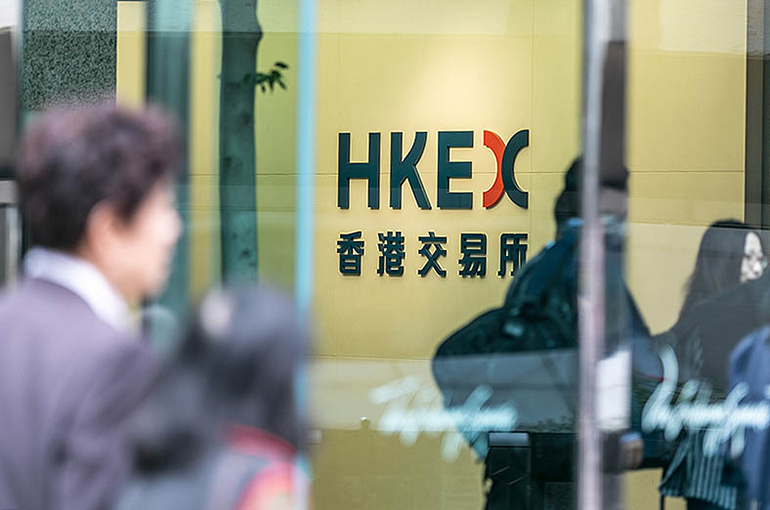
Yicai) Dec. 11 -- Chinese mainland firms have been the main driving force behind a nearly 40 percent surge in stock market listings in Hong Kong this year, and the pipeline for initial public offerings in the city is at an almost 10-year high.
Some 104 businesses have listed on the Hong Kong Stock Exchange so far in 2025, according to figures from the bourse and Wind Information.
Supportive policies, a rising stock market, and Hong Kong’s reputation as a gateway to global investors and international markets is fueling strong demand among mainland companies for listings in the city.
One of the key reasons for integrated circuit designer Novosense Microelectronics to list there on Dec. 8 was to use Hong Kong as a platform to strengthen its overseas business, according to Chairman and Chief Executive Wang Shengyang.
As China’s first analog chipmaker to have a dual listing on the mainland and in Hong Kong, the Suzhou-based company aims for roughly 20 percent of revenue coming from overseas by 2029, complementing its China business, Wang noted. Novosense plans to turn its Hong Kong office into its overseas operations and sales headquarters, serving global clients and building a foreign supply chain.
China’s integrated circuit exports jumped 26 percent in the first 11 months of 2025 from a year earlier, according to customs data.
“Going global is a sensitive issue this year,” Wang said, noting that the Nexperia episode has highlighted many uncertainties for Chinese firms operating abroad. “We have noticed these risks.”
Disagreements between Nexperia’s Dutch headquarters and its Chinese arm have led to a suspension of wafer deliveries to the firm’s Guangdong facility, Tech in Asia reported today.
Wang singled out geopolitical tensions as the most immediate risk, while stressing that despite this international expansion remains necessary amid intense competition at home in industries such as autos and energy.
More than 60 percent of Novosense’s clients in Europe have started mass production, with several key customers buying not just a single product but a bundle of multiple product types. In Japan and South Korea, eight clients in power battery technology and auto parts have also begun mass production.
To meet the challenges, Wang said the first thing mainland firms can do themselves is to strengthen their compliance systems, including setting up automated customer screening with clear definitions of prohibited counterparties to avoid direct or indirect dealings.
He added that overseas expansion requires approaches aligned with global market expectations, and Novosense addresses talent needs through a mix of expatriate postings and local hiring.
Editor: Emmi Laine





